
A clogged toilet is stressful at the best of times. A clogged toilet with no plunger in the house feels like an emergency. The good news is that most toilet clogs can be cleared with things you already have at home: hot water, dish soap, baking soda, vinegar or a wire coat hanger.
This guide walks through eight proven ways to unclog a toilet without a plunger, starting with the gentlest methods and working up to stronger ones. You’ll also learn what to avoid, how to stop the bowl from overflowing, and when it’s time to call a plumber.
Table of Contents
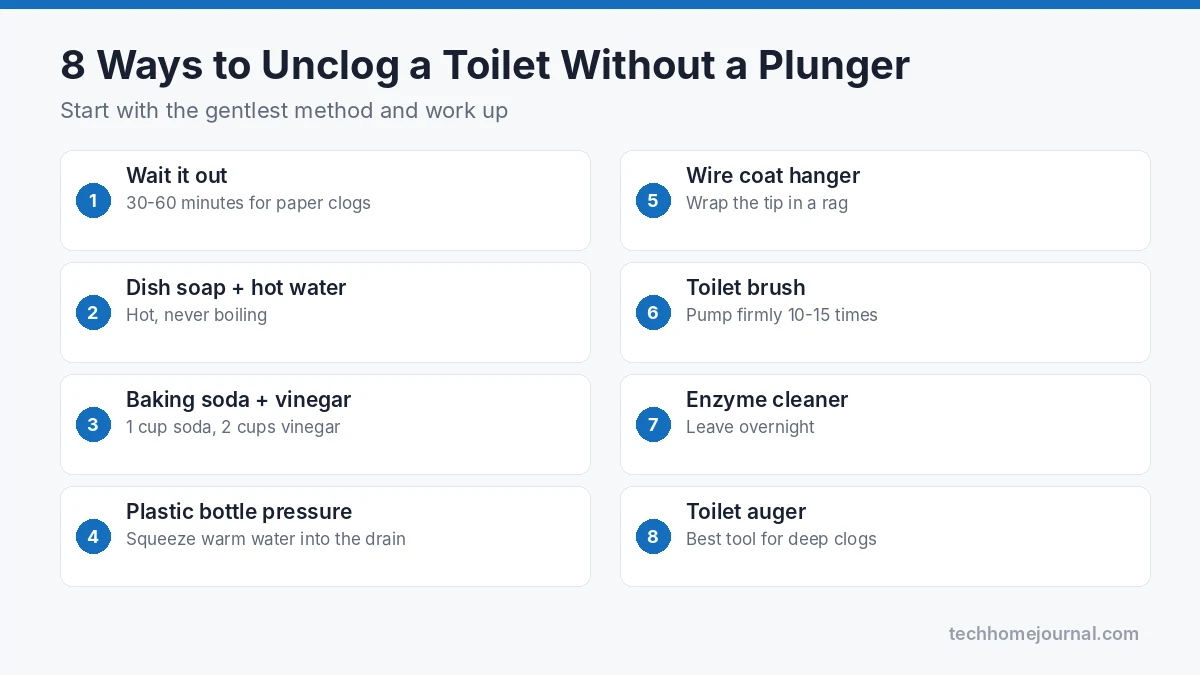
- Quick Picks: Which Method to Try First
- Before You Start: Stop an Overflow
- How a Toilet Drain Works
- Method 1: Wait It Out
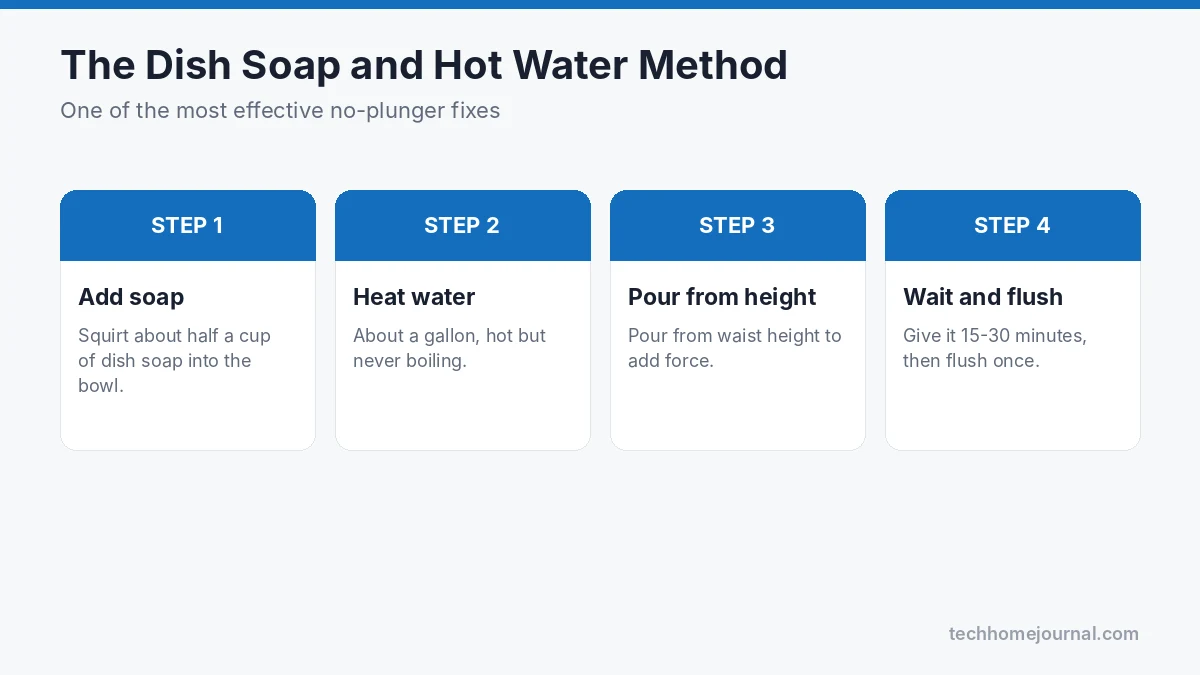
- Method 2: Dish Soap and Hot Water
- Method 3: Baking Soda and Vinegar
- Method 4: Plastic Bottle Pressure
- Method 5: Wire Coat Hanger
- Method 6: Toilet Brush
- Method 7: Enzyme Drain Cleaner
- Method 8: Toilet Auger
- What Not to Do
- Cleaning Up After a Clog
- When to Call a Plumber
- How to Prevent Toilet Clogs
- Smart Bathroom Upgrades That Help
- Frequently Asked Questions
- Final Verdict
Quick Picks: Which Method to Try First
| Method | Best for | Time | Difficulty |
|---|---|---|---|
| Wait it out | Toilet paper and waste clogs | 30 to 60 min | Very easy |
| Dish soap + hot water | Soft, organic clogs | 15 to 30 min | Easy |
| Baking soda + vinegar | Mild clogs, slow drains | 30 min | Easy |
| Plastic bottle pressure | Stubborn soft clogs | 5 to 10 min | Moderate |
| Wire coat hanger | Clogs near the drain opening | 10 min | Moderate |
| Enzyme cleaner | Waste and paper buildup | Overnight | Easy |
| Toilet auger | Deep or solid blockages | 10 to 20 min | Moderate |
Before You Start: Stop an Overflow
If the water is rising, don’t flush again. A second flush is the most common cause of a bathroom flood.
- Close the water supply. Turn the valve behind the toilet clockwise until it stops.
- Or lift the flapper. Remove the tank lid and press the rubber flapper down to stop more water entering the bowl.
- Protect the floor. Lay old towels around the base, and dry any spills thoroughly afterward; standing water can lead to mold, as the EPA explains in its guide to mold and moisture.
- Wear rubber gloves. Toilets carry plenty of bacteria, and eye protection is wise if you’ll be using any cleaners.
- Remove some water. If the bowl is very full, scoop some out into a bucket so you have room to work.
If your bathroom has had leaks before, a small water leak sensor near the toilet can alert you early. See our guide on where to place water leak sensors.
How a Toilet Drain Works (and Why It Clogs)
Knowing a little about what’s going on inside the toilet makes it easier to choose the right fix.
Every toilet has a curved channel built into the porcelain called the trap. It’s shaped like an S or a U and always holds some water, which blocks sewer gases from coming up into your bathroom. When you flush, water from the tank rushes into the bowl, creating a siphon that pulls the contents through the trap and into the drain pipe.
Most clogs happen in one of three places:
- In the trap itself: The tight curve is where too much paper, wipes or a small object usually gets stuck. This is the most common type of clog and the one most home methods can fix.
- In the drain pipe below the toilet: Clogs here are harder to reach and often need an auger.
- Further down the main line: If several fixtures are affected, the problem is likely in the main sewer line, which is a job for a plumber.
A weak flush can also mimic a clog. If the bowl drains slowly but eventually clears, check that the tank is filling to the correct level and that the small rim holes under the bowl’s edge aren’t blocked with mineral deposits.
Method 1: Wait It Out
It sounds too simple, but many clogs made of toilet paper and waste soften and break down on their own. If you have another bathroom, close the lid, turn off the supply valve and give it 30 to 60 minutes. Then turn the water back on and try a single, careful flush, ready to lift the flapper if the level rises.
This won’t work for wipes, cotton pads, toys or other solid objects, but it’s worth trying first because it carries zero risk.
Method 2: Dish Soap and Hot Water
Dish soap acts as a lubricant, helping a soft clog slide through the pipe, while hot water helps break it down.
- Squirt about half a cup of liquid dish soap into the bowl.
- Heat roughly a gallon of water until it’s hot but not boiling. Boiling water can crack the porcelain or damage the wax seal.
- Pour the hot water into the bowl from waist height to add a little force.
- Wait 15 to 30 minutes, then try flushing.
This is one of the most effective no-plunger methods for ordinary clogs, and you can repeat it once or twice.
Method 3: Baking Soda and Vinegar
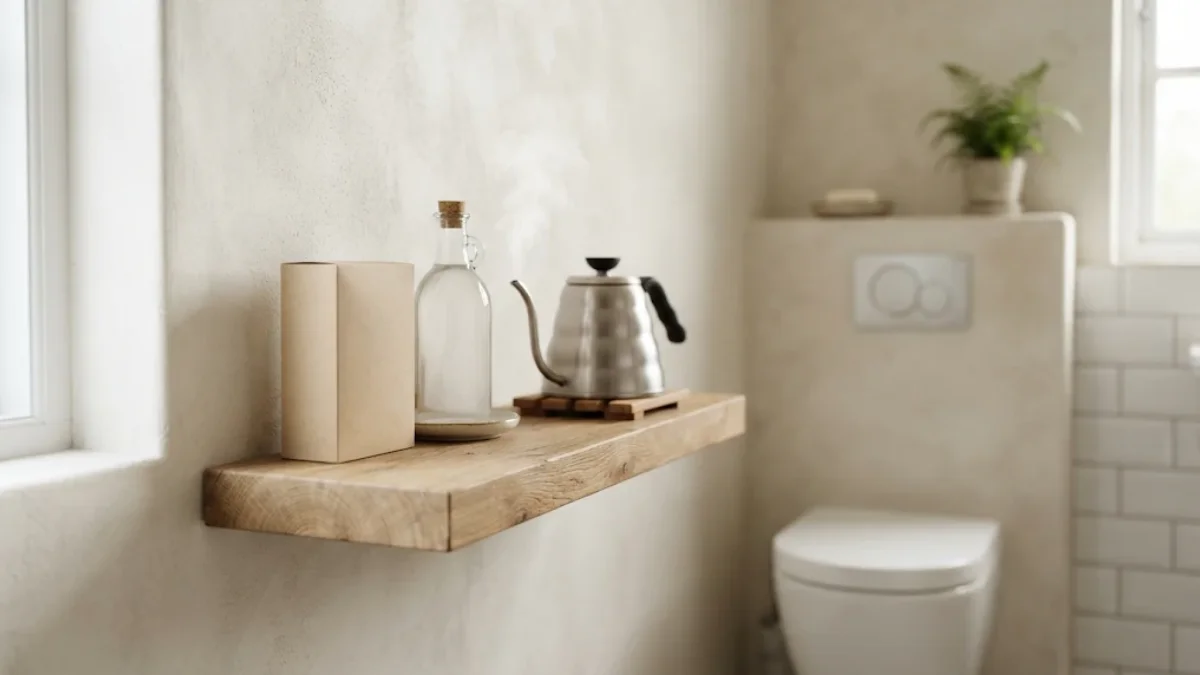
The fizzing reaction between baking soda and vinegar can help loosen mild clogs. It’s gentle on pipes and septic systems.
- Make sure the water level is low enough to leave room for bubbling.
- Add about one cup of baking soda to the bowl.
- Slowly pour in about two cups of white vinegar (roughly a 1:2 ratio).
- Let it fizz and sit for at least 30 minutes, or overnight for tougher clogs.
- Follow with hot (not boiling) water and flush.
It works best on soft organic clogs and slow drains. It won’t dissolve solid objects.
Method 4: Plastic Bottle Pressure
This trick uses a plastic bottle as a makeshift plunger to push water pressure into the drain.
- Fill an empty plastic bottle (a soda or water bottle works) with warm water.
- Put your gloved thumb over the opening.
- Push the neck of the bottle into the drain opening at the bottom of the bowl.
- Remove your thumb and squeeze the bottle hard to force water into the pipe.
- Repeat a few times, then try flushing.
It’s a little messy, so keep towels handy, but it can shift a soft clog that won’t move with soap alone.
Method 5: Wire Coat Hanger
If the clog is close to the drain opening, a wire coat hanger can act as a basic snake.
- Unwind a wire coat hanger and straighten it, leaving a small hook at one end.
- Wrap the end in a rag and secure it with tape to avoid scratching the porcelain.
- Gently feed it into the drain, twisting and pushing to break up or hook the clog.
- Pull out anything you catch, then flush carefully.
A coat hanger only reaches a short way, so if you don’t feel any resistance, the clog is probably deeper in the pipe.
Method 6: Toilet Brush
In a pinch, a toilet brush can work like a small plunger. Push the brush firmly into the drain opening and pump it in and out quickly 10 to 15 times. It won’t create as much suction as a real plunger, and you’ll want to clean or replace the brush afterward, but it can be enough to move a minor clog.
Method 7: Enzyme Drain Cleaner
Enzyme-based cleaners use natural bacteria and enzymes to digest organic waste and paper. They work slowly, usually overnight, but they’re much safer for pipes and septic systems than harsh chemical cleaners. Follow the product directions, avoid using the toilet while it works, and flush the next morning.
Method 8: Toilet Auger
If none of the above work, a toilet auger (also called a closet auger) is the next step. It’s a flexible cable inside a curved tube, designed to snake through the toilet’s built-in trap without scratching the bowl. It’s an inexpensive tool that every household should own.
- Place the curved end of the auger in the drain opening.
- Turn the handle while gently pushing the cable into the trap.
- When you hit resistance, keep turning to break up or grab the clog.
- Pull the cable back slowly, then flush to test.
What Not to Do
- Don’t keep flushing. It almost always makes things worse.
- Don’t use boiling water. Sudden heat can crack porcelain.
- Avoid harsh chemical drain cleaners. They can damage pipes and seals, harm septic systems, and are dangerous if they splash back. If you do need a plunger or auger afterward, you’ll be working in caustic water.
- Never mix chemicals. Combining different cleaners, especially bleach with acids or ammonia, can release toxic gases.
- Don’t force metal tools hard. They can scratch or crack the bowl.
Cleaning Up After a Clog
Once the toilet flushes normally again, take a few minutes to clean up properly:
- Run a test flush or two to make sure the water drains at a normal speed.
- Disinfect the bowl and rim with a toilet cleaner, and scrub the outside of the toilet, including the base, where splashes collect.
- Clean the floor with a disinfectant, paying attention to grout lines.
- Wash or throw away towels and rags used during the job, and soak the toilet brush or auger in a disinfectant solution.
- Dry everything thoroughly and open a window or run the exhaust fan to clear moisture and odors. An air purifier can also help clear lingering smells.
- Check under the floor if the toilet overflowed badly. Water can seep into the subfloor or the ceiling below, so look for stains or soft spots over the next few days.
When to Call a Plumber
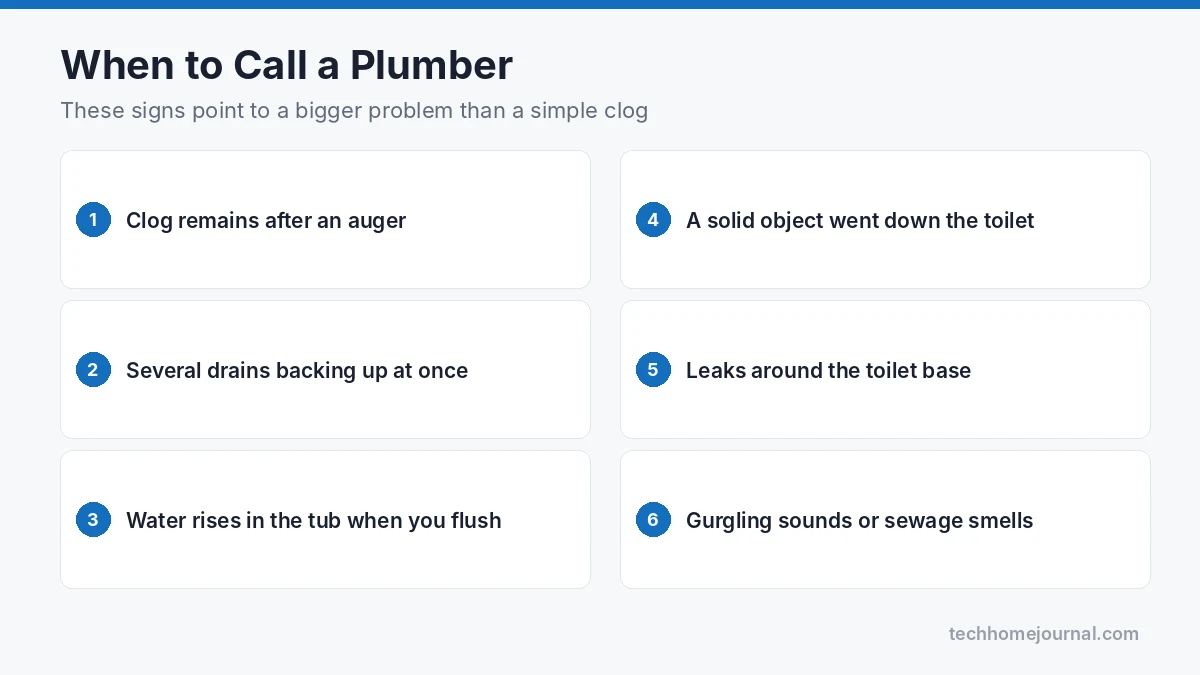
Call a professional if:
- You’ve tried several methods and an auger and the toilet is still blocked.
- Multiple drains in the house are slow or backing up at the same time; this suggests a main sewer line problem.
- Water backs up into the shower or tub when you flush.
- You know a solid object, such as a toy or phone, has gone down.
- Water is leaking from the base of the toilet, which may mean a failed wax seal.
- You notice sewage smells or gurgling sounds from drains.
If you have a septic system, frequent clogs can also mean the tank needs pumping. Regular inspection helps prevent costly backups, and a certified home inspector can check the condition of your plumbing if you’re buying an older home.
How to Prevent Toilet Clogs
- Only flush the three Ps: pee, poop and (toilet) paper.
- Never flush wipes, even those labeled “flushable.” They don’t break down like toilet paper.
- Use less paper per flush, or flush twice for larger amounts.
- Keep a bin in the bathroom for cotton pads, floss, sanitary products, hair and medications.
- Teach kids what can and can’t go down the toilet, and keep the lid closed with small children.
- Consider an upgrade. Older low-flow toilets sometimes struggle. Modern high-efficiency toilets are designed to use less water while still flushing well; the EPA’s WaterSense toilet guide explains what to look for.
- Fix running toilets quickly. A leaking flapper wastes a surprising amount of water. The EPA’s Fix a Leak Week resources include simple ways to check for toilet leaks.
- Keep a plunger and auger handy. A flange plunger is designed specifically for toilets and costs very little.
Smart Bathroom Upgrades That Help
Technology can’t unclog a toilet, but it can limit the damage when something goes wrong:
- Leak sensors: Small battery-powered sensors placed behind the toilet send a phone alert the moment water hits the floor.
- Smart water shut-off valves: These can automatically cut the water supply to the whole house when a leak is detected. Learn more in our smart water shut-off valve guide.
- Voice routines: Set up an Alexa or Google Home announcement when a leak sensor triggers. Our Alexa routines guide shows how.
- Motion-sensor lighting: A soft motion-activated night light helps kids find the bathroom at night without fumbling. See our motion sensor light bulb guide.
If you’re upgrading other parts of the bathroom, our guide to smart plugs covers simple ways to automate things like heated towel rails or fans safely.
Frequently Asked Questions
Will a toilet eventually unclog itself?
Clogs made of toilet paper and waste often soften and clear on their own within an hour or so. Clogs caused by wipes, sanitary products or solid objects won’t, and need to be removed.
Does dish soap really unclog a toilet?
Yes, for many soft clogs. Dish soap lubricates the clog and pipe, and hot water helps break the clog down. It works best combined with hot (not boiling) water and a little patience.
Can I use bleach to unclog a toilet?
Bleach isn’t designed to dissolve clogs and shouldn’t be mixed with other cleaners. Dish soap, baking soda and vinegar, enzyme cleaners or a toilet auger are safer and more effective choices.
Is baking soda and vinegar safe for septic systems?
Yes, in normal household amounts it’s considered safe. It’s much gentler than chemical drain cleaners, which can disrupt the bacteria a septic tank relies on.
What’s the difference between a sink plunger and a toilet plunger?
A toilet (flange) plunger has an extra rubber sleeve that fits into the toilet drain to create a better seal. A flat cup plunger is designed for sinks and tubs and doesn’t work as well on toilets.
Why does my toilet keep clogging?
Frequent clogs can be caused by too much paper, flushing wipes, an older low-flow toilet, a partial blockage deeper in the pipe, a blocked vent, or a main sewer line problem. If clogs keep happening, have a plumber inspect the system.
Final Verdict
You don’t need a plunger to fix most toilet clogs. Stop the water first, then work through the gentle options: wait, dish soap and hot water, baking soda and vinegar, and the bottle trick. If those fail, a wire hanger or, better still, a toilet auger will clear most remaining blockages.
Avoid harsh chemicals and boiling water, know when to call a plumber, and once the drama is over, buy a flange plunger and a toilet auger so you’re ready next time.