
A motion sensor light bulb is the simplest way to turn an ordinary light into a motion light. It looks like a regular LED bulb but has a small sensor built into the tip. Screw it into an existing porch light, garage socket or basement fixture, leave the wall switch on, and it lights up automatically when someone walks by after dark.
Free tool: Use our free LED vs Incandescent Savings Calculator to see how much switching to LED bulbs saves you each year, or our free Lumens Calculator to work out how many lumens each room needs.
No wiring, no app and no hub. This guide explains how motion sensor bulbs work, where they shine (and where they don’t), and the bulbs worth buying in 2026.
Table of Contents
- How Motion Sensor Light Bulbs Work
- Pros and Cons
- Best Motion Sensor Light Bulbs
- Where to Use Them
- What to Look For
- Installation and Setup Tips
- Alternatives to Motion Sensor Bulbs
- Troubleshooting
- Frequently Asked Questions
- Final Verdict
How Motion Sensor Light Bulbs Work
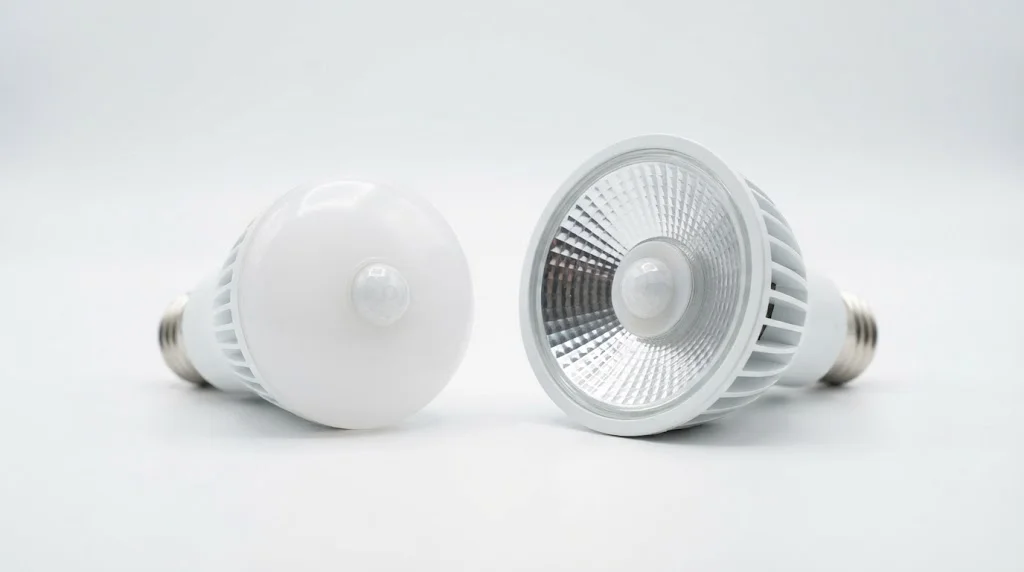
Inside the bulb is a small passive infrared (PIR) sensor that detects the heat of a moving person, plus a light sensor that tells it when it’s dark. After dusk, when the PIR sensor sees motion, the bulb switches on; when there’s no more movement, it switches off again. The wall switch has to stay on so the bulb always has power to run its sensor. Want the full background on sensor types? Read our guide on how motion sensors work.
Pros and Cons
| Pros | Cons |
|---|---|
| Installs in seconds, no wiring | The fixture must face the area you want to detect |
| Works in existing fixtures | Enclosed or frosted fixtures can block the sensor |
| No app, hub or Wi-Fi needed | Few or no settings to adjust |
| Saves energy versus leaving a light on | The wall switch must stay on |
| Cheaper than a new motion fixture | Usually not dimmable |
Best Motion Sensor Light Bulbs
| Bulb | Brightness | Color | Detection | Rating |
|---|---|---|---|---|
| GE LED+ Motion Sensor A21 | 1,100 lumens (12 W, 75 W equivalent) | 5000K daylight | 90°, up to 24 ft | Damp-rated, indoor/outdoor |
| GE LED+ Motion Sensor PAR38 | 1,150 lumens (14 W, 90 W equivalent) | 5000K daylight | 90°, up to 24 ft | Wet-rated outdoor floodlight |
| Sengled Smartsense PAR38 | 1,050 lumens (11.5 W) | 3000K soft white | 100°, up to 90 ft | Wet-rated (check availability) |
GE LED+ Motion Sensor A21: a standard-shaped E26 bulb that fits most porch lights, lanterns and ceiling sockets. It puts out 1,100 lumens of 5000K daylight, detects motion up to 24 feet across a 90° view, is damp-rated for covered outdoor fixtures and needs no app or hub. GE quotes a lifespan of up to 13.7 years.
GE LED+ Motion Sensor PAR38: a wet-rated floodlight bulb for exposed outdoor fixtures, such as twin-head security lights over a garage. It delivers 1,150 lumens from 14 watts with the same 90°, 24-foot detection.
Sengled Smartsense PAR38: a warmer 3000K option with an impressive 100°, up-to-90-foot detection range and a 90-second on-time after motion stops. It’s rated for wet locations but isn’t dimmable, and availability has been patchy, so check before you plan around it.
Where to Use Them
- Porch and entry lights: light the door only when someone arrives.
- Garages and carports: use a wet-rated PAR38 in exposed fixtures.
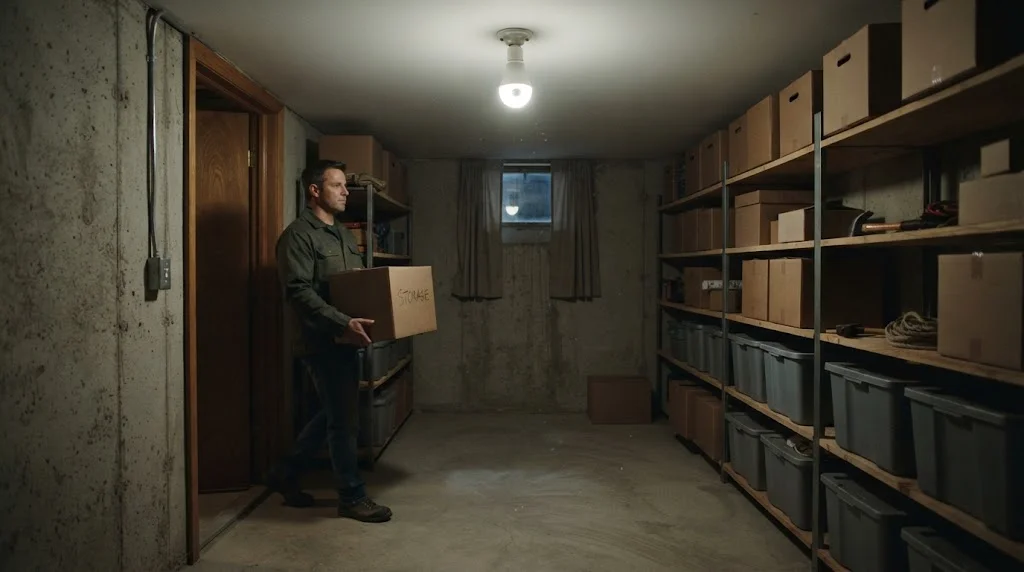
- Basements, attics and storage rooms: no more lights left on for days.
- Side paths and back doors: in fixtures that face the walkway.
They’re a poor fit for enclosed globe fixtures, lamps with shades and fixtures that point at a wall, because the sensor needs a clear view of the area. For those spots, a motion sensor light switch or a dedicated motion sensor light works better.
What to Look For
- Bulb shape and base: A19/A21 for standard fixtures, BR30 for recessed cans, PAR38 for floodlight holders. Most use an E26 base.
- Brightness: 800 to 1,100 lumens suits porches and garages.
- Color temperature: 2700K to 3000K looks warmer and friendlier; 5000K is crisper for security lighting.
- Detection range and angle: 20+ feet and 90°+ cover most entries.
- Wet or damp rating: wet-rated for exposed fixtures, damp-rated for covered porches.
- On-time: some bulbs have fixed timers; check how long they stay on after motion stops.
Installation and Setup Tips
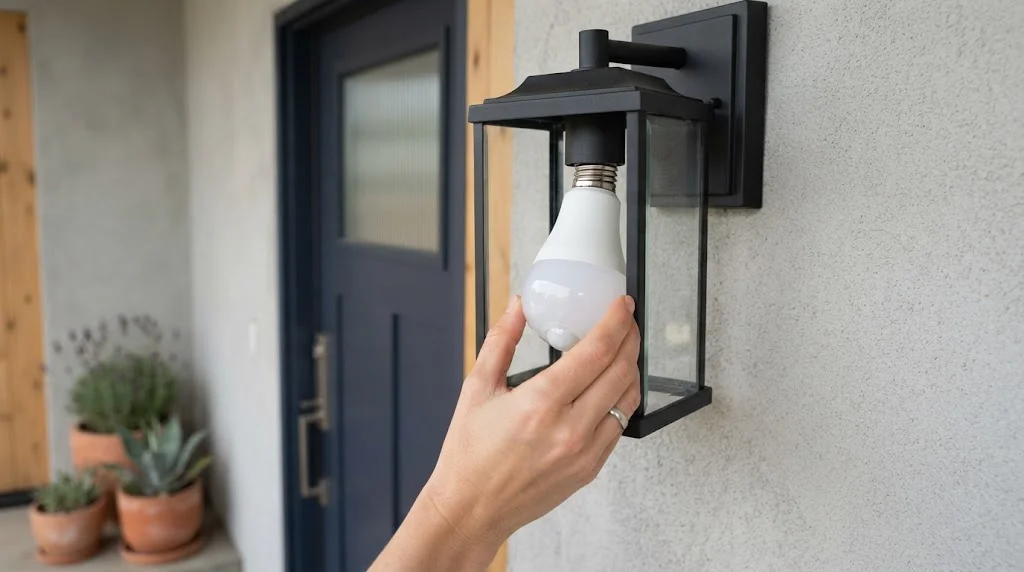
- Turn the switch off and let the old bulb cool.
- Screw in the motion bulb so the sensor faces the walkway or door.
- Turn the switch on and leave it on; tape a small note over the switch if family members tend to flip it off.
- Test after dark by walking toward the fixture from different angles.
- If the fixture has a dimmer, replace it with a standard switch, as most motion bulbs aren’t dimmable.
Alternatives to Motion Sensor Bulbs
- Motion sensor wall switch: controls every bulb on the circuit with adjustable timeouts. See our motion sensor light switch guide.
- Smart bulbs + a smart motion sensor: full control of brightness, color and schedules. See our smart light bulbs guide.
- Solar or battery motion lights: for spots with no fixture at all. See our solar motion sensor light guide.
- Camera bulbs: some bulbs now include a security camera. Pair motion lighting with a motion sensor alarm for extra security.
Troubleshooting
- Won’t turn on at night: nearby lights (a street light or another porch light) may make the sensor think it’s still daytime.
- Turns on randomly: cars, trees or pets in view; reposition the fixture or bulb.
- Doesn’t detect from the side: the sensor’s angle is limited, so turn the bulb slightly in its socket.
- Flickers: remove any dimmer and check the bulb is seated firmly.
- Stays off after a power cut: some bulbs need a few seconds to recalibrate.
Frequently Asked Questions
Do motion sensor light bulbs work in any fixture?
They need a fixture with the right base (usually E26) and an open view of the area. Enclosed glass globes and shaded lamps can block the sensor.
Does the light switch need to stay on?
Yes. The bulb needs constant power to run its sensor. If the switch is off, the bulb can’t detect motion.
Do motion sensor bulbs work during the day?
Most have a built-in light sensor and only react to motion after dark, so they won’t switch on in daylight.
Can I use a motion sensor bulb outdoors?
Yes, if it’s rated for the location. Damp-rated bulbs suit covered porches; wet-rated bulbs like the GE PAR38 suit exposed fixtures.
Are motion sensor bulbs dimmable?
Usually not. Use them on a standard on/off switch rather than a dimmer.
How much electricity does a motion sensor bulb use?
Very little. The LED runs only when triggered, and standby power is tiny; the Sengled Smartsense PAR38, for example, lists 0.2 W standby. See more savings ideas in our guide to lowering your electricity bill.
Final Verdict
If you have an existing porch, garage or basement fixture with a clear view, a motion sensor light bulb is the cheapest and fastest upgrade you can make. The GE LED+ A21 suits most standard fixtures, and the wet-rated GE PAR38 handles exposed floodlight holders. If you want adjustable timers or warmer light everywhere, look at a motion switch or smart bulbs instead.