
Your doorbell stopped ringing, your new video doorbell keeps rebooting, or the chime just hums. In most of these cases, the problem is a small box you have probably never noticed: the doorbell transformer. It quietly converts your home’s 120 volt power into the low voltage your doorbell needs, and when it is too weak or worn out, everything connected to it misbehaves.
This guide explains what a doorbell transformer does, where to find it, how to test it with a multimeter, what voltage and VA rating you need for a video doorbell, and how to replace it safely, step by step.
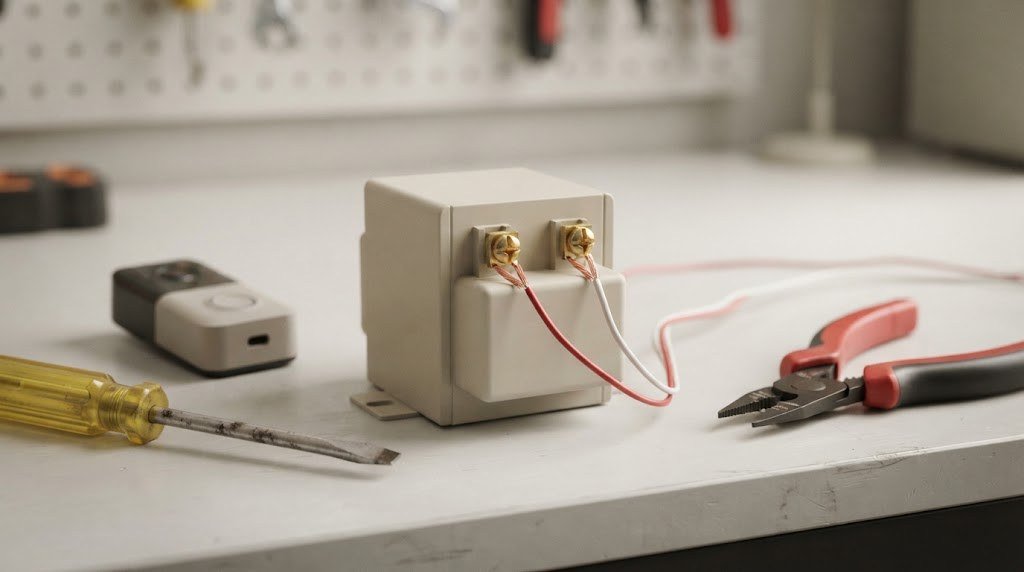
Safety first: The primary side of a doorbell transformer is connected to 120 volt household power. Always turn off the breaker and confirm the power is off with a tester before touching it. If you are not comfortable with electrical work, hire a licensed electrician. Local codes vary.
What Is a Doorbell Transformer?
A doorbell transformer is a small step down transformer that converts standard household current (120V AC in the US) into low voltage AC, usually between 10 and 24 volts. That low voltage powers your doorbell button, chime and, if you have one, your video doorbell.
Inside, two coils of wire are wrapped around an iron core. The primary coil connects to your home’s wiring, and the secondary coil delivers the reduced voltage through two small screw terminals. Because the output is low voltage, the wires running to your doorbell button and chime are thin and much safer to handle than regular household wiring.
Two numbers that matter: volts and VA
Every doorbell transformer is labeled with two ratings:
- Voltage (V): The output voltage, such as 10V, 16V, 18V or 24V.
- Volt amperes (VA): How much power the transformer can deliver, such as 10VA, 20VA, 30VA or 40VA. Think of VA as the transformer’s capacity.
Older mechanical doorbells only draw power for a moment when someone presses the button, so a small 10V or 16V, 10VA transformer was enough. Video doorbells are different. They run a camera, WiFi radio and night vision all day, so they need more voltage and more capacity.
Do You Need a New Doorbell Transformer?
You may need to check or replace your transformer if you notice any of these signs:
- The doorbell does not ring at all, even with a new button.
- The chime makes a weak, buzzing or humming sound.
- A video doorbell keeps restarting, goes offline or shows a low power warning.
- Night vision or live view cuts out on a video doorbell.
- The transformer itself hums loudly or feels very hot.
- You just installed a video doorbell and the app says the power is insufficient.
The most common reason people replace a doorbell transformer today is upgrading to a video doorbell. Many older homes still have a 10V or 16V, 10VA transformer that simply cannot keep up.
Doorbell Transformer Requirements for Video Doorbells
Every brand publishes its own power requirements, so always check your doorbell’s manual. As a general guide:
| Doorbell type | Typical voltage | Typical capacity |
|---|---|---|
| Traditional mechanical doorbell | 10V to 16V AC | 10VA |
| Basic wired video doorbell | 16V to 24V AC | 10VA to 20VA |
| Premium wired video doorbell | 16V to 24V AC | 20VA to 30VA or more |
| Doorbell plus digital chime | 16V to 24V AC | 30VA or more recommended |
If your transformer is rated below what your video doorbell needs, upgrading to a 16V or 24V, 30VA transformer is a common fix. Never use a transformer that exceeds the maximum voltage your doorbell supports.
If you have not chosen a doorbell yet, our guide to the best smart doorbell for home security compares popular models, and our wireless doorbell camera with no subscription guide covers battery models that do not need a transformer at all.
Where Is My Doorbell Transformer?
Doorbell transformers are small and easy to miss. Look in these places, roughly in order:
- Near the main electrical panel. Often mounted on a junction box right beside or on top of the panel.
- In the basement or crawl space. Frequently attached to a ceiling joist or junction box near the furnace.
- Near the furnace or HVAC unit. Some installers mount it on the same junction box that powers the furnace.
- In the attic. Common in homes without basements. Look near the light fixture junction boxes above the front door area.
- In the garage. Especially if the garage shares a wall with the front entry.
- Inside or behind the chime box. Some newer homes have the transformer near the chime or in a closet.
Tip: Follow the thin doorbell wire from the chime box. It usually leads toward the transformer. You can also look for a small rectangular metal box with two small screw terminals and a thin pair of wires attached.
How to Test a Doorbell Transformer With a Multimeter
Testing takes about five minutes and tells you whether the transformer is working and how much voltage it supplies.
What you need: A digital multimeter that can measure AC voltage.
- Find the transformer and locate the two low voltage screw terminals on its face.
- Set the multimeter to AC volts (V with a wavy line), on a range above 24V.
- Touch one probe to each low voltage terminal. Keep your hands away from the 120V side.
- Read the display. A working transformer typically reads at or a little above its rated voltage with no load, for example 16 to 18V on a 16V transformer.
- Interpret the result:
| Reading | What it means |
|---|---|
| Close to the rated voltage | Transformer is working |
| Much lower than rated (for example 5V on a 16V unit) | Transformer is weak or failing |
| 0V | No power reaching it, a tripped breaker, or a dead transformer |
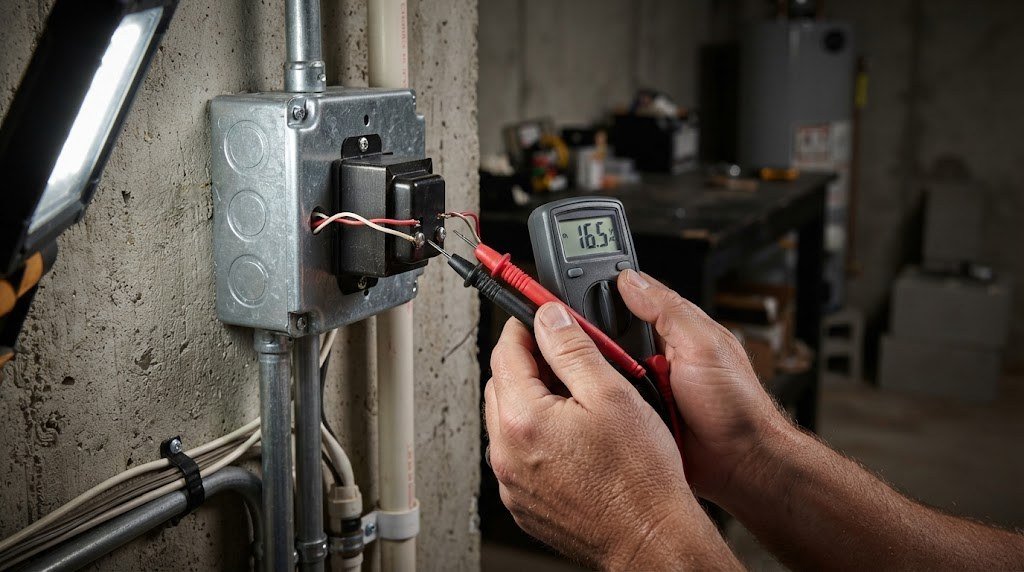
If the transformer reads 0V, check the breaker first. If the breaker is on and the transformer still reads zero, the transformer has likely failed.
Testing at the chime
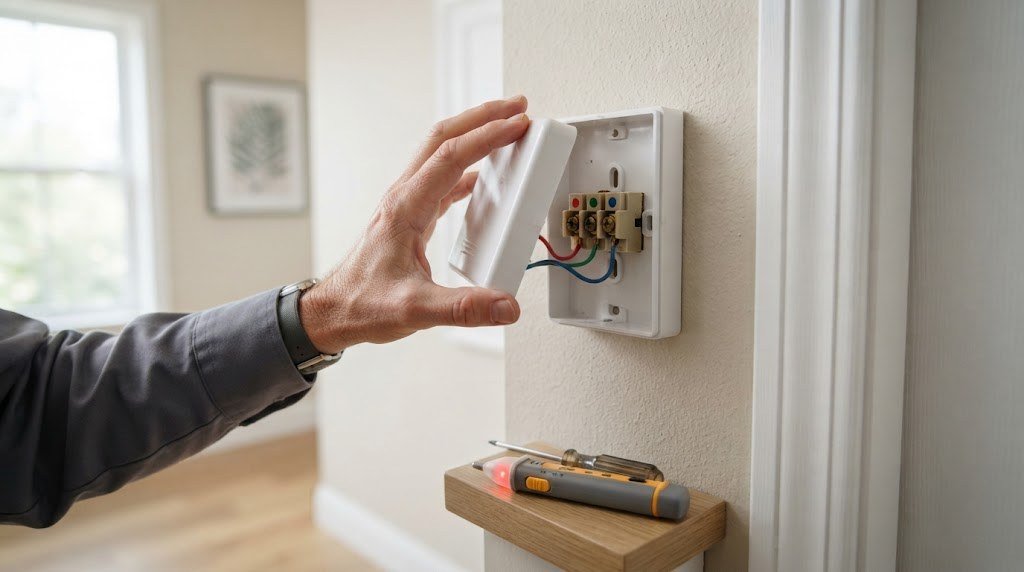
You can also test at the chime box. Remove the chime cover and measure between the Trans terminal and the Front terminal. This tells you how much voltage actually reaches the chime after running through the wires, which can reveal a broken or loose wire if the transformer itself reads fine.
How to Replace a Doorbell Transformer
Replacing a hardwired doorbell transformer is a common DIY project, but it involves 120V wiring. If you are unsure at any step, call an electrician.
What you need: New transformer with the right voltage and VA, screwdriver, wire nuts, wire stripper, voltage tester, multimeter.
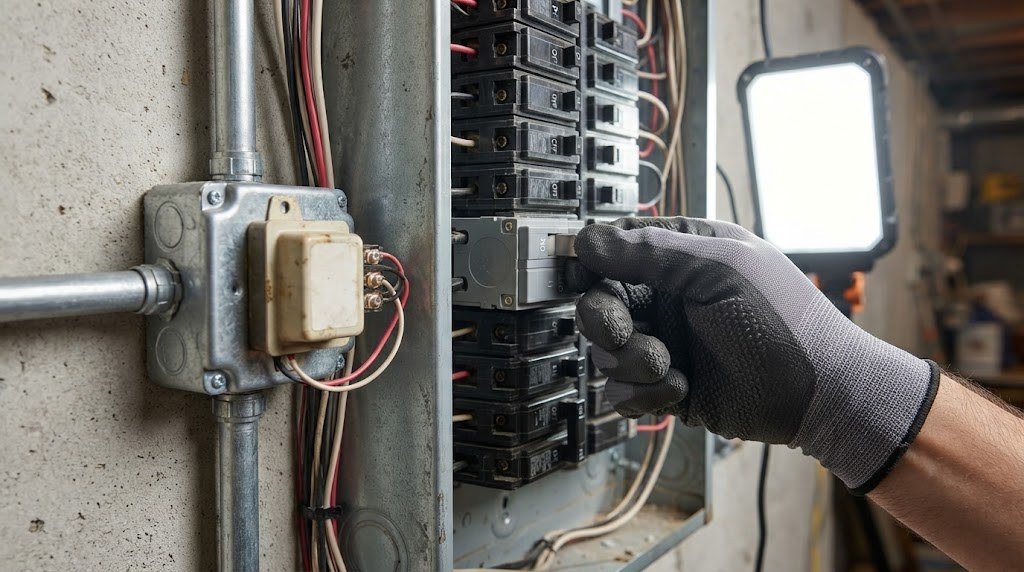
- Turn off the breaker that powers the transformer. If the breaker is not labeled, you may need to turn off the main breaker.
- Confirm the power is off with a non contact voltage tester on the transformer’s line wires.
- Take a photo of the existing wiring before disconnecting anything.
- Disconnect the low voltage wires from the two screw terminals.
- Open the junction box cover and disconnect the transformer’s line wires (usually black, white and ground) from the household wiring.
- Remove the old transformer by unscrewing it from the junction box knockout.
- Mount the new transformer in the same knockout and secure it.
- Connect the line wires inside the junction box: black to black (hot), white to white (neutral), and ground to ground, using wire nuts.
- Close the junction box and reconnect the low voltage doorbell wires to the new screw terminals.
- Turn the breaker back on and test the output with your multimeter, then press the doorbell.
No access to the transformer? Use a plug in adapter
If the transformer is buried in a wall or ceiling and hard to reach, some video doorbells can use a plug in power adapter instead. You run a thin low voltage wire from an indoor outlet to the doorbell. It is not as clean looking, but it avoids opening up walls.
Types of Doorbell Transformers
Not every doorbell transformer looks the same. Knowing the type you have makes buying a replacement much easier.
Hardwired junction box transformers
This is the most common type in North American homes. The transformer screws into a knockout on a metal junction box, with the 120V wires inside the box and the low voltage screw terminals on the outside. They are reliable and out of sight, but replacing one requires working with household wiring.
Plate mount transformers
Some transformers mount flat against a wall, stud or junction box cover with screws. They are often used when there is no convenient knockout, or in newer installations near the chime.
Plug in transformers and adapters
These plug into a standard outlet and provide low voltage through a thin cable. They are ideal for renters, apartments and homes where the original transformer is inaccessible. Many video doorbell brands sell their own branded plug in adapter.
Multi tap transformers
Some transformers offer multiple output voltages, such as 8V, 16V and 24V, from different terminal pairs. They are handy if you are not sure which voltage your chime and doorbell need, but be sure to connect to the right pair of terminals.
How to Choose the Right Doorbell Transformer
Use this quick checklist before you buy:
- Check your doorbell’s requirements. Find the minimum and maximum voltage and the minimum VA in the manual or on the manufacturer’s website.
- Check your chime. Older mechanical chimes are often rated for 10V or 16V. If you upgrade to 24V, make sure the chime can handle it, or replace the chime too.
- Count your doorbells. A home with a front and back doorbell, or a video doorbell plus a digital chime, needs more capacity. Choose 30VA or higher.
- Match the mounting style. Buy the same type (junction box, plate mount or plug in) so it fits where the old one was.
- Look for safety certification. Choose a UL listed or ETL listed transformer with built in overload protection.
- Consider distance. Very long wire runs lose some voltage. If the reading at the doorbell is much lower than at the transformer, a slightly higher voltage or thicker wire can help.
| Your setup | Recommended transformer |
|---|---|
| Old mechanical doorbell and chime | 16V, 10VA |
| One video doorbell, mechanical chime | 16V or 24V, 30VA |
| Video doorbell with digital chime | 24V, 30VA to 40VA (check doorbell limits) |
| Two doorbells (front and back) | 16V or 24V, 30VA or more |
| No access to existing transformer | Plug in adapter from the doorbell brand |
Doorbell Transformer Maintenance Tips
Doorbell transformers can last decades, but a little attention prevents surprises:
- Check connections once a year. Loose screw terminals cause intermittent ringing and power drops.
- Keep it ventilated. Do not bury the transformer under insulation in the attic.
- Watch for heat. A transformer that is too hot to touch is overloaded or failing.
- Label it. Write “doorbell transformer” on the junction box and note the breaker number so you can find it easily next time.
- Retest after upgrades. Every time you add a video doorbell, digital chime or second button, test the voltage again.
Doorbell Transformer Cost
| Item | Typical cost |
|---|---|
| Standard 16V 10VA transformer | $10 to $20 |
| Upgraded 16V or 24V 30VA transformer | $15 to $35 |
| Plug in doorbell power adapter | $15 to $30 |
| Electrician to replace transformer | Roughly $100 to $250 depending on area and access |
Prices vary by retailer and location.
Common Doorbell Transformer Problems and Fixes
| Problem | Likely cause | Fix |
|---|---|---|
| Chime hums or buzzes | Stuck button or low voltage | Check the button, test voltage |
| Video doorbell keeps rebooting | Transformer too weak | Upgrade to 30VA |
| Doorbell works only sometimes | Loose wire or corroded terminal | Tighten and clean connections |
| No power at all | Tripped breaker or dead transformer | Reset breaker, test, replace if needed |
| Transformer very hot | Overloaded or failing | Replace with a higher VA model |
| Digital chime stopped working after video doorbell install | Chime not compatible | Use the doorbell’s chime kit or diode |
Doorbell Transformer and Digital Chimes
Many video doorbells work best with mechanical chimes (the kind with a metal bar and plunger). Digital chimes that play melodies can interfere with the power a video doorbell receives. Some brands include a small adapter, diode or power kit to solve this. Check your doorbell’s instructions if your chime stops ringing or the doorbell loses power after installation.
Frequently Asked Questions
What does a doorbell transformer do?
It converts 120 volt household power into low voltage AC, typically 10 to 24 volts, to safely power your doorbell button, chime and video doorbell.
What size doorbell transformer do I need for a video doorbell?
Most video doorbells need 16 to 24 volts AC, and many recommend at least 20VA to 30VA. Always check your doorbell’s manual for its exact requirements.
How do I know if my doorbell transformer is bad?
Test it with a multimeter set to AC volts. If the reading is far below its rated voltage or zero with the breaker on, the transformer is likely failing.
Where is the doorbell transformer usually located?
Common spots include near the electrical panel, in the basement near the furnace, in the attic, in the garage, or near the chime box.
Can I replace a doorbell transformer myself?
Yes, many homeowners do, but it involves 120V wiring. Turn off the breaker, verify the power is off and follow the steps above. Hire an electrician if you are not confident.
Why does my doorbell transformer hum?
A slight hum is normal. A loud buzz can mean a stuck doorbell button, loose connections or an overloaded transformer.
Can I use a 24V transformer for my doorbell?
Only if your doorbell and chime support 24V. Many video doorbells accept 16V to 24V, but some older chimes are designed for 10V or 16V.
Final Thoughts
A doorbell transformer is small, but it decides whether your doorbell and chime work reliably. If your doorbell is silent, your chime buzzes or your video doorbell keeps restarting, test the transformer first. For most video doorbell upgrades, a 16V or 24V, 30VA transformer solves power problems for under $35. Turn off the power, test carefully, and you can usually fix the issue in under an hour.