
The smoke detector battery is the most important part of the alarm that most people never think about. When it is fresh, you never notice it. When it runs low, you get the infamous 3 a.m. chirp. And when it is missing or dead, the alarm cannot warn you at all.
This guide answers the questions people ask most about the battery for smoke detector models of every type: which battery your alarm needs, whether lithium is better than alkaline, how often to change it, how to replace it safely, and when it makes more sense to switch to a sealed 10-year alarm instead.
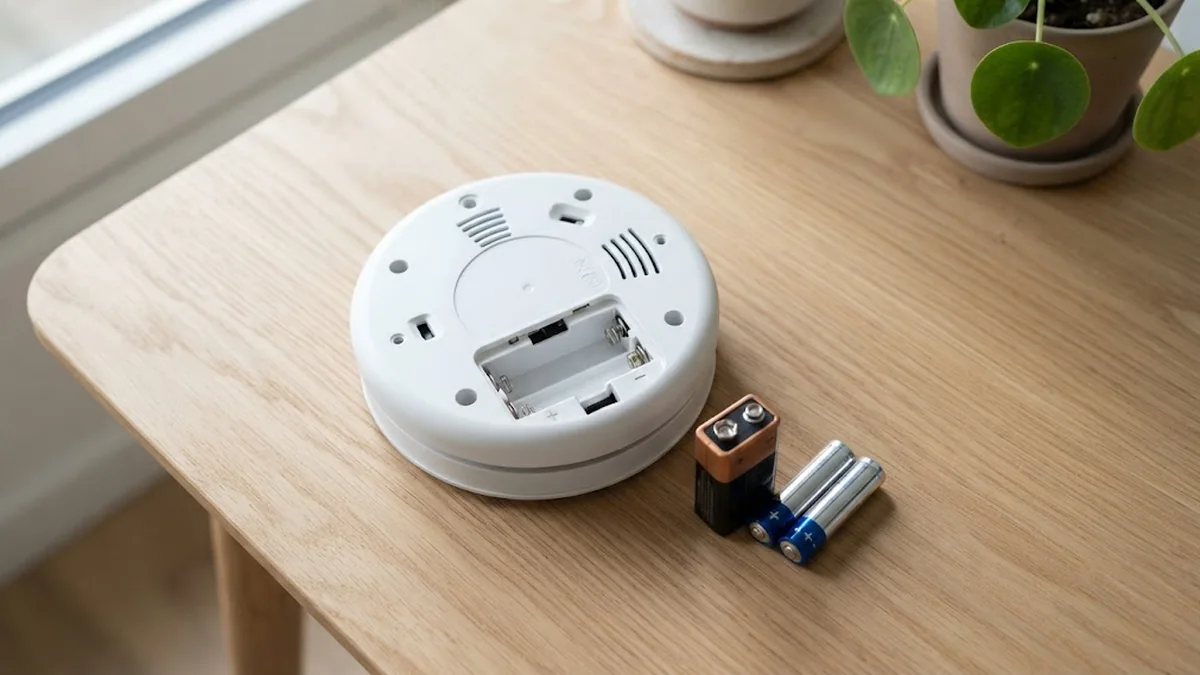
Table of Contents
- Why the Smoke Detector Battery Matters
- Which Battery Does My Smoke Detector Need?
- Lithium vs Alkaline Smoke Detector Batteries
- How Often Should You Change a Smoke Detector Battery?
- How to Change a Smoke Detector Battery
- Signs Your Smoke Detector Battery Is Low
- Hardwired Smoke Detector Backup Batteries
- Sealed 10-Year Battery Smoke Detectors
- Smoke Detector Battery Mistakes to Avoid
- Check the Label for Approved Batteries
- How to Test the Battery Properly
- How Temperature Affects Battery Life
- How to Dispose of Old Batteries Safely
- Batteries in Smart Smoke Alarms
- Smoke Alarm Batteries in Rented Homes
- Frequently Asked Questions
- Final Thoughts
Why the Smoke Detector Battery Matters
A smoke alarm is only useful if it has power. The NFPA smoke alarm guidance notes that working smoke alarms cut the risk of dying in a home fire in half. Missing, disconnected or dead batteries are one of the main reasons alarms fail when they are needed most, often because someone pulled the battery to stop a nuisance chirp and never put it back.
Even hardwired alarms rely on a battery. Their backup battery keeps them working during a power cut, which is exactly when candles, space heaters and generators raise the fire risk.
Which Battery Does My Smoke Detector Need?
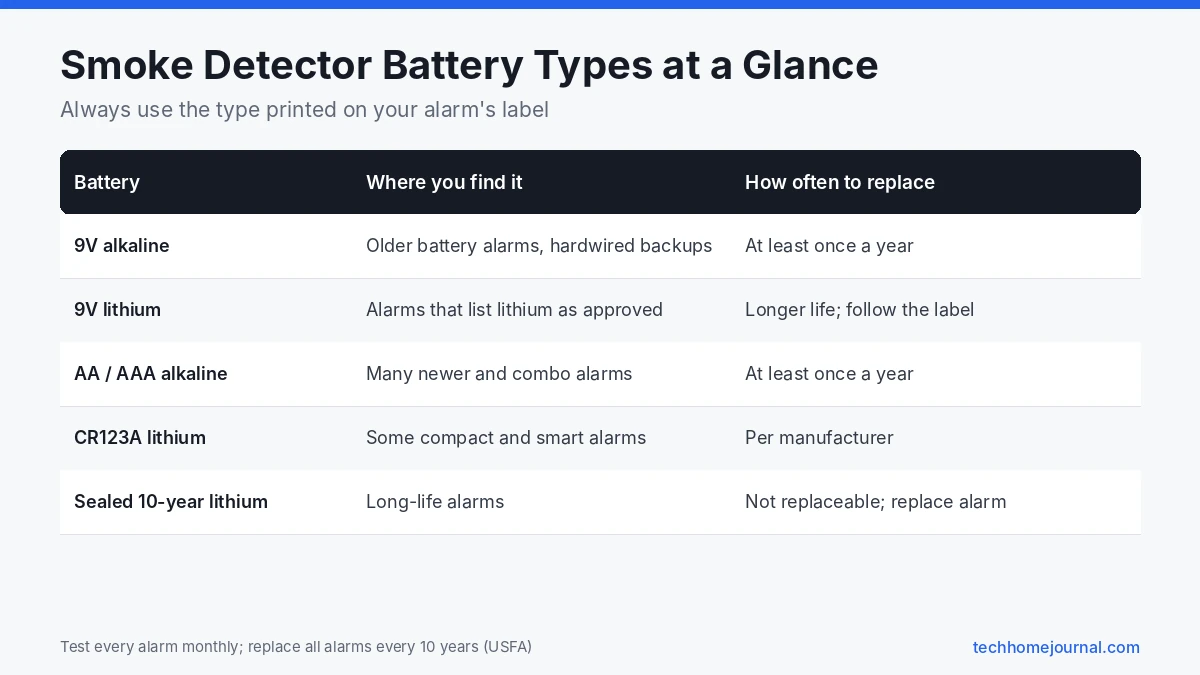
Check the label on the back of the alarm or inside the battery compartment. It lists the exact battery type, and often the approved brands. The most common types are:
| Battery type | Common in | Typical replacement |
|---|---|---|
| 9V alkaline | Older battery alarms and many hardwired backups | At least once a year |
| 9V lithium | Alarms that list lithium as approved | Longer life, but follow the label |
| AA or AAA alkaline | Many newer battery alarms and combo units | At least once a year |
| CR123A lithium | Some compact and smart alarms | Per manufacturer guidance |
| Sealed 10-year lithium | Long-life alarms | Not replaceable; replace the whole alarm at end of life |
Kidde’s battery product sheet warns that batteries are not all made to the same specifications and that using the wrong ones can affect alarm performance. That is why sticking to the type and brands listed on your alarm matters more than buying whatever is cheapest.
Lithium vs Alkaline Smoke Detector Batteries
Lithium 9V batteries last much longer than alkaline ones and handle cold attics and garages better. They cost more up front, but you change them less often.
Before you switch, check two things:
- Is lithium approved for your alarm? Many alarms list specific alkaline and lithium batteries. If yours only lists alkaline, use alkaline.
- Will you still check it every month? A longer life battery is not an excuse to skip the monthly test.
Avoid rechargeable batteries unless the manual allows them. Rechargeable cells often run at a slightly lower voltage and can drop off suddenly, which may trigger chirping or leave the alarm without enough power.
How Often Should You Change a Smoke Detector Battery?
The US Fire Administration gives clear guidance:
- Alarms with replaceable 9V batteries: replace the battery at least once a year.
- Hardwired alarms: replace the backup battery at least once a year.
- 10-year sealed lithium alarms: the battery cannot be replaced; replace the whole alarm according to the manufacturer.
- All alarms: test monthly and replace the entire unit every 10 years.
Many families tie the battery change to a date they will remember, such as when the clocks change in spring or fall, or a birthday. Write the date on the battery with a marker so you never have to guess.
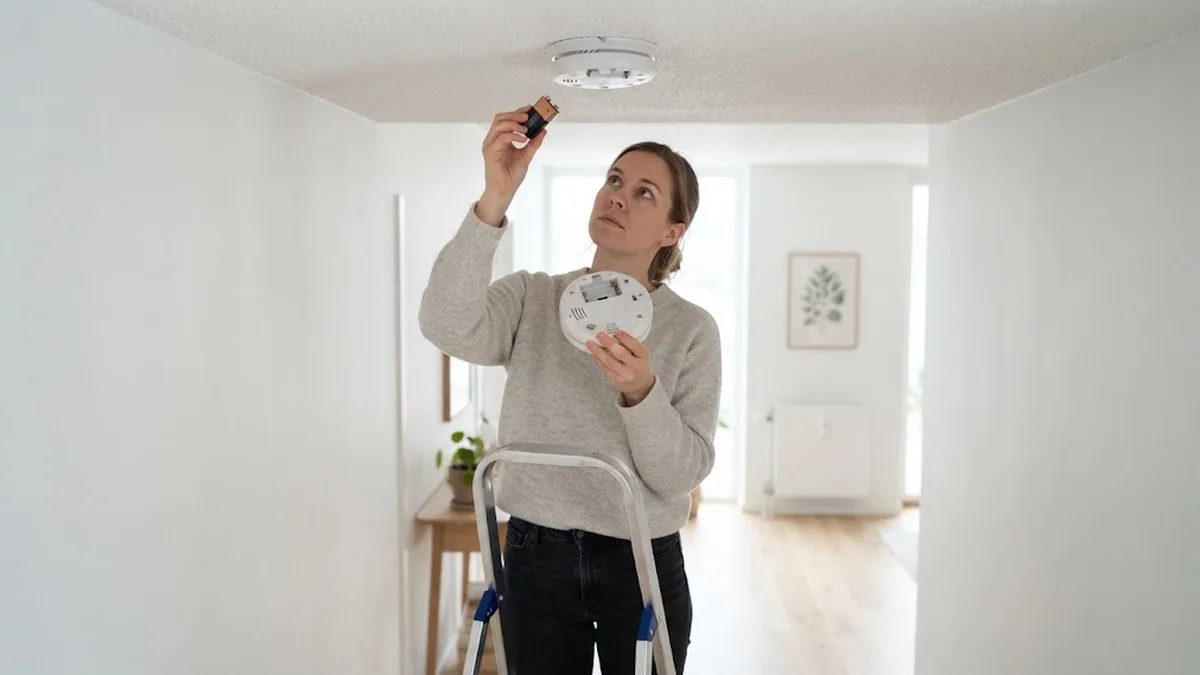
How to Change a Smoke Detector Battery
- Warn everyone in the house. Testing will set off a loud alarm.
- Use a sturdy step stool or ladder. Most falls during battery changes happen from chairs.
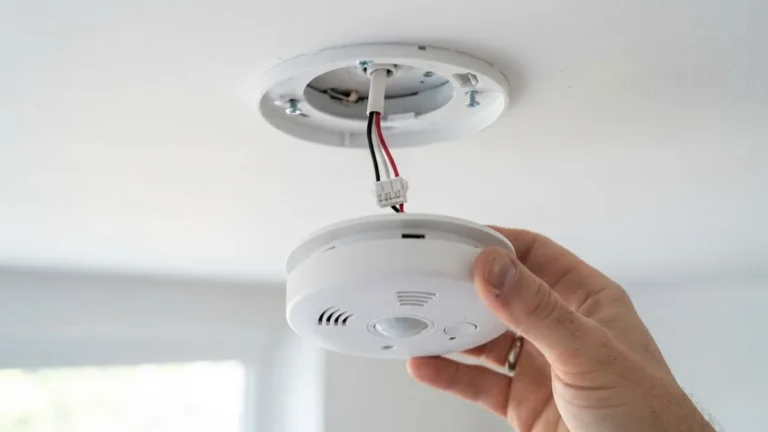
- Twist the alarm off its base, usually counterclockwise. For hardwired alarms, unplug the connector or turn off the breaker first if the manual says so.
- Open the battery door or drawer and remove the old battery.
- Insert the new battery, matching the plus and minus markings. Make sure the drawer clicks fully closed; many alarms will not mount on the base if it is open.
- Reattach the alarm and reconnect power.
- Press and hold the Test button until the alarm sounds.
If the alarm still chirps after a new battery, hold the Test button for 15 to 20 seconds with the battery removed to drain leftover charge, then reinstall. Our guide to smoke detector beeping covers other causes, such as an alarm that has reached its end of life.
Signs Your Smoke Detector Battery Is Low
Most alarms warn you well before the battery is empty:
- A single chirp every 30 to 60 seconds. Kidde’s chirping support page says a low battery chirp typically repeats every 30 to 40 seconds for at least seven days.
- A chirp that starts at night. Batteries lose voltage as the house cools, so a weak battery often gives up in the early hours.
- A flashing amber or red light paired with the chirp on some models.
- A phone notification if you have a smart alarm.
First Alert’s beep pattern guide adds that a chirp which continues after a fresh battery usually means the battery is not seated correctly or the alarm has reached its end of life. If small children live in the home, keep spare batteries out of reach; our tips for childproofing a smart home cover safe storage ideas.
Hardwired Smoke Detector Backup Batteries
Hardwired alarms run on household power and are often interconnected so they all sound together. Their backup battery:
- Keeps the alarm working during power cuts.
- Usually is a 9V or AA, or a sealed lithium cell in newer units.
- Triggers a low battery chirp just like a battery only alarm.
Replace it on the same yearly schedule. If one hardwired unit chirps, check that unit’s battery first, but remember that the chirp can bounce around hallways. Stand under each alarm and wait for the next chirp to find the right one.
Sealed 10-Year Battery Smoke Detectors
Sealed alarms have a lithium battery built in for the life of the unit. You never change the battery; when it runs down after about 10 years, the alarm chirps to tell you to replace the whole thing.
Pros:
- No yearly battery changes.
- Nobody can borrow the battery for the TV remote.
- The battery and the sensor wear out at about the same time.
Cons:
- Higher price per alarm.
- You must replace the entire alarm when the battery runs out.
Many local codes now require sealed 10-year batteries for new battery-only alarms, so check your local rules if you are replacing several units. Smart alarms are another option; they send a phone alert for low batteries and real alarms. See our list of the best smart smoke detectors and our smart carbon monoxide detector guide if you want combined protection.
Smoke Detector Battery Mistakes to Avoid
- Pulling the battery to stop a chirp. Replace it instead, the same day.
- Using the wrong type. Always match the label.
- Mixing old and new batteries in alarms that take more than one.
- Ignoring the manufacture date. A new battery will not fix an alarm that is over 10 years old.
- Painting over or covering the alarm. This blocks the sensor.
- Forgetting the backup in hardwired alarms.
For more low cost ways to keep your home safe, read our budget home security tips and our ideas for home automation for safety.
Check the Label for Approved Batteries
Most smoke alarms list the exact battery types they were tested with, printed on the back of the alarm or inside the battery compartment. Safety standards require alarms to be tested with specific batteries, so these are the ones the manufacturer knows will give accurate low-battery warnings.
- Use a battery from that list whenever possible, especially for 9V alarms.
- If the label lists alkaline only, don’t assume a lithium battery is better. It may change how the low-battery warning behaves.
- If the label is unreadable, check the model number in the manufacturer’s manual online.
How to Test the Battery Properly
Pressing the test button is the main check, but it’s worth knowing what it does and doesn’t tell you:
- Press and hold the test button for a few seconds. A loud alarm means the battery, horn and circuit are working.
- If the sound is weak or short, replace the battery even if it hasn’t started chirping.
- Use a battery tester or multimeter if you want to check a spare battery before fitting it. A 9V battery reading well below its rated voltage is near the end of its life.
- Test monthly, and after any long holiday or power cut.
The test button checks the electronics and horn, not the smoke sensor itself. An alarm past its 10-year life can still beep on test but react poorly to real smoke, so check the manufacture date too.
How Temperature Affects Battery Life
Batteries don’t like extremes. An alarm in a cold garage, unheated loft or hot attic can drain its battery faster or give early low-battery chirps. Many alarms chirp in the early morning, when the house is coldest and battery voltage drops slightly. If an alarm keeps chirping only at night, a fresh battery usually fixes it. For spaces that get very hot or cold, consider a heat alarm instead, which is designed for those conditions.
How to Dispose of Old Batteries Safely
- Put tape over the terminals of 9V batteries before storing or recycling them. Touching terminals together, or against keys or coins, can cause sparks or heat.
- Take lithium and alkaline batteries to a battery recycling point. Many supermarkets and DIY stores have collection boxes.
- Sealed 10-year alarms should be recycled as electronic waste when they reach end of life. Follow the maker’s instructions for disabling the battery first, which usually means twisting off the base or pressing a deactivation switch.
- Never throw lithium batteries in household rubbish, where they can start fires in bin lorries and recycling centres.
Batteries in Smart Smoke Alarms
Smart smoke alarms work a little differently. Because they use Wi-Fi or a wireless mesh to talk to your phone, battery life depends on the model and how it connects.
- Many smart alarms send a phone notification when the battery is getting low, often weeks before it chirps.
- Some use AA batteries, others use sealed long-life batteries. Check the specs before buying so you know what maintenance to expect.
- Hardwired smart alarms still have a backup battery for power cuts.
- Listener devices that hear your existing alarms and send alerts have their own power needs, usually a plug-in supply.
If you also want carbon monoxide alerts on your phone, our guide to smart carbon monoxide detectors covers combined options.
Smoke Alarm Batteries in Rented Homes
Rules differ by country, state and city, but the general pattern is similar. Landlords usually have to provide working smoke alarms when a tenancy starts. Tenants are often expected to test them and replace batteries during the tenancy. Some areas now require sealed 10-year battery alarms in new installations, which removes battery changes altogether.
If you rent, check your tenancy agreement and local fire service guidance. Tell your landlord straight away if an alarm is damaged, expired or keeps sounding after a new battery. Never remove the battery to stop chirping without replacing it.
Frequently Asked Questions
What battery goes in a smoke detector?
It depends on the model. Most use a 9V or AA battery, and some newer models have a sealed lithium battery. The correct type is printed on the alarm.
How long does a smoke detector battery last?
Alkaline batteries usually last about a year in a smoke alarm, which is why the US Fire Administration recommends yearly replacement. Lithium batteries last longer, and sealed alarms last about 10 years.
Can I use a lithium 9V battery in any smoke detector?
Only if your alarm’s label or manual lists lithium as approved. Some alarms are designed for alkaline batteries only.
Why does my smoke detector chirp with a new battery?
The battery may be the wrong type, not fully seated, or the alarm may be holding leftover charge or be past its end of life. Reseat the battery, hold Test for 15 to 20 seconds, and check the manufacture date.
Do hardwired smoke detectors need batteries?
Most do, as a backup during power cuts. Replace the backup battery yearly unless it is a sealed 10-year model.
Can I use rechargeable batteries in a smoke detector?
It is not recommended unless the manufacturer allows it. Rechargeables can lose power suddenly and may not provide the right voltage.
Why does my smoke detector chirp at night with a new battery?
Night-time chirps are often caused by colder temperatures lowering battery voltage. If it continues with a fresh, approved battery, the alarm may have reached end of life or need a reset by holding the test button for 15 to 20 seconds.
Are lithium 9V batteries worth the extra cost?
They can last much longer than alkaline batteries, which means fewer changes. Only use them if your alarm’s label lists them as approved.
How do I stop a smoke detector chirping after changing the battery?
Make sure the battery is fully seated and the compartment door is closed. Then press and hold the test button for 15 to 20 seconds to clear the alarm’s memory. If it still chirps, try a different approved battery or check whether the alarm is past its 10-year life.
Should I change all smoke detector batteries at the same time?
Yes, it’s a good habit. Changing every battery on the same day, such as when the clocks change, means you don’t have alarms chirping one after another over the following weeks.
Can a dead battery stop a hardwired smoke alarm from working?
A hardwired alarm still works on mains power with a flat backup battery, but it will chirp and won’t protect you during a power cut. Replace the backup battery as soon as it chirps.
Final Thoughts
The right smoke detector battery is the one printed on your alarm. Change replaceable batteries at least once a year, test every alarm monthly, and replace the whole alarm every 10 years. If yearly battery swaps are a chore, sealed 10-year or smart alarms take most of the work out of it, but whichever you choose, never leave an alarm without power.