
It is 3 a.m., the house is silent, and then you hear it: a single, sharp chirp. You wait. Forty seconds later, it happens again. A beeping smoke detector is one of the most annoying sounds in any home, but it is also your alarm trying to tell you something specific. The good news is that almost every case has a simple cause and a fix that takes less than ten minutes.
This guide explains exactly why your smoke detector is beeping, how to read the different beep and chirp patterns, and how to stop the noise safely, whether you have a battery-only unit, a hardwired alarm or a smart smoke detector. Everything here is based on manufacturer guidance from First Alert and Kidde and fire-safety advice from the U.S. Fire Administration.
Table of Contents
- Quick Answer: Why Is My Smoke Detector Beeping?
- Chirp vs. Full Alarm: Know the Difference First
- Smoke Detector Beep Patterns Decoded
- 9 Reasons Your Smoke Detector Is Beeping
- How to Stop a Smoke Detector From Beeping
- Hardwired Smoke Detector Beeping? Do This
- Why Smoke Detectors Chirp at Night
- Still Chirping After a New Battery?
- How to Prevent False Alarms
- Should You Upgrade to a Smart Smoke Detector?
- FAQ
- Final Verdict
Quick Answer: Why Is My Smoke Detector Beeping?
If your smoke detector gives one short chirp every 30 to 60 seconds, the cause is almost always a low battery. Replace the battery, hold the Test button for 15 to 20 seconds to clear any leftover charge, and the chirping should stop. If it keeps chirping with a fresh battery, the alarm has most likely reached the end of its life (around 10 years) and the whole unit needs replacing.
If your alarm is making a loud, continuous pattern of three beeps, that is not a maintenance warning. It is a smoke alarm. Get everyone out first and troubleshoot later.
- One chirp every 30-60 seconds: low battery (most common)
- Chirp every 30 seconds with a sealed battery: end of life, replace the unit
- Chirping after a battery change: residual charge, loose battery or open battery drawer
- Random beeping or short alarms: dust, insects, steam or humidity in the sensor
- 3 loud beeps repeating: smoke detected, evacuate
- 4 loud beeps repeating: carbon monoxide detected (combo alarms), get fresh air and call 911
Chirp vs. Full Alarm: Know the Difference First
Before you grab a ladder, it is worth knowing which sound you are dealing with. According to First Alert, a chirp is a short, intermittent sound that usually points to a power or maintenance issue. A full alarm is a loud, repeating sound that signals smoke or fire.
The difference matters because the right response is completely different. A chirp is a to-do item. A full alarm is an emergency. The U.S. Fire Administration warns that once an alarm sounds, you may have less than two minutes to get everyone safely outside. Never assume a full alarm is false until you have checked every room.
Smoke Detector Beep Patterns Decoded
Beep and light patterns vary by brand and model, so your user manual (or the model number on the back label) is the final word. That said, most alarms in the U.S. follow very similar patterns. Use this table as a starting point:
| Sound / Pattern | What It Usually Means | What to Do |
|---|---|---|
| 1 chirp every 30-60 seconds | Low battery | Replace the battery and test |
| 1 chirp every 30 seconds (sealed 10-year battery) | End of life | Replace the entire alarm |
| 3 loud beeps, pause, repeat | Smoke detected (fire alarm) | Get out, call 911 |
| 4 loud beeps, pause, repeat | Carbon monoxide detected (combo alarm) | Get to fresh air, call 911 |
| Chirp every 30-40 seconds for ~7 minutes | Hush/silence mode active (Kidde) | Wait, it will reset on its own |
| Chirps between red LED flashes | Malfunction or fault (Kidde) | Press Test for 2 seconds, replace if no sound |
| Random beeps or short alarms | Dust, insects, steam or humidity | Clean the alarm, move it if needed |
| All interconnected alarms beeping | One alarm triggered the whole network | Find the initiating alarm (fastest-blinking LED) |
Kidde’s own support page on consistent chirping causes confirms many of these patterns, including the low-battery chirp every 30 to 40 seconds (60 seconds on some models) that can continue for at least seven days.
9 Reasons Your Smoke Detector Is Beeping
1. The Battery Is Low
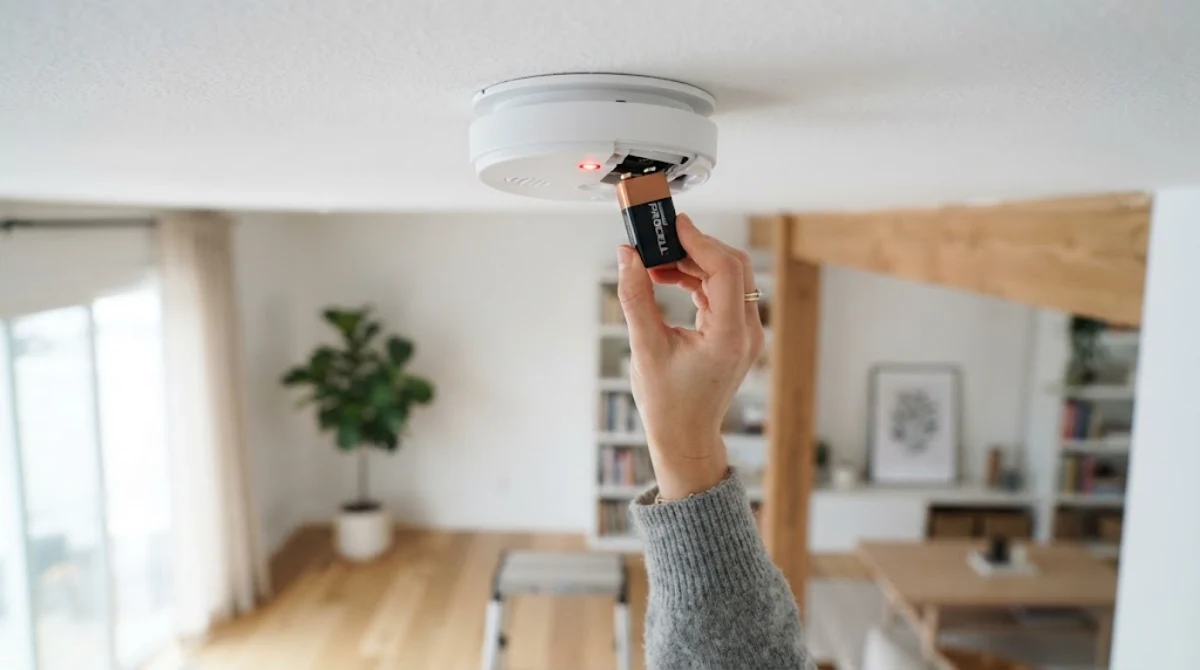
This is the cause in the vast majority of cases. Smoke alarms are designed to give you plenty of warning, so they start chirping well before the battery is completely dead. The chirp is short and spaced out, usually every 30 to 60 seconds. Replace the battery with the exact type listed on the alarm (most often a 9V or AA). The U.S. Fire Administration recommends replacing standard 9-volt batteries at least once a year, even if they are not chirping yet.
2. The Alarm Has Reached End of Life
Smoke detector sensors lose sensitivity over time. Both First Alert and the U.S. Fire Administration say to replace the entire alarm every 10 years from the manufacture date. Many newer alarms with sealed lithium batteries are built to chirp every 30 seconds when they reach that point, and you cannot fix it with a new battery. Check the date printed on the back of the unit. If it is close to or past 10 years, or the label is missing, replace it.
3. The Battery Drawer Is Not Fully Closed
A very common mistake after a battery swap. If the battery door or drawer is not snapped completely shut, or the battery is loose or in backwards, the alarm will keep chirping. Open it, check the + and – polarity, push the battery firmly into place, and close the drawer until it clicks.
4. Leftover Charge After a Battery Change
Smoke detectors can hold a small residual charge that keeps an old low-battery error stored in memory. That is why an alarm sometimes keeps chirping even with a brand-new battery. The fix is a reset: remove the battery, hold the Test/Silence button for 15 to 20 seconds, then reinstall the battery. We cover the full process in the step-by-step section below.
5. Dust, Debris or Insects in the Sensor
Smoke alarms work by detecting particles in a small sensing chamber. Dust, cobwebs, drywall dust from renovation work and tiny insects can get inside and confuse the sensor, triggering random beeps or short false alarms. A gentle vacuum with a soft brush attachment around the vents, or a few short bursts of canned air, usually solves it.
6. Steam, Humidity or Cooking Smoke
Steam from a hot shower or a boiling pot can look a lot like smoke to a sensor, especially ionization-type alarms. If your alarm goes off every time you cook or shower, it is likely placed too close to the kitchen or bathroom. The fix is usually ventilation, or moving the alarm a few feet further away (more on placement below).
7. Temperature Swings
Cold air affects batteries. Kidde explains that as a battery weakens, its internal resistance rises, and cooler air raises it even more, which can trigger the low-battery chirp. Kidde notes its alarms are designed to work between 40°F and 100°F, so an alarm in a cold garage, attic or unheated room may chirp more often.
8. A Power Issue on a Hardwired Alarm
Hardwired alarms run on household power with a backup battery. A power outage, a surge, a tripped breaker or a loose wiring connection can all cause chirping. Very often the real issue is simply a dead backup battery that nobody has changed in years.
9. It Is Actually a Carbon Monoxide Warning
If you have a combination smoke and CO alarm, some of the beeping you hear may come from the CO side. Kidde says its CO alarms chirp once every 60 seconds for a low battery and reach end of life about seven years after first power-up. A repeating pattern of four loud beeps means carbon monoxide has been detected. Treat that as an emergency. If you are thinking about adding dedicated CO protection, read our smart carbon monoxide detector buying guide.
How to Stop a Smoke Detector From Beeping (Step-by-Step)
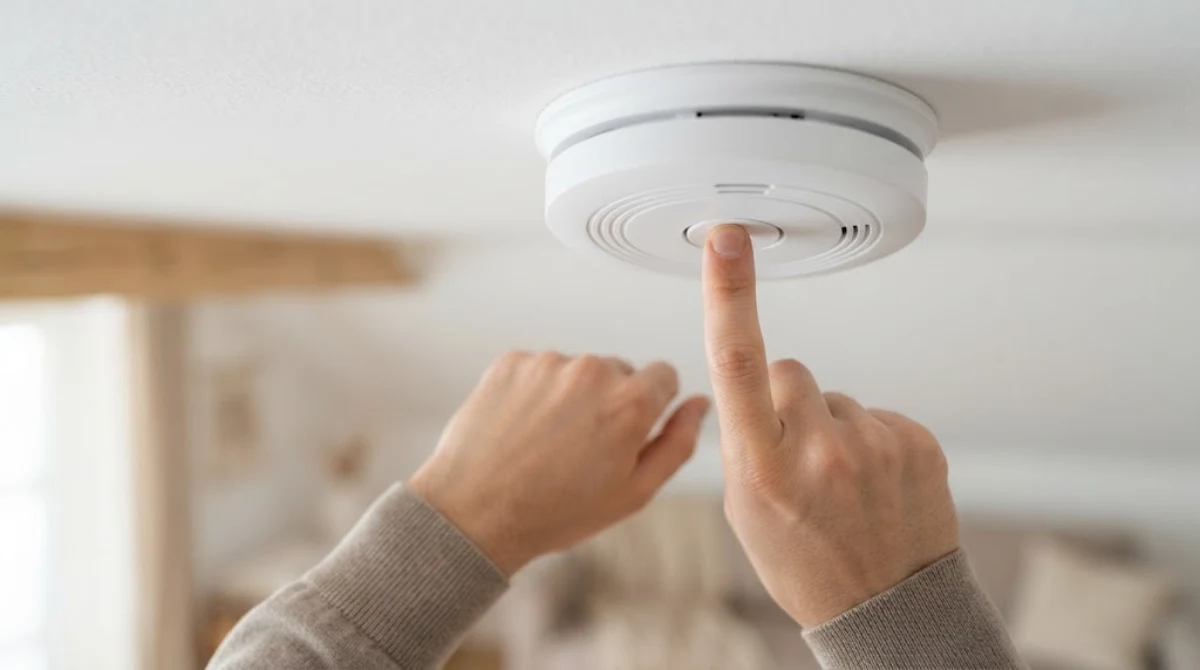
Here is the reset process for a battery-powered smoke detector, based on First Alert’s official reset instructions. The steps are very similar for most brands.
- Confirm there is no fire. Check every room quickly. Only troubleshoot when you are sure the home is safe.
- Find the chirping alarm. Stand under each alarm and wait for the next chirp. A phone camera or a second person helps in larger homes.
- Remove the alarm from its bracket. Most twist counter-clockwise off the ceiling plate.
- Take out the battery. Note the battery type printed inside the compartment.
- Hold the Test/Silence button for 15 to 20 seconds. This drains residual charge and clears stored errors. The alarm may sound briefly. That is normal.
- Insert a fresh battery of the correct type, checking + and – polarity.
- Close the battery drawer fully until it clicks, then reattach the alarm to its bracket.
- Press the Test button to confirm a loud alarm sounds. If it is silent, replace the unit.
Pro tip: if one alarm needs a battery, the others in your home were probably installed at the same time. Changing all of them together saves you from another 3 a.m. chirp next week.
Hardwired Smoke Detector Beeping? Do This
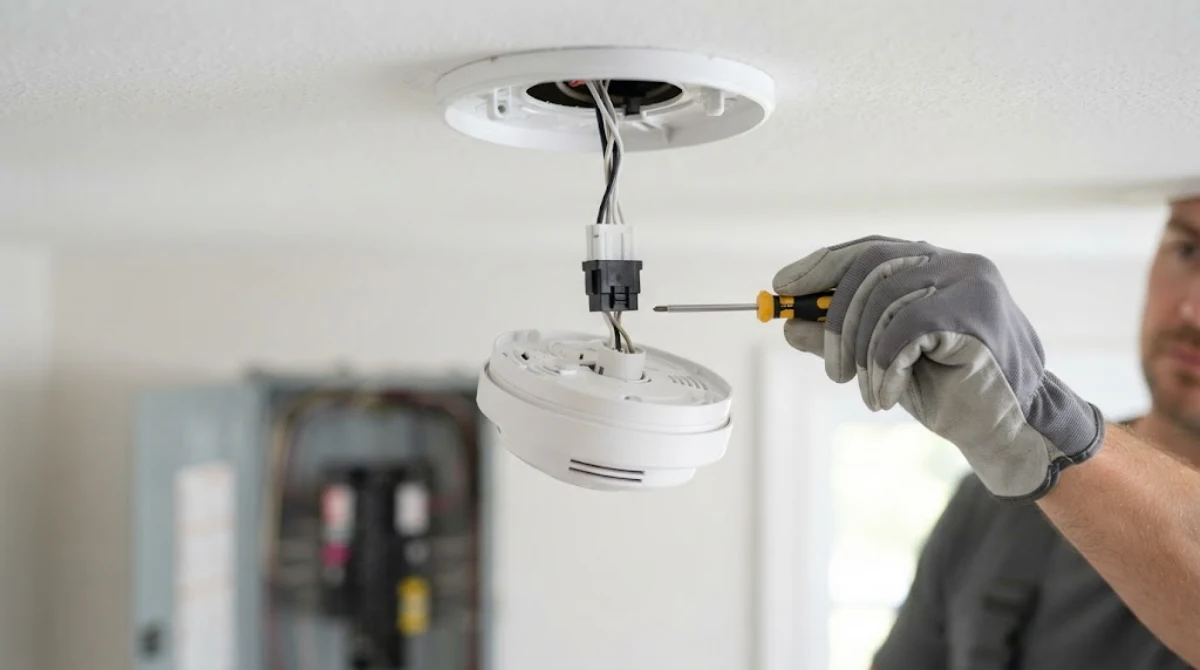
Hardwired alarms add one extra step: you need to cut the power before you reset them. Here is the process First Alert recommends:
- Turn off power to the alarm at the circuit breaker.
- Twist the alarm off its mounting bracket and unplug the wiring harness connector (if your model has one).
- Remove the backup battery.
- Hold the Test/Silence button for 15 to 20 seconds.
- Reconnect the harness, install a fresh backup battery and reattach the alarm.
- Turn the breaker back on. The green power light should come on.
- Press Test to confirm it works.
If you have interconnected alarms and they all start beeping at once, look for the one with the fastest-blinking red LED. That is usually the alarm that started it. Unless you are comfortable with electrical work, leave wiring repairs and new hardwired installations to a licensed electrician, which is also what the U.S. Fire Administration advises.
Why Smoke Detectors Chirp at Night
It is not your imagination. Smoke detectors really do seem to pick 2 a.m. to start chirping, and there is a simple reason. According to Kidde, most homes are coolest between 2 a.m. and 6 a.m. As the temperature drops, a weak battery’s internal resistance rises just enough to trigger the low-battery warning. Once the house warms up a few degrees in the morning, the chirp often stops, which is why it can feel like the problem fixed itself.
It did not. A chirp that stops during the day is still a battery that is about to fail. Replace it the same day. If chirping at night drives you crazy, consider moving to alarms with sealed 10-year lithium batteries, which remove yearly battery swaps entirely.
Still Chirping After a New Battery? Here’s Why
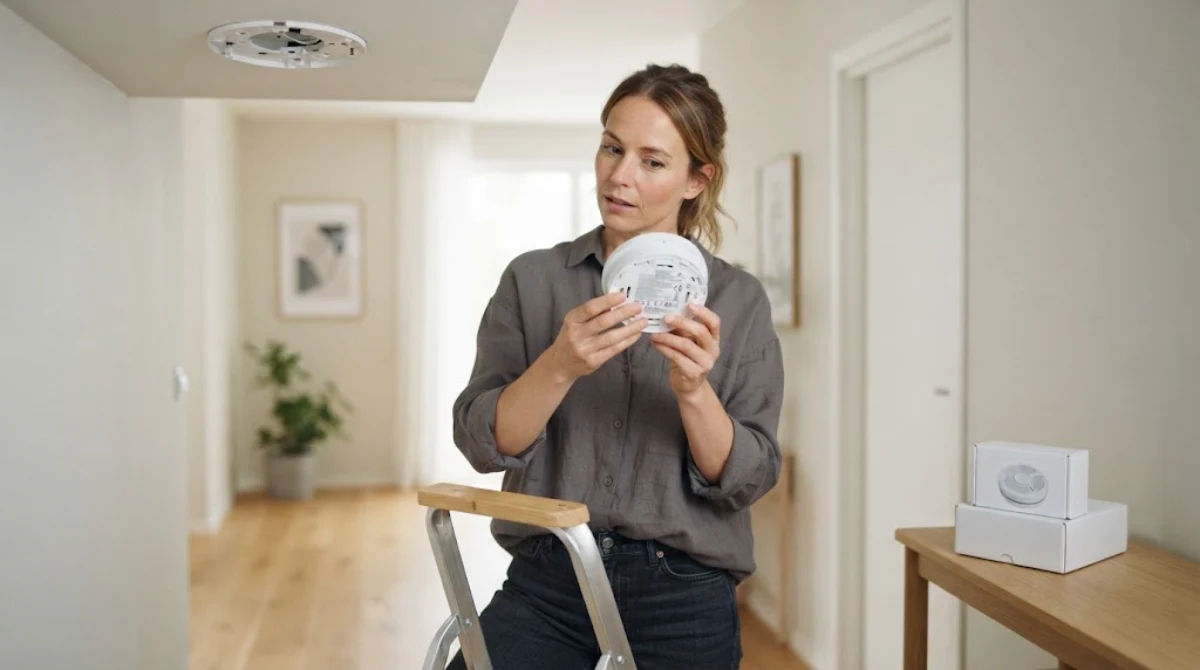
This is one of the most searched smoke detector problems, and it almost always comes down to one of five things:
- You changed the wrong alarm. Sound bounces off hallways and ceilings. Double-check which unit is chirping.
- The alarm was not reset. Remove the battery again and hold Test for 15 to 20 seconds.
- The battery is not seated properly or the drawer is not fully closed.
- The “new” battery is old. Batteries that sat in a drawer for years may already be weak. Use a fresh pack, and do not use rechargeable batteries unless your manual allows them.
- The alarm has expired. Check the manufacture date. If it is around 10 years old, no battery will fix it.
When in doubt, replacing the alarm is inexpensive compared with the protection it gives you. The National Fire Protection Association notes that working smoke alarms cut the risk of dying in a home fire in half.
How to Prevent False Alarms and Random Beeping
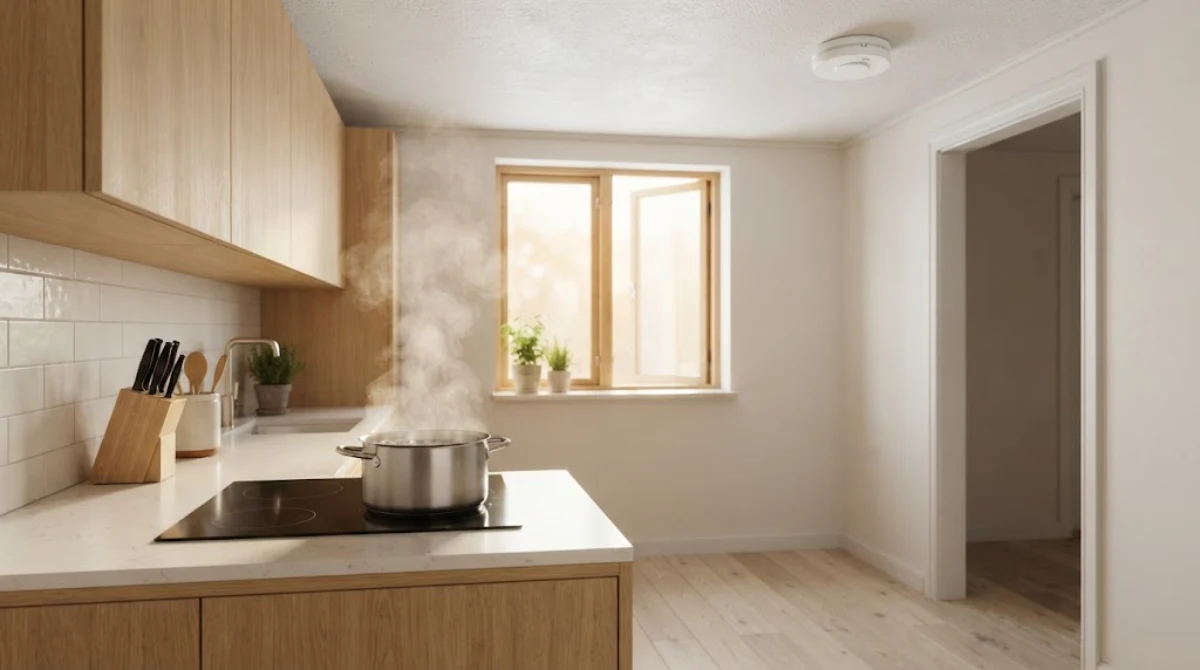
False alarms are the main reason people pull batteries out of their smoke detectors, which is exactly what fire departments warn against. A few simple habits keep your alarms quiet and working:
- Place alarms away from kitchens and bathrooms. The U.S. Fire Administration suggests moving an alarm that keeps going off a few feet further from the kitchen or bathroom.
- Ventilate while cooking. Run the range hood and crack a window. If the alarm sounds, press Hush and wave a towel, but never remove the battery.
- Clean alarms regularly. Vacuum around the vents every few months to clear dust and insects.
- Avoid drafty spots. Keep alarms away from windows, ceiling fans and HVAC vents, which can push dust into the sensor.
- Test monthly. Press the Test button once a month so you know every alarm still works.
- Choose the right sensor type near the kitchen. Photoelectric alarms are generally less prone to cooking-related nuisance alarms than ionization models.
If you have small children at home, alarm placement and testing are even more important. Our guide on how to childproof your smart home setup covers more safety habits for families.
Should You Upgrade to a Smart Smoke Detector?
If you are tired of guessing which alarm is chirping, a smart smoke detector is worth a look. Smart alarms send a notification to your phone that tells you which room has a low battery or detected smoke, and many can alert you when you are away from home. That is useful if you travel, have elderly parents, or own a rental property.
One important update: Google discontinued the Nest Protect in 2025 and partnered with First Alert for its next-generation smart alarms. If you are shopping now, see our roundup of the best smart smoke detectors after Nest Protect. You can also connect alarms to a broader system. Our guide to the best home alarm systems covers monitored options, and our list of home monitoring apps shows how to keep an eye on everything from your phone.
For a minimalist, Scandinavian-style living room, a slim white smart alarm blends into the ceiling almost invisibly, and it removes the need for loud ladder-and-battery sessions in the middle of the night. If you are building out your setup step by step, our home automation for safety ideas and smart home security tips are good next reads.
Frequently Asked Questions
Why is my smoke detector beeping every 30 seconds?
A single chirp every 30 to 60 seconds usually means a low battery. If the alarm has a sealed 10-year battery and chirps every 30 seconds, it has reached the end of its life and the whole unit needs replacing.
Why is my smoke detector beeping with no smoke?
Random beeping without smoke is usually caused by dust or insects in the sensor, steam or humidity from a nearby bathroom or kitchen, a loose battery, or an old alarm. Clean the vents, check the battery and reset the unit.
How do I stop my smoke detector from chirping?
Replace the battery, then hold the Test/Silence button for 15 to 20 seconds with the battery removed to clear residual charge. Reinstall the battery, close the drawer fully and press Test. For hardwired alarms, turn off the breaker first.
Why does my smoke detector chirp only at night?
Homes are usually coolest between 2 a.m. and 6 a.m. Cooler air raises a weak battery’s internal resistance, which triggers the low-battery chirp. It often stops when the house warms up, but the battery still needs replacing.
Can I just take the battery out to stop the beeping?
You can remove it briefly to reset the alarm, but never leave an alarm without power. Fire safety agencies warn that disabled smoke alarms are a leading factor in home fire deaths. Replace the battery or the alarm the same day.
How often should smoke detectors be replaced?
Replace every smoke alarm 10 years after the manufacture date printed on the back, or sooner if you do not know its age. Standard 9-volt batteries should be replaced at least once a year.
Why are all my smoke detectors beeping at once?
Interconnected alarms sound together when one detects smoke or a fault. Look for the alarm with the fastest-blinking red LED, which is usually the one that started it, and check that unit first.
Final Verdict
A beeping smoke detector is almost never a mystery. A single chirp every 30 to 60 seconds means low battery. A chirp that does not stop after a fresh battery and a reset means the alarm is near its 10-year limit. Three loud beeps mean smoke, and four mean carbon monoxide, so get out first.
Fix it the same day: swap the battery, hold the Test button for 15 to 20 seconds, check the manufacture date and replace anything that is a decade old. Then test every alarm once a month. It takes a few minutes, and it is one of the simplest things you can do to protect your home and family.