
A washing machine usually gives you warning signs before it fails completely. A new grinding noise, a puddle on the floor, clothes that come out soaking wet: each one is a clue. Catch the problem early and it’s often a cheap fix. Ignore it and you could be dealing with water damage or a machine that’s beyond saving.
This guide covers the most common signs your washing machine needs repair or replacement, what usually causes each one, which fixes you can safely try yourself, and how to decide whether repairing is worth it or it’s time for a new washer.
Safety first: Always unplug the washer and turn off the water supply before inspecting hoses, filters or internal parts. If you’re not confident, call a qualified appliance technician.
Table of Contents
- Quick Diagnosis Table
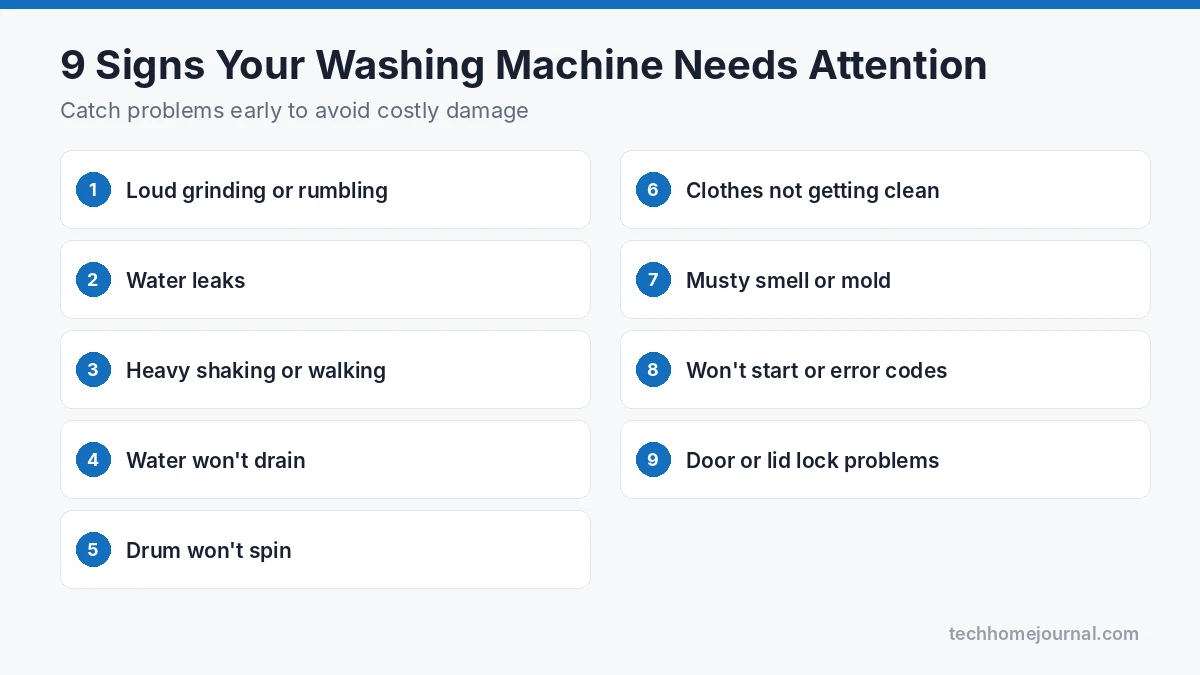
- Sign 1: Loud or Unusual Noises
- Sign 2: Water Leaks
- Sign 3: Excessive Shaking and “Walking”
- Sign 4: Water Won’t Drain
- Sign 5: Drum Won’t Spin
- Sign 6: Clothes Aren’t Getting Clean
- Sign 7: Bad Smells and Mold
- Sign 8: Won’t Start or Shows Error Codes
- Sign 9: Door or Lid Problems
- Repair or Replace? How to Decide
- How to Make Your Washer Last Longer
- Are Smart Washers Worth It?
- Washer Maintenance Schedule
- Frequently Asked Questions
- Final Verdict
Quick Diagnosis Table
| Symptom | Common causes | DIY fix? |
|---|---|---|
| Grinding or rumbling noise | Worn drum bearings, foreign object | Object yes; bearings usually pro |
| Leaking water | Loose or cracked hose, door seal, pump | Hoses and seal often yes |
| Violent shaking | Unbalanced load, uneven feet, worn shocks | Yes for load and leveling |
| Won’t drain | Clogged filter or hose, failed pump | Filter and hose yes |
| Won’t spin | Unbalanced load, lid switch, belt, motor | Sometimes |
| Clothes not clean | Overloading, wrong detergent, buildup | Yes |
| Musty smell | Mold in seal or drum, wet door left shut | Yes |
| Won’t start / error code | Door lock, power, control board | Check basics, then pro |
Sign 1: Loud or Unusual Noises
Every washer makes some noise, especially on the spin cycle. What you’re listening for is a change: grinding, banging, squealing or a loud rumble that wasn’t there before.
- Rattling or clicking: Often a coin, button, hair clip or underwire stuck between the drum and tub or in the drain pump. Check pockets before washing, and inspect the pump filter.
- Loud rumbling or roaring during spin: A classic sign of worn drum bearings. Bearings can be replaced, but it’s a big job and on many front-loaders the repair cost approaches the price of a new machine.
- Squealing: Usually a worn drive belt or motor coupling on older machines.
- Banging: Typically an unbalanced load or worn suspension springs and shock absorbers.
Act quickly on grinding and rumbling. Damaged bearings get worse with every load, and a failed bearing can damage the drum and seals too.
Sign 2: Water Leaks
A leaking washer can cause serious damage to floors, subfloors and the rooms below, so never ignore even a small puddle.
Check these in order:
- Inlet hoses: Look for cracks, bulges and loose connections at the back of the machine and at the taps. Rubber hoses should be replaced every few years; braided stainless-steel hoses last longer.
- Door seal (front-loaders): Inspect the rubber gasket for tears, mold or trapped debris.
- Detergent drawer: Too much detergent or a clogged drawer can cause overflow.
- Drain hose and pump: Leaks under the machine often come from the pump or its hose clamps.
- Tub seal: A leak from the very bottom center of the machine may mean a failed tub seal, which is often linked to bearing failure.
Using too much high-efficiency (HE) detergent creates excess suds that can also leak out. A water leak sensor next to the washer is a cheap insurance policy; see our guide on where to place water leak sensors, or go further with a smart water shut-off valve.
Sign 3: Excessive Shaking and “Walking”
If your washer shakes violently or moves across the floor during the spin cycle, start with the simple causes:
- Unbalanced load: Heavy items like towels, jeans or a single bath mat can bunch on one side. Redistribute and run the spin again.
- Uneven floor or feet: Use a spirit level on top of the machine and adjust the feet until it’s level and all four feet are firmly on the floor. Tighten the lock nuts.
- Shipping bolts: On a newly installed front-loader, make sure the transit bolts were removed. Leaving them in will cause severe shaking and damage.
- Worn shocks or springs: If the machine is level and loads are balanced but it still bangs, the suspension may need replacing.
Sign 4: Water Won’t Drain
Opening the door to find a drum full of dirty water is frustrating, but it’s usually fixable.
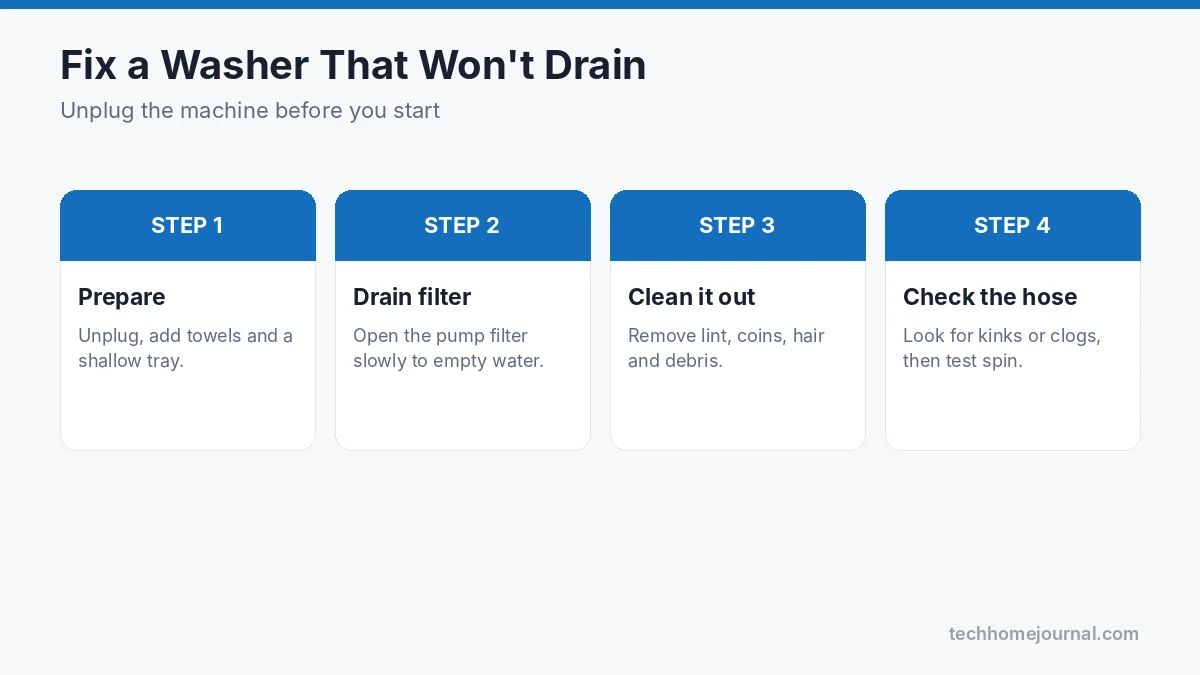
- Unplug the machine and place towels and a shallow tray in front of it.
- Open the small access panel at the bottom front (on most front-loaders) and slowly unscrew the pump filter to drain the water.
- Clean out lint, coins, hair and debris from the filter.
- Check the drain hose for kinks or clogs, and make sure it isn’t pushed too far down the standpipe.
- Run a drain and spin cycle to test.
If the pump hums but no water moves, or you hear nothing at all, the drain pump may have failed. Pumps are usually an affordable part, and many owners replace them with basic tools, though a technician is the safer choice if you’re unsure.
Sign 5: Drum Won’t Spin
If clothes come out dripping wet, the spin cycle isn’t working properly. Common causes include:
- An unbalanced or overloaded drum, which makes many machines refuse to spin for safety.
- A drain problem; most washers won’t spin until the water has drained.
- A faulty lid switch or door lock that tells the machine it isn’t safe to spin.
- A worn or broken drive belt.
- A failing motor or control board.
Try a smaller, balanced load and a separate spin-only cycle first. If the drum still won’t turn, or turns freely by hand with no resistance, it’s time for a technician.
Sign 6: Clothes Aren’t Getting Clean
Before blaming the machine, rule out the most common user issues:
- Overloading: Clothes need room to move. Fill a front-loader no more than about three-quarters full.
- Wrong detergent: HE machines need HE detergent, and more detergent is not better; it leaves residue.
- Wrong cycle: Quick or eco cycles may not be enough for heavily soiled clothes.
- Buildup: Detergent, fabric softener and limescale build up over time. Run a monthly cleaning cycle.
If you’ve fixed all of these and clothes are still dirty, the machine may not be filling properly (check the inlet filters and water pressure) or heating water correctly (a heating element or thermostat fault).
Sign 7: Bad Smells and Mold
A musty smell is especially common in front-loaders, where water can sit in the rubber door seal. It’s rarely a mechanical fault, but it’s a sign to change your habits:
- Wipe the door seal dry after the last wash of the day.
- Leave the door and detergent drawer open between washes.
- Remove wet clothes promptly.
- Run a hot cleaning cycle monthly with a washer cleaner or white vinegar (check your manual first).
- Clean the pump filter, where trapped lint and water can smell.
Mold thrives on moisture anywhere in the home. The EPA’s guide to mold and moisture explains how to keep it under control.
Sign 8: Won’t Start or Shows Error Codes
If the washer won’t start, check the basics first: the plug, the circuit breaker, the water taps, and whether the door is fully closed and locked. Many modern machines also have a child lock that disables the controls.
Error codes can save a lot of guesswork. Look up the code in your manual or on the manufacturer’s support site; for example, Samsung’s washer support pages list codes and troubleshooting steps. Smart washers can also send error alerts and diagnostics straight to your phone.
Repeated electrical faults, burning smells or tripping breakers are a job for a professional. Stop using the machine until it has been checked.
Sign 9: Door or Lid Problems
If the door won’t lock, won’t open after a cycle, or the machine stops mid-cycle, the door lock or lid switch may be failing. Wait a few minutes after a cycle, as many locks have a safety delay. If the door won’t unlock at all, check for water left in the drum, then consult the manual for the emergency release.
Repair or Replace? How to Decide
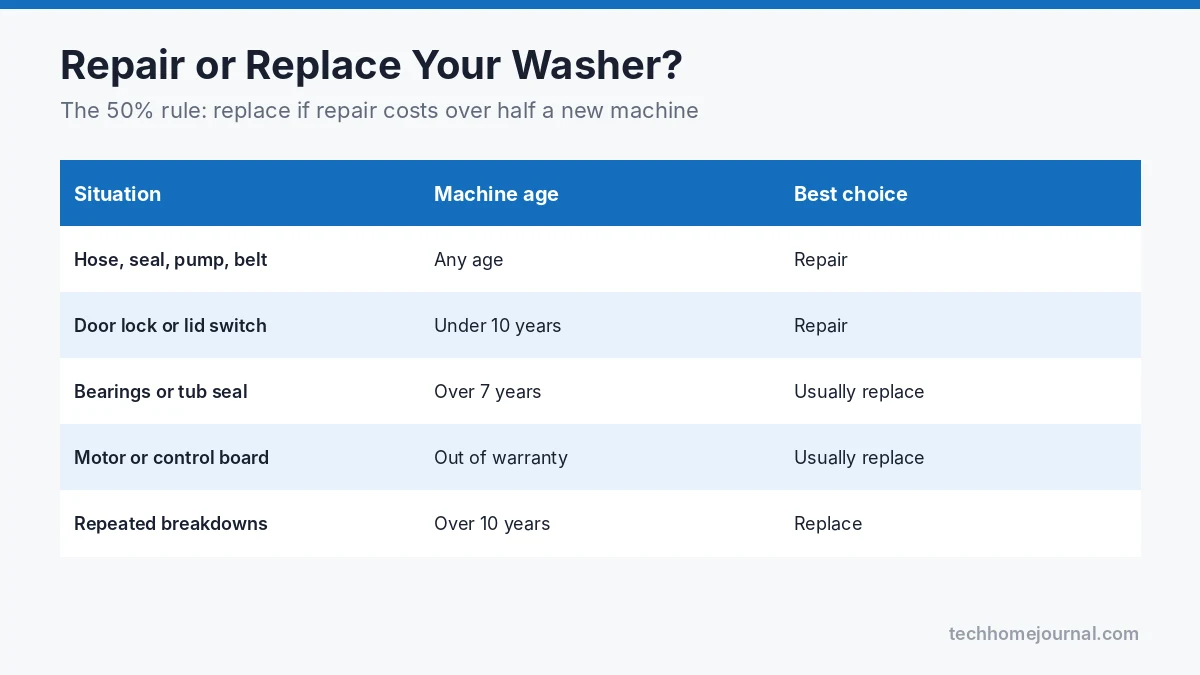
Most washing machines last around 10 to 14 years with normal use. A simple rule many technicians use is the 50% rule: if the repair costs more than half the price of a comparable new machine, and the washer is more than halfway through its expected life, replacement usually makes more sense.
| Usually worth repairing | Usually time to replace |
|---|---|
| Machine under 6 to 7 years old | Machine over 10 years old |
| Drain pump, hoses, door seal, belt | Drum bearings plus tub seal on older units |
| Door lock or lid switch | Failed motor or control board out of warranty |
| Single, isolated fault | Repeated breakdowns in a short time |
| High-end model in good condition | Rust on the drum or cabinet |
Before paying for any repair, check whether the machine is still under warranty or covered by a recall. You can search the CPSC recalls database by brand and model.
If you do replace it, consider an efficient model. Newer front-loaders typically use much less water and energy than older top-loaders, and WaterSense and Energy Star-rated appliances can lower your utility bills over time. The EPA’s WaterSense program has more on saving water at home. Smart washers with app alerts and remote start are also worth a look; our Google Home tips and Alexa routines guide show how to get a voice alert when the laundry is done.
How to Make Your Washer Last Longer
- Don’t overload: It strains the bearings, motor and suspension.
- Use the right detergent dose: Too much causes buildup and excess suds.
- Clean the pump filter: Every one to three months.
- Run a cleaning cycle: Monthly, to remove residue and odors.
- Leave the door open: Let the drum and seal dry between washes.
- Check hoses yearly: Replace any that are cracked, bulging or more than five years old.
- Keep it level: Recheck the feet if the machine starts to vibrate more.
- Protect from surges: A surge protector can help protect the control board.
- Treat hard water: Limescale shortens the life of heating elements; a descaler or water softener helps in hard-water areas.
If your laundry room is in a basement or garage, also make sure the space stays dry and well ventilated. A small dehumidifier or a vent fan can help in damp spaces, and a leak sensor on the floor will warn you about problems early.
Are Smart Washers Worth It?
If you’re replacing your washer, you’ll notice that many mid-range and premium models now include Wi-Fi. Are the smart features worth paying for? For many households, yes, and not only for convenience.
- Cycle alerts: Get a phone or smart speaker notification when the wash is done, so clothes don’t sit wet and start to smell.
- Remote start: Load the machine in the morning and start it so it finishes just as you get home.
- Diagnostics: Many smart washers can report error codes to the app and suggest fixes, which can save a service call or help the technician arrive with the right part.
- Usage tracking: Some apps show water and energy use per cycle, helping you choose more efficient settings.
- Auto-dosing: Higher-end models dispense the right amount of detergent automatically, preventing the buildup that causes smells and poor cleaning.
To get the most from a smart washer, make sure your laundry area has a reliable Wi-Fi signal. Basements and utility rooms are often dead zones; our home network setup guide explains how to extend coverage, and if you use a smart speaker for alerts, see how to connect Alexa to Wi-Fi.
Washer Maintenance Schedule
| How often | Task |
|---|---|
| After every wash day | Wipe the door seal dry and leave the door open |
| Weekly | Rinse the detergent drawer if residue builds up |
| Monthly | Run a hot cleaning cycle with washer cleaner |
| Every 1 to 3 months | Clean the drain pump filter |
| Every 6 months | Check the machine is level; clean inlet hose filters |
| Yearly | Inspect hoses for cracks and bulges; replace old rubber hoses |
Homes with pets should clean the pump filter more often. Pet hair collects quickly in the filter and drum, and removing as much as possible beforehand helps. A good robot vacuum for pet hair keeps fur off the floors and out of the laundry pile in the first place.
Frequently Asked Questions
How long should a washing machine last?
Most washers last around 10 to 14 years. Heavy use, overloading, hard water and poor maintenance can shorten that, while regular care can help a good machine last longer.
Is it worth repairing a 10-year-old washing machine?
Usually only for small, cheap repairs like a hose, belt or drain pump. For major faults such as bearings, a motor or control board, replacing a 10-year-old washer is generally the better value.
Why is my washing machine so loud when spinning?
The most common causes are an unbalanced load, an uneven machine, a foreign object in the drum or pump, or worn drum bearings. If balancing and leveling don’t help and you hear a rumble or grind, have the bearings checked.
Why is my washer leaking from the bottom?
Leaks from underneath usually come from the drain pump, drain hose clamps, or a failing tub seal. Check the hoses and pump first; a tub seal leak typically needs a technician.
How do I clean a smelly washing machine?
Wipe and dry the door seal, clean the detergent drawer and pump filter, then run a hot cleaning cycle with a washer cleaner. Leave the door open between washes to prevent the smell returning.
Can I fix a washing machine myself?
Many small jobs, such as cleaning the filter, replacing hoses, leveling the machine and clearing the drain, are DIY-friendly. Anything involving electrical parts, bearings or the control board is best left to a qualified technician.
Final Verdict
Most washing machine problems start small. Unusual noise, leaks, heavy shaking, drainage issues and poor cleaning are all warning signs worth acting on quickly. Start with the simple checks: balance the load, level the machine, clean the filter and inspect the hoses. If those don’t solve it, use the age and the cost of repair to decide your next step.
For a machine under seven years old with a single fault, repair is usually worth it. For an older washer with a major failure, put the money toward an efficient new model instead.