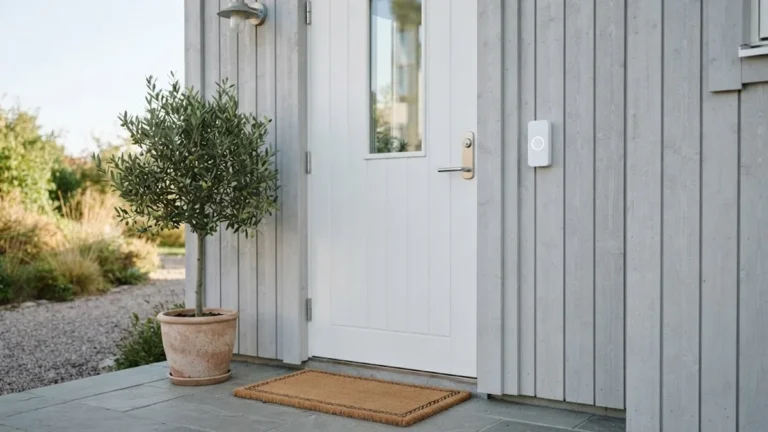

No home can be made 100% burglar-proof. But most intruders are looking for an easy, quick and quiet way in. If your doors, windows and garage make that difficult, the majority will simply move on to an easier target.
This guide focuses on the physical side of home security: the locks, frames, glass, lighting and habits that actually slow a burglar down. Smart gadgets are great, but they work best on top of a solid foundation. A camera can record a door being kicked in; a reinforced strike plate can stop it from happening at all.
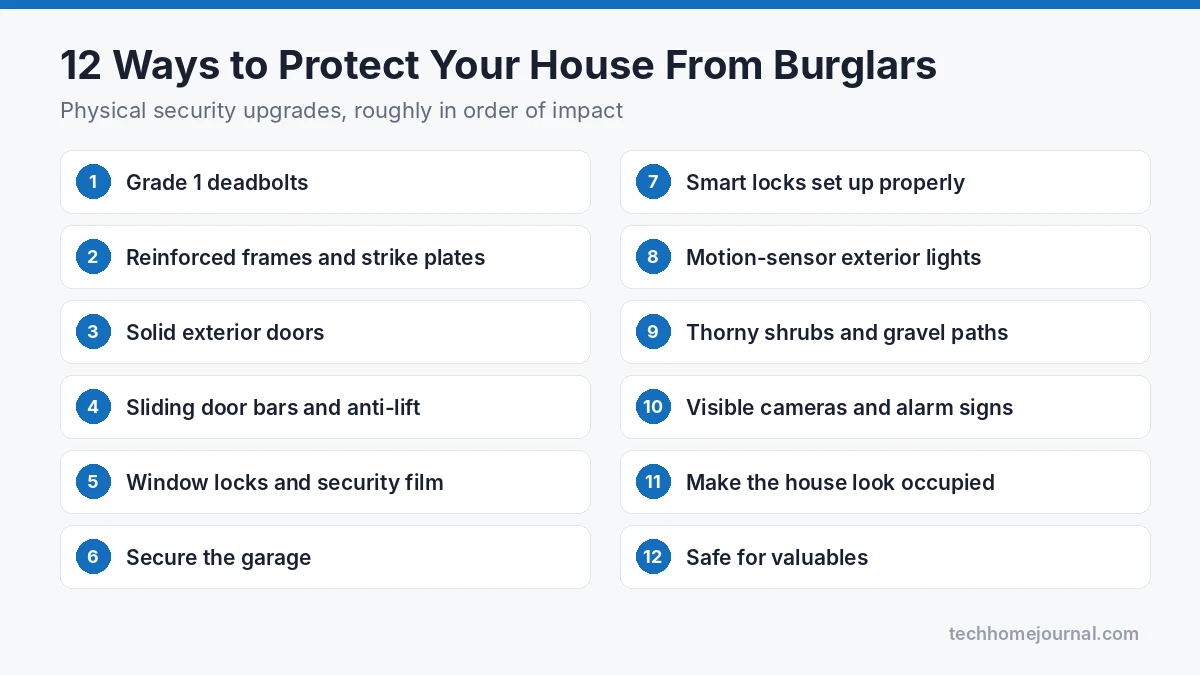
Below are 12 practical upgrades, roughly in order of impact, with tips on cost and difficulty so you can decide where to start.
Table of Contents
- Quick Picks: Where to Start
- How Burglars Choose a House
- 1. Install Grade 1 Deadbolts
- 2. Reinforce Door Frames and Strike Plates
- 3. Upgrade or Reinforce Exterior Doors
- 4. Secure Sliding Glass Doors
- 5. Lock and Strengthen Windows
- 6. Protect the Garage
- 7. Add Smart Locks the Right Way
- 8. Light Up the Outside
- 9. Use Landscaping as a Barrier
- 10. Add Visible Deterrents
- 11. Make the House Look Occupied
- 12. Protect Valuables Inside
- Room-by-Room Security Checklist
- Frequently Asked Questions
- Final Verdict
Quick Picks: Where to Start
| Upgrade | Approx. cost | Difficulty | Impact |
|---|---|---|---|
| Long screws in strike plates and hinges | Under $20 | Easy | High |
| Grade 1 deadbolts | $40 to $100 per door | Easy to moderate | High |
| Sliding door bar or pin lock | $15 to $40 | Easy | High |
| Window locks and security film | $10 to $50 per window | Easy | Medium to high |
| Motion-sensor exterior lights | $25 to $80 per light | Easy | Medium |
| Door frame reinforcement kit | $50 to $150 per door | Moderate | High |
| Solid-core or steel exterior door | $300 to $1,500+ installed | Professional | High |
Prices are approximate list prices and vary by brand and region, so check current deals before you buy.
How Burglars Choose a House
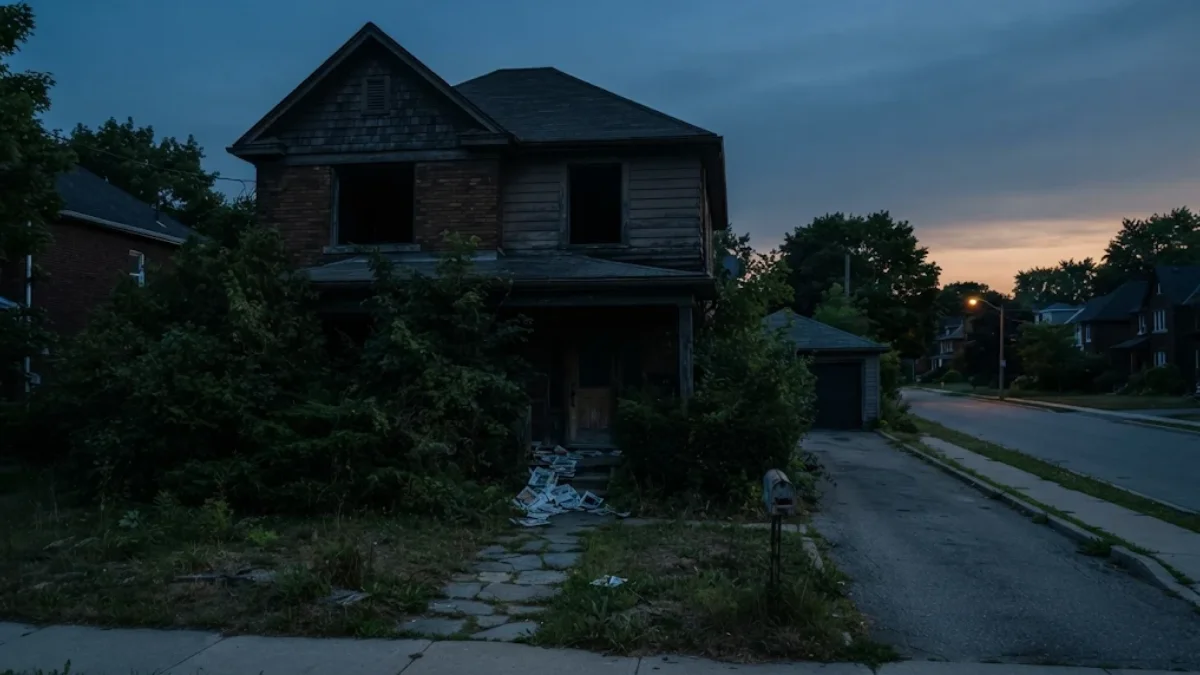
Understanding how intruders think makes it easier to protect against them. Most residential burglaries are opportunistic. A burglar walks or drives through a neighborhood and looks for a house that seems empty, easy to enter and unlikely to be noticed.
The signs they look for include:
- No car in the driveway, piled-up mail or packages, and lights that never change
- Doors and windows hidden from the street by fences, hedges or darkness
- Weak-looking doors, old locks or open windows
- Tools or ladders left outside that make climbing in easier
- No visible camera, alarm sign or dog
The goal of everything below is simple: make your home look occupied, visible and difficult to enter. You don’t need to beat a professional thief; you just need to make your house a worse choice than the alternatives.
1. Install Grade 1 Deadbolts
Every exterior door should have a deadbolt, not just a spring latch in the handle. Spring latches can often be slipped open with a card or pried with a screwdriver. A deadbolt throws a solid steel bolt into the door frame.
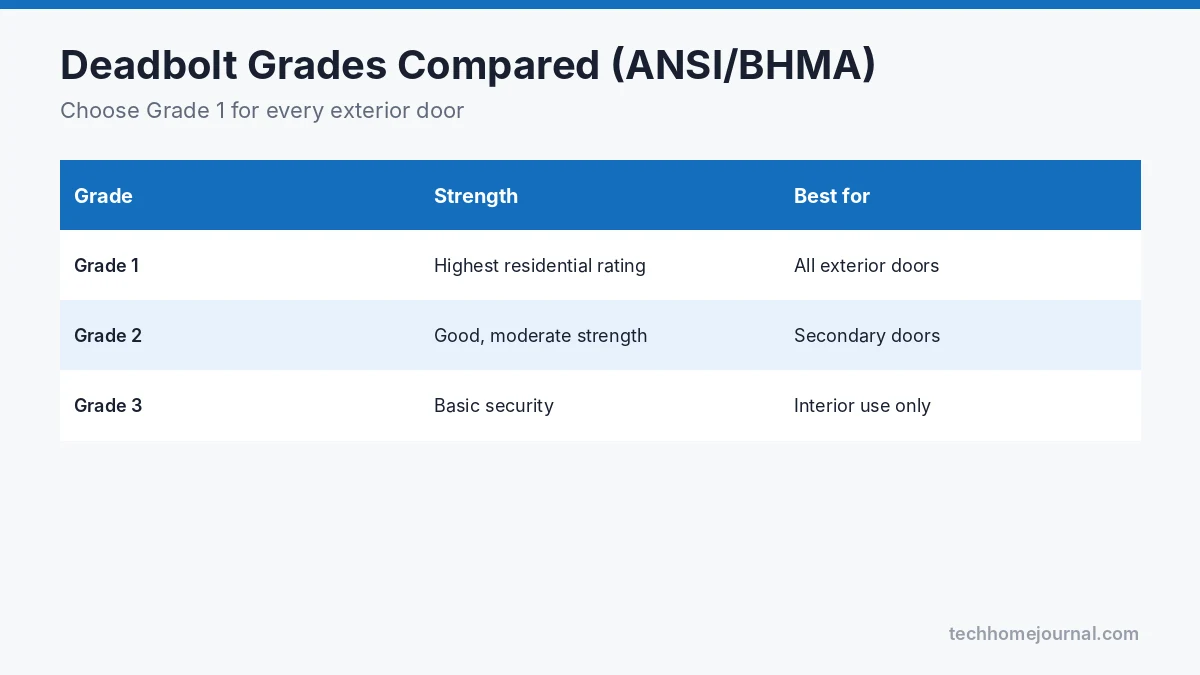
Deadbolts are rated by the Builders Hardware Manufacturers Association (BHMA) under ANSI standards:
- Grade 1: The highest residential rating, designed for heavy use and greater resistance to force.
- Grade 2: Good quality and common in homes, but less robust.
- Grade 3: Basic security, best avoided for exterior doors.
Look for a bolt that extends at least one inch (often called a “1-inch throw”) and a hardened steel insert that resists sawing. Single-cylinder deadbolts (key outside, thumb turn inside) are the most common. Double-cylinder models need a key on both sides; they can stop someone reaching through broken glass, but they can be dangerous in a fire, so check local building codes before choosing one.
2. Reinforce Door Frames and Strike Plates
Here’s something many homeowners don’t realize: even a great deadbolt can fail if the door frame is weak. When someone kicks a door, the lock usually holds; it’s the thin wooden frame around the strike plate that splits.
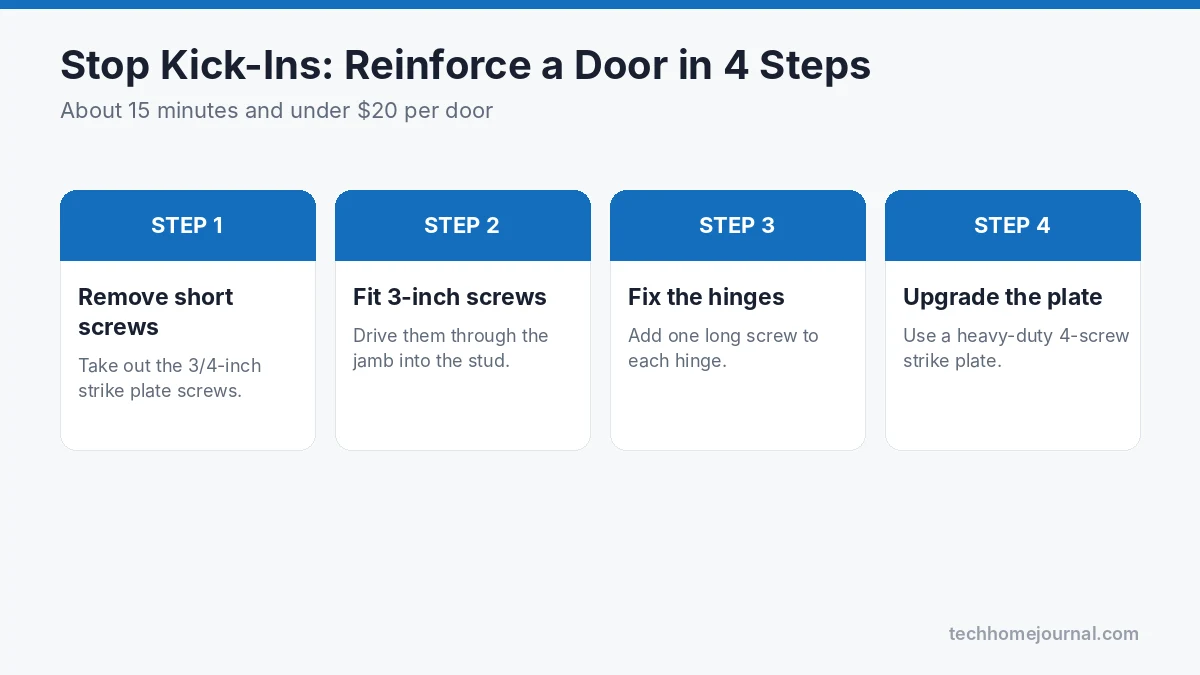
The cheapest, most effective fix takes about 15 minutes:
- Remove the short screws (usually about 3/4 inch) from the deadbolt strike plate.
- Replace them with 3-inch screws that reach through the door jamb into the wall stud behind it.
- Do the same for at least one screw in each hinge.
- Upgrade to a heavy-duty, four-screw strike plate if your current one is small.
For even more strength, door frame reinforcement kits add a long steel plate along the jamb, spreading the force of a kick across the whole frame. These are especially worth considering for back and side doors that can’t be seen from the street.
3. Upgrade or Reinforce Exterior Doors
Hollow-core doors are common inside homes but should never be used outside. They’re light, cheap and easy to break through. Exterior doors should be solid wood, solid-core, fiberglass or steel.
Other things to check:
- Gaps: If there’s a big gap between the door and frame, a pry bar can get in. Weatherstripping and proper alignment help.
- Glass panels: Doors with glass near the lock let someone break the glass and reach the thumb turn. Consider security film or replacing the panel with laminated glass.
- Exposed hinges: Outward-opening doors with hinge pins on the outside can sometimes be removed. Use security hinges or non-removable pins.
- Peepholes or video doorbells: Always see who’s outside before opening.
A video doorbell adds a useful layer here. If you prefer to avoid monthly fees, see our roundup of the best wireless doorbell cameras with no subscription.
4. Secure Sliding Glass Doors
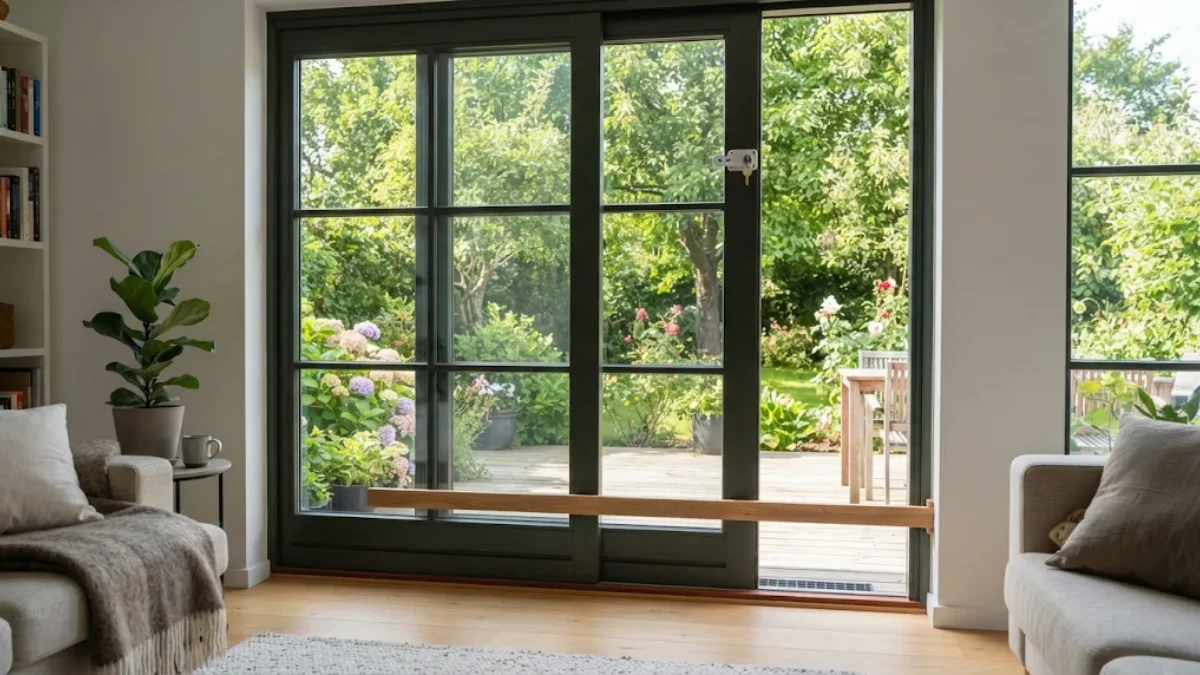
Sliding patio doors are a favorite target because many come with weak latches and some can be lifted right out of their tracks. They’re also usually at the back of the house, out of view.
Easy ways to secure them:
- Place a security bar or a cut wooden dowel in the bottom track so the door can’t slide.
- Install a pin lock or a keyed auxiliary lock through both frames.
- Add anti-lift blocks or screws in the upper track to stop the panel being lifted out.
- Apply security film to the glass and add a contact sensor or glass-break sensor.
We’ve covered the options in detail in our guides to the best sliding glass door locks and security sensors for sliding glass doors.
5. Lock and Strengthen Windows
Ground-floor windows, and any upper windows that can be reached from a roof, deck or tree, need real locks. Many standard window latches are designed to hold the window closed against weather, not against someone trying to force it.
- Window locks: Add keyed sash locks or pin locks to double-hung windows, and track stops to sliding windows.
- Ventilation stops: These let you open a window a few inches for air while preventing it from opening further.
- Security film: A clear film that holds broken glass together, making it much slower and noisier to break through.
- Laminated glass: When replacing windows, laminated glass offers similar protection built in.
- Sensors: Contact sensors alert you if a window opens; glass-break sensors listen for the sound of shattering.
- Basement windows: Consider window well covers or bars that can be opened from the inside for fire safety.
Never install bars or locks that would stop you getting out in an emergency. Bedrooms need at least one window that can be opened quickly from inside.
6. Protect the Garage
An attached garage is essentially a second front door, often with weaker security. Once inside, a burglar has privacy to work on the internal door, plus access to tools and bikes.
- Keep the garage door closed whenever you’re not actively using it.
- Treat the door between the garage and house as an exterior door: solid core, deadbolt, long screws.
- Don’t leave the garage remote in a car parked outside.
- Use a smart garage controller that alerts you if the door is left open.
- Cover garage windows with frosted film so no one can see what’s inside.
- Secure the emergency release with a shield or zip tie so it can’t be hooked from outside.
7. Add Smart Locks the Right Way
Smart locks are convenient: no keys to lose, temporary codes for guests, and alerts when someone comes home. But a smart lock is only as secure as its hardware and its settings.
When choosing one, look for a lock with a solid deadbolt and a good BHMA rating, auto-lock, activity logs and two-factor authentication in the app. Keep the firmware updated and change codes regularly. If you’re weighing up the options, our comparison of smart locks vs traditional locks breaks down the pros and cons, and our smart lock installation guide walks through fitting one correctly.
Many smart locks now support Matter, an industry standard that lets devices from different brands work together. You can read more about it on the Connectivity Standards Alliance Matter page.
8. Light Up the Outside
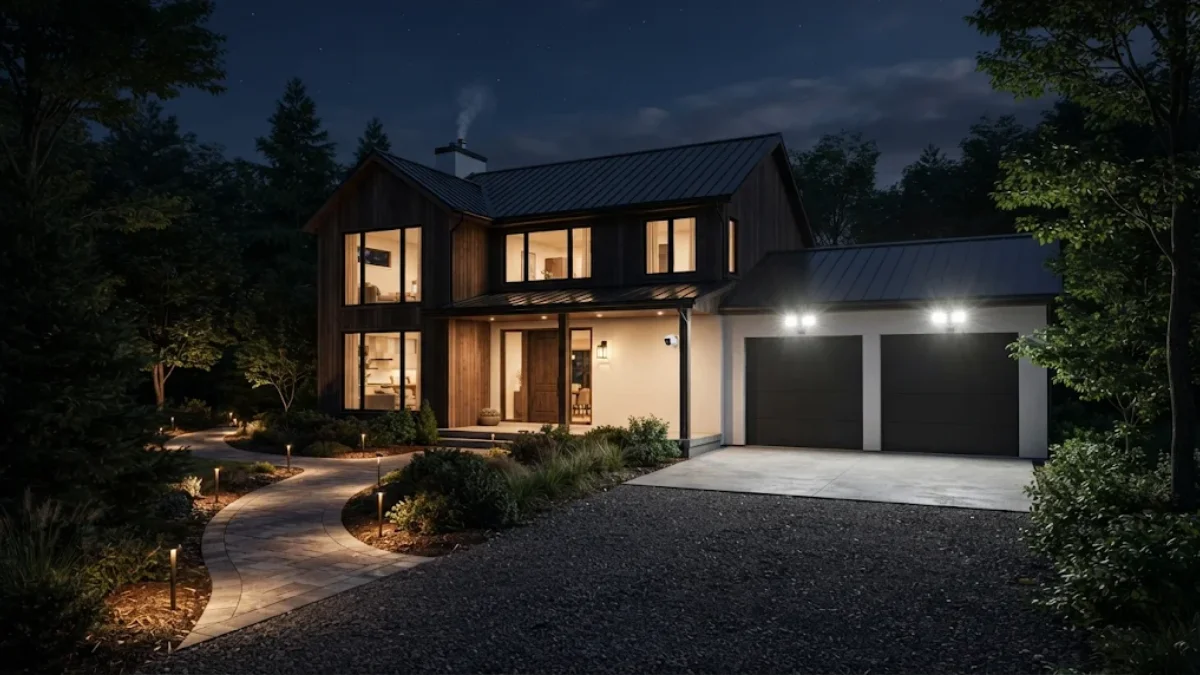
Darkness lets intruders work unseen. Good exterior lighting at doors, driveways, side passages and back yards removes that cover.
Motion-activated lights are especially effective because a sudden flash of light draws attention. Energy-efficient LED bulbs make it cheap to keep porch lights on overnight too; the U.S. Department of Energy explains the benefits of LED lighting. See our guide to motion sensor lights for wired, battery and solar options, or combine lighting and recording with a floodlight camera.
9. Use Landscaping as a Barrier
Your garden can either hide intruders or help keep them out.
- Trim shrubs below window height and cut back trees that touch the roof or upper windows.
- Plant thorny shrubs, such as roses or barberry, under ground-floor windows.
- Use gravel paths near the house; footsteps on gravel are noisy.
- Keep side gates locked, ideally with a lock on the inside.
- Store ladders and tools in a locked shed or garage.
10. Add Visible Deterrents
Some of the most effective security measures work before anyone even tries a door. Visible cameras, alarm signs and window decals tell a burglar that this house will be harder and riskier.
Make sure the deterrents are real, though. Experienced burglars can often spot fake cameras. A working camera covering the front and back of the house, paired with a motion sensor alarm or a full home monitoring system, gives you both deterrence and evidence. Joining a local neighborhood watch, supported by groups like the National Neighborhood Watch, adds another set of eyes on the street.
11. Make the House Look Occupied
An empty-looking home is an invitation. When you’re away, even for a weekend:
- Put lights, a TV or a radio on smart plugs with varying schedules.
- Pause mail and package deliveries or ask a neighbor to collect them.
- Ask a neighbor to park in your driveway occasionally.
- Keep the lawn mowed and snow cleared.
- Don’t post vacation photos until you’re home.
Smart home routines make this effortless. For example, you can set Alexa routines to switch lights on in different rooms at slightly different times each evening.
12. Protect Valuables Inside
If someone does get in, you want them to leave with as little as possible.
- Use a bolted-down safe for jewelry, passports, cash and important documents.
- Avoid the master bedroom for valuables; it’s the first place burglars check.
- Keep laptops and gadgets out of sight from windows.
- Photograph or video your belongings and keep serial numbers for insurance claims.
- Engrave or mark expensive items so they’re harder to sell.
Room-by-Room Security Checklist
Use this checklist on a quick walk around your home. Tick off each item, and note anything that needs fixing.
Front entrance
- Grade 1 deadbolt with a 1-inch throw
- Strike plate and hinges fixed with 3-inch screws
- Video doorbell or peephole
- Bright porch light, ideally on a timer or motion sensor
- No spare key hidden under the mat or in a planter
Back and side doors
- Solid-core or steel door, not hollow-core
- Door frame reinforcement kit on doors hidden from the street
- Motion-sensor light covering the approach
- Side gate locked from the inside
Living room and patio
- Sliding door bar or dowel in the track
- Anti-lift screws or blocks in the upper track
- Contact or glass-break sensor on the patio door
- Valuables and gadgets out of view from windows
Bedrooms
- Window locks on all reachable windows
- At least one window per bedroom that opens quickly for fire escape
- Jewelry and documents in a bolted safe, not in a drawer
Garage and basement
- Internal garage door treated like an exterior door
- Garage remote never left in a parked car
- Emergency release protected
- Basement windows locked, with well covers if needed
- Ladders and tools locked away
Outside
- Shrubs trimmed below window height
- Trees cut back from the roof and upper windows
- Cameras covering the front and back approaches
- Alarm signs and window decals displayed
Do this walk-through once or twice a year, and again whenever you move into a new home. You’ll often spot small problems, such as a loose hinge, a broken latch or a bush that has grown over a window, before a burglar does.
Frequently Asked Questions
What is the best single thing I can do to protect my home from burglars?
Lock every door and window, every time. After that, install Grade 1 deadbolts with long strike-plate screws on all exterior doors. These two steps cost very little and stop many forced and opportunistic entries.
Are smart locks safer than regular locks?
Not automatically. A smart lock is as strong as its physical bolt and as secure as its app settings. A good smart lock with a solid deadbolt, auto-lock and two-factor authentication can be very secure, and it removes the risk of lost or copied keys.
How do I secure a sliding glass door cheaply?
Place a security bar or a cut wooden dowel in the bottom track, and add anti-lift screws to the top track. Together these cost very little and prevent the door from being slid open or lifted out.
Do security signs and stickers really work?
They help when they’re backed by a real system. Signs and decals tell a burglar the house may have an alarm or cameras, which makes it a riskier target. On their own, without any real equipment, they’re much less effective.
Should I put bars on my windows?
Fixed bars can create a serious fire risk. If you need extra protection on ground-floor or basement windows, choose security film, locks, or bars that have a quick-release mechanism on the inside.
Is a dog a good burglar deterrent?
A barking dog draws attention, which most burglars want to avoid. It’s a useful extra layer, but it shouldn’t replace good locks, lighting and an alarm.
Final Verdict
Protecting your house from burglars starts with the basics: strong doors, Grade 1 deadbolts, reinforced frames, and locks on every window and sliding door. Add good outdoor lighting, smart landscaping and visible deterrents, and make sure your home always looks occupied.
Start with the cheap, high-impact jobs this weekend, such as longer strike-plate screws and a sliding door bar, then work your way up to bigger upgrades. Layer by layer, your home becomes the one burglars walk past.