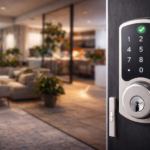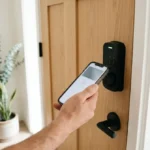

Meta: Bluetooth smart locks vs traditional deadbolts which is actually safer? Real security comparison for 2026 homes.
Is your deadbolt actually protecting you, or just giving you false confidence? Most homeowners assume a physical key lock is the gold standard of security. That assumption is worth questioning.
The smart lock vs traditional lock debate has shifted dramatically over the past few years. Modern smart locks now offer features that mechanical locks simply cannot match – and in some cases, they close security gaps that deadbolts leave wide open. This guide breaks down both sides honestly, names the best products on the market in 2026, and tells you exactly which setup fits your situation.
—
Table of Contents
- How We Evaluated These Locks
- Quick Picks at a Glance
- 1. Schlage Encode Plus – Best Overall Smart Lock
- 2. Yale Assure Lock 2 – Best for Apartment Renters
- 3. August Wi-Fi Smart Lock – Best Retrofit Option
- 4. Medeco Maxum Deadbolt – Best Traditional Lock
- 5. Kwikset SmartKey Security Deadbolt – Best Budget Traditional Lock
- Comparison Table
- Buying Guide: Smart vs. Traditional Lock Decision Framework
- The Honest Verdict on Lock Security in 2026
- Frequently Asked Questions
—
How We Evaluated These Locks
Picking a lock is not like picking a gadget. The evaluation criteria here go beyond spec sheets.
Each lock in this list was assessed across five dimensions: physical attack resistance (including ANSI/BHMA grade rating), pick and bump resistance, access control flexibility, failure-mode behavior, and real-world usability under stress. I also looked at how each lock performs when power fails, when Wi-Fi drops, or when a battery dies at 11 PM in January.
ANSI Grade 1 is the top residential rating – it means the lock withstands 250,000 open/close cycles and resists a 360 lb. force strike. Grade 2 handles 150,000 cycles and 250 lb. Grade 3 is the bottom of the barrel. Any lock that doesn’t hit at least Grade 2 didn’t make this list.
This guide is for homeowners, renters with landlord approval, and property managers who want an honest comparison – not a marketing brochure.
—
Quick Picks at a Glance
| Rank | Product | Best for | Price |
|---|---|---|---|
| 1 | Schlage Encode Plus Editor’s pick | Homeowners wanting top-tier security + smart features | Check official site |
| 2 | Yale Assure Lock 2 | Apartment renters and Apple Home users | Check official site |
| 3 | August Wi-Fi Smart Lock | Renters who cannot replace the exterior hardware | Check official site |
| 4 | Medeco Maxum Deadbolt | Security-first buyers who want zero digital attack surface | Check official site |
| 5 | Kwikset SmartKey Security Deadbolt | Budget-conscious buyers needing rekey flexibility | Check official site |
—
1. Schlage Encode Plus – Best Overall Smart Lock
> Editor’s pick: The Encode Plus combines ANSI Grade 1 physical security with built-in Wi-Fi and Apple Home Key support, making it the most complete residential smart lock available in 2026.
Overview
Schlage has been making commercial-grade hardware since 1920. The Encode Plus brings that pedigree into the smart home era without compromising the deadbolt’s core job. It uses a 6-pin anti-pick cylinder, a hardened steel bolt, and a reinforced strike plate system. The built-in alarm technology detects door attacks – forced entry, door ajar – and triggers an 85 dB alert.
No hub required. Wi-Fi connects directly to your router. Battery life runs approximately 6 months on 4 AA batteries, and the lock gives you a low-battery warning at 20% capacity. The touchscreen keypad accepts up to 100 unique access codes.
Key Benefits
- ANSI/BHMA Grade 1 certified – the highest residential standard
- Built-in Wi-Fi (no separate bridge or hub needed)
- Apple Home Key tap-to-open up via iPhone or Apple Watch
- Up to 100 access codes with individual scheduling
- Auto-lock timer configurable from 15 seconds to 4 minutes
- Access log stores the last 100 entries with timestamps
- Works with Alexa, Google Home, and Apple HomeKit
Pros and Cons
Pros:
- Best-in-class physical attack resistance
- No subscription required for core features
- Backup keyway for mechanical override
- Alarm sensor adds a layer traditional deadbolts lack
Cons:
- Bulkier than minimalist alternatives
- Apple Home Key requires iOS 15 or later
- Touchscreen can be sluggish in sub-freezing temps
Best For
Homeowners who want a single lock to handle physical security AND smart access without buying a separate hub. Ideal for Apple ecosystem households.
If you decide on a traditional lock, our roundup of the best deadbolt locks compares Grade 1 options from Schlage, Yale and Kwikset.
Verdict
The Schlage Encode Plus is the rare product that wins the smart lock vs traditional lock argument on both fronts. It’s as hard to kick in as a Grade 1 deadbolt and smarter than most competing smart locks. It earns the top spot without reservation.
—
2. Yale Assure Lock 2 – Best for Apartment Renters
Overview
Yale redesigned the Assure Lock line for 2024, and the Assure Lock 2 is the version worth buying in 2026. It ships in multiple configurations – Wi-Fi only, Zigbee, Z-Wave, or Matter over Thread – so it fits into virtually any smart home ecosystem. The lock body is slim at 2.4 inches wide, which matters in apartments with tight door clearances.
ANSI Grade 2 rating puts it a step below the Schlage, but Grade 2 still handles 150,000 cycles and a 250 lb. strike force. That’s more than adequate for most residential doors.
Key Benefits
- Matter over Thread support for cross-platform compatibility
- Slim profile fits tight apartment door frames
- Touchscreen keypad with backlit keys for nighttime use
- Up to 250 access codes (more than most competitors)
Pros and Cons
Pros:
- Wide ecosystem compatibility via Matter
- Sleek design that doesn’t look industrial
- Works natively with Apple Home, Google Home, and Amazon Alexa
Cons:
- Grade 2 (not Grade 1) physical rating
- Some configurations require a Yale Connect Bridge for remote access
- No built-in alarm sensor
Best For
Renters with landlord approval, Apple HomeKit households, or anyone already running a Matter-based smart home setup.
Verdict
A genuinely versatile lock. Not the most physically formidable on this list, but the Matter compatibility and 250-code capacity make it the most flexible for multi-user households.
—
3. August Wi-Fi Smart Lock – Best Retrofit Option
Overview
The August Wi-Fi Smart Lock installs entirely on the interior side of your door. It attaches to your existing deadbolt’s thumb turn. That means your exterior hardware – including the cylinder and keyway – stays exactly as it was. Installation takes under 10 minutes with a standard screwdriver.
This is the defining feature for renters. You don’t touch the exterior lock. Your landlord never knows you upgraded anything. And when you move out, you unscrew it in 10 minutes and take it with you.
Key Benefits
- Installs on interior only – no exterior hardware change
- Works with your existing deadbolt and keys
- DoorSense technology detects if the door is truly closed and locked
- Auto-lock and auto-open up based on phone proximity
Pros and Cons
Pros:
- Renter-friendly – zero exterior modification
- DoorSense is genuinely useful (detects ajar door)
- Works with Alexa, Google Home, and Apple HomeKit
Cons:
- Security is only as strong as your existing deadbolt
- Larger interior footprint than competitors
- Battery life averages 3-4 months (shorter than Schlage)
Best For
Renters who cannot modify exterior hardware, or homeowners who want smart features without replacing a high-security cylinder they already trust.
Verdict
The August Wi-Fi Smart Lock doesn’t improve your physical security – it layers smart features onto whatever deadbolt you already have. That’s its strength and its limitation. Choose it for convenience, not for upgrading a weak lock.
—
4. Medeco Maxum Deadbolt – Best Traditional Lock
Overview
If you want zero digital attack surface, the Medeco Maxum is the answer. No Bluetooth. No Wi-Fi. No app. Just a physically formidable deadbolt that has been specified by the US government and commercial security professionals for decades.
The Maxum uses Medeco’s patented rotating and elevating pin system. Standard lock picks fail against it. Bump keys are ineffective. The cylinder is rated to ANSI Grade 1 and carries an UL 437 listing – a separate standard that covers pick resistance, drill resistance, and key control. The hardened steel bolt extends 1 inch and the housing resists physical attack with a steel case reinforcement.
Key Benefits
- UL 437 listed for pick, drill, and key control resistance
- Patented rotating pin technology defeats standard picking tools
- Restricted key system – duplicates require authorization
- ANSI/BHMA Grade 1 certified
Pros and Cons
Pros:
- No digital vulnerabilities whatsoever
- Key control prevents unauthorized duplication
- Proven track record in high-security commercial applications
Cons:
- No remote access or smart home integration
- Replacement keys require going through an authorized dealer
- Higher cost than standard deadbolts
Best For
Security-conscious homeowners who distrust networked devices, off-grid properties, or anyone who’s experienced a digital security breach and wants a clean break from connected hardware.
Verdict
The Medeco Maxum proves that the best traditional lock can match a smart lock on physical security – and beat it on digital attack surface. The trade-off is zero remote access. For some people, that’s the point.
—
5. Kwikset SmartKey Security Deadbolt – Best Budget Traditional Lock
Overview
The Kwikset SmartKey Security Deadbolt is the most practical entry-level traditional lock for homeowners who’ve just moved in and need to rekey without calling a locksmith. The SmartKey system lets you rekey the cylinder yourself in under 60 seconds using the included tool and a new key. No disassembly. No locksmith fee (which typically runs $50-$100 per visit).
It’s ANSI Grade 1 certified and includes BumpGuard technology that resists bump key attacks. The cylinder won’t stop a determined professional, but it handles the realistic threat profile for most residential homes.
Key Benefits
- Self-rekey in under 60 seconds with no tools beyond the SmartKey tool
- ANSI Grade 1 certified
- BumpGuard bump-key resistance
- Available in a wide range of finishes
Pros and Cons
Pros:
- Rekey yourself after moving in – no locksmith needed
- Grade 1 certification at an accessible price point
- Widely available at hardware stores
Cons:
- SmartKey cylinders have been demonstrated vulnerable to certain bypass techniques
- No smart features whatsoever
- Key control is weaker than Medeco’s restricted system
Best For
Budget-conscious homeowners who move frequently, landlords managing multiple units, or anyone who needs a solid Grade 1 deadbolt without the premium price.
Verdict
Solid, affordable, and practical. The rekey feature alone justifies it for anyone who’s moved into a home and doesn’t know how many copies of the old key are floating around. Not a high-security pick, but a smart practical one.
—
Comparison Table
| Product | ANSI Grade | Smart Features | Best For | Standout Feature |
|---|---|---|---|---|
| Schlage Encode Plus | Grade 1 | Wi-Fi, Apple Home Key, Alexa, Google | Homeowners, Apple users | Built-in alarm + no hub needed |
| Yale Assure Lock 2 | Grade 2 | Matter, Wi-Fi, Zigbee, Z-Wave | Renters, multi-platform homes | 250 access codes, Matter support |
| August Wi-Fi Smart Lock | Depends on existing lock | Wi-Fi, Alexa, Google, HomeKit | Renters, retrofit installs | Interior-only install, DoorSense |
| Medeco Maxum Deadbolt | Grade 1 + UL 437 | None | Security-first, no digital risk | UL 437 pick/drill resistance |
| Kwikset SmartKey Deadbolt | Grade 1 | None | Budget buyers, frequent movers | Self-rekey in 60 seconds |
—
Buying Guide: Smart vs. Traditional Lock Decision Framework
Three questions cut through most of the noise here.
First: What’s your actual threat model? Most residential break-ins involve kicking in a door or breaking a window – not picking a lock. The FBI’s crime data consistently shows that forced entry accounts for roughly 60% of residential burglaries. A Grade 1 deadbolt with a reinforced strike plate addresses that threat whether it’s smart or traditional.
Second: Do you need remote access? If you manage an Airbnb, supervise contractors, or have kids who lose keys, a smart lock isn’t a luxury – it’s the right tool. Issuing a time-limited code is cleaner than cutting a key and hoping it doesn’t get copied.
Third: How do you feel about digital attack surface? Smart locks can theoretically be targeted via Bluetooth or Wi-Fi exploits. In practice, this attack vector is rare for residential properties – criminals still prefer a crowbar to a laptop. But if you work in a sensitive field or have reason to worry about targeted attacks, the Medeco Maxum’s zero-connectivity is a genuine advantage.
Who should skip smart locks entirely: Anyone with unreliable home Wi-Fi, anyone unwilling to replace batteries every 3-6 months, and anyone living in a rental where exterior hardware changes are prohibited (the August retrofit is the exception here).
Who