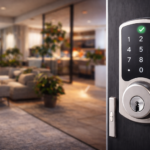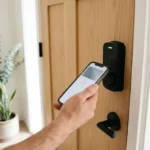

That big, beautiful sliding glass door leading to your patio looks stunning in a Scandinavian-style living room. Clean lines, natural light, a smooth connection to the outdoors. But here is the uncomfortable truth: a standard factory latch can be defeated in under 10 seconds with a flathead screwdriver. I have seen it happen. Choosing the best sliding glass door locks 2026 is not just a security upgrade – it is a basic necessity that most smart home guides still undertreat.
This guide covers the top locks across every category, from deadbolts and bar locks to Wi-Fi-connected smart locks. Whether you want something invisible enough to keep your Scandinavian aesthetic intact or a full connected security setup, there is an option here for your living room.
—
Quick Picks: Best Sliding Glass Door Locks at a Glance
- Winforce Double-Bolt Keyed Lock – Best overall security for most homes – $35 to $55
- Master Lock 265D Sliding Door Bar – Best budget bar lock, virtually unbreakable – $18 to $28
- Alarm Lock PDHB Series Smart Lock – Best smart lock for tech-forward setups – $180 to $260
- Ideal Security SK110 – Best for renters, no drilling required – $14 to $22
- Andersen 2592778 Sash Lock – Best OEM-grade replacement lock – $28 to $45
- August Smart Lock Pro – Best for Apple HomeKit and Alexa integration – $200 to $280
—
Table of Contents
- Why Your Factory Latch Is Not Enough
- What to Look for Before You Buy
- Detailed Reviews: Top 6 Locks Compared
- Smart Locks vs. Mechanical Locks: Which Wins in 2026?
- Installation: What Actually Involves a Drill vs. What Doesn’t
- Matching Locks to Your Scandinavian Living Room Aesthetic
- Making the Right Call for Your Home
- Frequently Asked Questions
—
Why Your Factory Latch Is Not Enough
Most sliding glass doors ship with a simple lever latch – a small hook that engages a keeper plate. It holds the door closed. That is about all it does. A determined intruder can lift the door off its track, shimmy the latch, or simply force the frame sideways. According to the FBI’s Uniform Crime Reporting data, roughly 34% of home burglaries involve entry through a rear or side door. Sliding patio doors account for a significant slice of that number.
The fix is not complicated. Adding a secondary lock – whether a keyed bolt, a bar lock, or a smart deadbolt – raises the effort required to break in by several orders of magnitude. Most burglars move on within 60 seconds if they meet resistance. That is the entire security argument in one sentence.
Beyond security, good locks also prevent accidental openings. If you have kids or pets, a living room slider that a toddler can yank open is a real hazard. A simple bar lock or pin lock solves that problem for under $20.
—
What to Look for Before You Buy
Not every lock fits every door. Before you add anything to your cart, check these four things.
Track type and door thickness. Most residential sliding doors have a 3/4-inch to 1-inch thick frame. Bar locks and pin locks are nearly universal, but keyed deadbolts need specific mounting hardware that varies by door brand.
Frame material. Aluminum frames and vinyl frames behave differently under stress. A lock rated for aluminum may not grip vinyl properly. Check the product spec sheet, not just the listing title.
Finish compatibility. This matters especially in Scandinavian-style living rooms where hardware finishes are part of the design. Brushed nickel, matte black, and satin chrome are the three finishes that blend cleanest with minimalist interiors. Avoid brass unless your room calls for it.
Smart home compatibility. If you run Apple HomeKit, Google Home, or Amazon Alexa, confirm the lock’s protocol before buying. Z-Wave and Zigbee locks need a hub. Wi-Fi locks do not – but they draw more power and need a stable signal within 30 feet of the door.
—
Detailed Reviews: Top 6 Locks Compared
Winforce Double-Bolt Keyed Lock
Overview: This is the lock I recommend most often to homeowners who want real security without going smart. It installs into the door frame with two hardened steel bolts and includes a key cylinder rated to 200,000 cycles. At $35 to $55, it punches well above its price.
Key benefits:
- Dual-bolt design resists both lifting and lateral force
- Fits doors with 3/4-inch to 1-3/8-inch frame depth
- Comes in brushed nickel and matte black finishes
- Includes 3 keys; re-keying kits available for $8 to $12
Pros: Extremely solid feel, low-profile design, no batteries needed.
Cons: Requires drilling two 7/8-inch holes; not renter-friendly.
Best for: Homeowners who want a permanent, tool-resistant upgrade.
Verdict: The single best mechanical lock for most living rooms in 2026.
—
Master Lock 265D Sliding Door Bar
Overview: Master Lock has been making security hardware since 1921, and the 265D is one of their most practical products. It is a steel security bar that wedges between the door and the far wall of the track. No drilling. No tools. Adjustable from 27.75 to 48.5 inches to fit most standard patio doors.
Key benefits:
- Bright red color acts as a visual deterrent
- Adjustable length covers most standard door widths
- Works on both sliding doors and sliding windows
- Weighs just 1.8 lbs, easy to store when not in use
Pros: Instant installation, inexpensive, child-proof when engaged.
Cons: Must be manually set each time; not smart-home compatible.
Best for: Renters, vacation homes, or as a secondary layer behind a keyed lock.
Verdict: At $18 to $28, nothing beats it for the price.
—
Alarm Lock PDHB Series Smart Lock
Overview: This is the lock for serious smart home setups. The PDHB mounts directly to the door stile and communicates over Z-Wave Plus, meaning it integrates with most major home automation platforms including SmartThings and Home Assistant. Battery life runs 12 to 18 months on four AA batteries.
Key benefits:
- Z-Wave Plus for reliable mesh networking
- Tamper alarm triggers at 85 dB if forced
- Logs up to 500 access events with timestamps
- ANSI Grade 2 rated for residential use
Pros: Excellent logging, works offline if hub loses internet, strong build quality.
Cons: Requires a Z-Wave hub; installation takes about 45 minutes for non-technical users.
Best for: Smart home enthusiasts who want automation and audit trails.
Verdict: The most capable connected lock in this price range at $180 to $260.
—
Ideal Security SK110
Overview: The SK110 is a sliding window and door lock that clamps onto the top of the door frame. No drilling. No permanent modification. It takes about 90 seconds to install and costs $14 to $22. It will not stop a determined professional, but it adds meaningful friction for casual attempts.
Key benefits:
- Installs without tools in under 2 minutes
- Works on aluminum and vinyl frames
- Locks in multiple positions, including partially open for ventilation
- Comes in white and brown to match frame color
Pros: Renter-friendly, ventilation mode is genuinely useful, very affordable.
Cons: Less resistant to sustained force than a keyed or bar lock.
Best for: Renters, secondary bedrooms, or ventilation-lock use cases.
Verdict: The best no-drill option in the lineup.
—
Andersen 2592778 Sash Lock
Overview: If your patio door is an Andersen brand unit and the original latch is worn or broken, this is the replacement to buy. It is a direct OEM fit for most Andersen 200 and 400 Series sliding doors. At $28 to $45, it restores factory security without guesswork about compatibility.
Key benefits:
- Exact OEM replacement for Andersen 200 and 400 Series doors
- Keyed cylinder adds a layer beyond the standard latch
- Satin nickel finish matches most Andersen hardware sets
- Installs with two screws in about 15 minutes
Pros: Perfect fit, no modification needed, includes key cylinder.
Cons: Only works with specific Andersen door models.
Best for: Andersen door owners replacing a worn or damaged factory latch.
Verdict: Narrow use case, but if it fits your door, it is the obvious choice.
—
August Smart Lock Pro
Overview: The August Smart Lock Pro is the most polished smart lock in this roundup. It supports Apple HomeKit, Amazon Alexa, Google Assistant, and Z-Wave – making it compatible with virtually every major smart home ecosystem. The companion app shows real-time lock status and sends push notifications within 3 to 5 seconds of any activity.
Key benefits:
- Works with HomeKit, Alexa, Google Assistant, and Z-Wave
- Auto-lock and auto-open up based on phone proximity
- DoorSense sensor confirms whether the door is physically closed
- Sleek cylindrical design in silver or dark gray
Pros: Best app experience in the category, excellent ecosystem support, DoorSense is genuinely useful.
Cons: At $200 to $280, it is the most expensive pick here; requires August Connect bridge for remote access.
Best for: Apple HomeKit households and users who want the smoothest app experience.
Verdict: Worth the price if you are already deep in the Apple ecosystem.
—
Smart Locks vs. Mechanical Locks: Which Wins in 2026?
This is the question I get most often. The honest answer is: it depends on what you are optimizing for.
Mechanical locks – keyed bolts, bar locks, pin locks – do not need batteries, do not depend on Wi-Fi, and cannot be hacked remotely. They are reliable in a way that no connected device can fully match. A bar lock at $25 will still work perfectly in 10 years without a firmware update.
Smart locks give you remote visibility and automation. You can check whether your living room door is locked from your phone while you are at work. You can set auto-lock timers. You can get an alert if someone forces the frame. For a modern smart home setup, that visibility is genuinely valuable – especially if you travel frequently or have house guests.
My recommendation in 2026: layer both. Use a keyed deadbolt like the Winforce as your primary physical lock and add a smart sensor or a connected lock as your monitoring layer. That combination covers the failure modes of each approach. Neither a dead battery nor a lost key defeats both systems at once.
—
Installation: What Actually Involves a Drill vs. What Doesn’t
Half the hesitation around upgrading sliding door locks comes from fear of the installation. Here is the real breakdown.
No drilling required:
- Bar locks (Master Lock 265D) – drop into the track, done
- Clamp-style locks (Ideal Security SK110) – clip onto the frame top
- Pin locks – insert a metal pin through aligned holes in the door and frame
Requires drilling:
- Keyed deadbolts (Winforce) – need 7/8-inch holes through the door stile
- Smart lock mounting plates – typically need 2 to 4 pilot holes in the frame
If you are renting, stick to no-drill options. If you own your home, the 30-minute investment in drilling pays off in security for years. Most keyed deadbolts include a paper template that makes hole placement straightforward. A standard 18V cordless drill with a spade bit handles the job cleanly.
—
Matching Locks to Your Scandinavian Living Room Aesthetic
Scandinavian design is built on restraint. Clean surfaces, neutral palettes, and hardware that disappears into the room rather than announcing itself. A bulky brass padlock is a design disaster in this context.
The finishes that work: matte black, brushed nickel, and satin chrome. All three read as intentional rather than industrial. The Winforce and August Smart Lock Pro both offer matte black, which pairs well with the dark-framed windows common in Nordic-inspired interiors.
Profile matters too. Low-profile locks that sit flush with the door stile are far less visually disruptive than protruding hardware. The Andersen sash lock and the Ideal Security SK110 both have minimal visual footprints. If the lock needs to be visible, choose one with a form that echoes the clean geometry of your other hardware – door handles, window latches, cabinet pulls. Consistency across 3 to 5 hardware finishes in a room is what separates a designed space from a random one.
—
Making the Right Call for Your Living Room
The best sliding glass door locks 2026 are not all the same lock. They are the right combination of layers for your specific situation. For most homeowners, that means a keyed deadbolt as the foundation, a bar lock as a backup, and a smart sensor or connected lock for visibility. That three-layer setup costs $70 to $120 total and takes an afternoon to install.
If you are a renter or want zero permanent modifications, the Master Lock 265D bar plus the Ideal Security SK110 clamp gives you solid protection for under $50 combined. Not glamorous, but genuinely effective.
For full smart home integration – especially if you are running Apple HomeKit or a SmartThings hub – the August Smart Lock Pro or the Alarm Lock PDHB brings your living room slider into the same automation ecosystem as the rest of your home. The monitoring alone is worth it if you travel more than a few times a year.
One last thing: check your door track and frame condition before buying any lock. A lock is only as strong as the material it is mounted to. A warped aluminum frame or a worn track defeats even the best hardware. If the door rattles or sits unevenly, address that first – typically a $15 to $30 track roller replacement – then add the lock. Security starts with the door itself.
If you are building out a full smart home security layer for your living room, you may also want to explore smart window sensors and motion-activated lighting as complementary upgrades that work alongside your new locks.
—
Securing the rest of your entry points? See our guide to the best deadbolt locks for front and back doors.
Frequently Asked Questions
Can I add a lock to a sliding glass door without drilling?
Yes. Bar locks like the Master Lock 265D and clamp-style locks like the Ideal Security SK110 require no drilling at all. They work by wedging into the track or clamping onto the frame top. Both install in under 2 minutes and are fully removable, making them ideal for renters.
What is the most secure type of lock for a sliding patio door?
A keyed double-bolt deadbolt – like the Winforce Double-Bolt – combined with a bar lock in the track is the most secure mechanical combination. The deadbolt resists lifting and lateral force, while the bar lock prevents the door from sliding even if the deadbolt is bypassed. For maximum security, add a smart tamper sensor as a third layer.
Do smart locks work on sliding glass doors?
Yes, but compatibility varies. Most smart locks designed for sliding doors mount to the door stile rather than replacing the knob like a standard door lock. The August Smart Lock Pro and the Alarm Lock PDHB are both built specifically for this application. Always confirm the lock is rated for sliding doors before purchasing – not all smart locks are.
How do I know which lock fits my sliding door brand?
Check your door’s brand and series number, usually printed on a sticker inside the frame or on the door rail. Andersen, Pella, and Milgard all have brand-specific replacement locks. For non-brand-specific options, measure your frame depth (most fall between 3/4 inch and 1-3/8 inches) and match that to the product specs before ordering.
Are sliding glass door locks compatible with Scandinavian-style interiors?
Absolutely, if you choose the right finish and profile. Matte black and brushed nickel finishes blend well with minimalist Nordic interiors. Low-profile locks like the Andersen sash lock and the August Smart Lock Pro have clean geometric forms that complement rather than clash with Scandinavian hardware design.