
A home monitoring system does one job: it tells someone the moment something goes wrong at home. That could be a door opening at 3 a.m., smoke in the kitchen or water spreading under the washing machine. The real question is who gets that alert. Is it a trained agent at a 24/7 monitoring center, or you, looking at your phone in a meeting?
This guide explains how home monitoring systems work in 2026, what professional monitoring actually costs each month, and which providers are worth a look. It’s written for renters and homeowners who want honest numbers before they sign up. Prices are approximate list prices as of October 2026, so check current deals before buying.
Table of Contents
- What Is a Home Monitoring System?
- How Home Monitoring Works
- Professional vs Self-Monitoring
- Quick Picks: Best Home Monitoring Systems 2026
- Home Monitoring Costs Compared
- Best Home Monitoring Systems in Detail
- What to Look for in a Monitoring Plan
- How to Avoid Hidden Costs and Bad Contracts
- Frequently Asked Questions
- Final Verdict
What Is a Home Monitoring System?
A home monitoring system is a set of connected sensors, a central hub (or base station) and a monitoring service that watches for problems. Most systems cover three areas:
- Intrusion: door and window sensors, motion sensors, glass-break sensors and cameras.
- Fire and life safety: monitored smoke and carbon monoxide detectors.
- Environmental: water leak and freeze sensors. See our guide on where to place water leak sensors.
The equipment is only half the picture. What you pay for each month is the monitoring: the service that receives an alarm signal and acts on it. That’s what separates a home monitoring system from a few standalone smart gadgets. If you mainly want to check cameras and sensors from your phone, our roundup of the best home monitoring apps covers that side.
How Home Monitoring Works
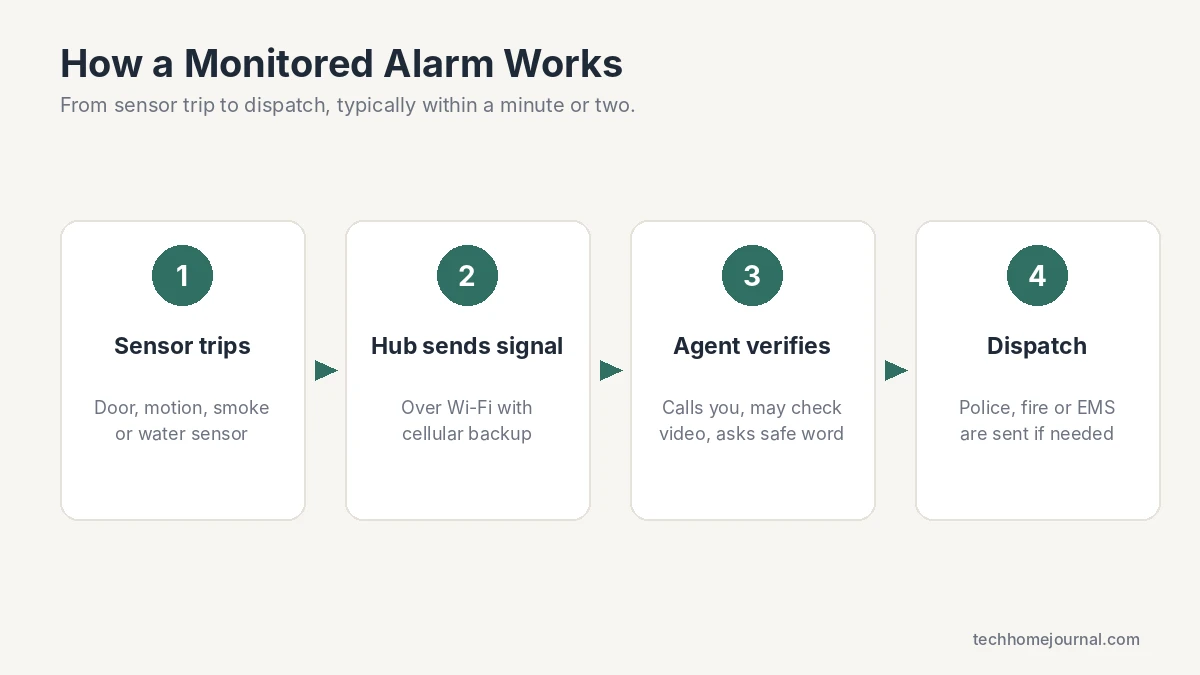
When a sensor trips, the hub sends a signal to the monitoring center, usually over Wi-Fi with cellular backup so it still works if your internet goes down. An agent then tries to verify the alarm. They may call you, ask for your safe word or check camera footage if your plan includes video verification. If the threat looks real, or nobody answers, they dispatch police, fire or EMS.
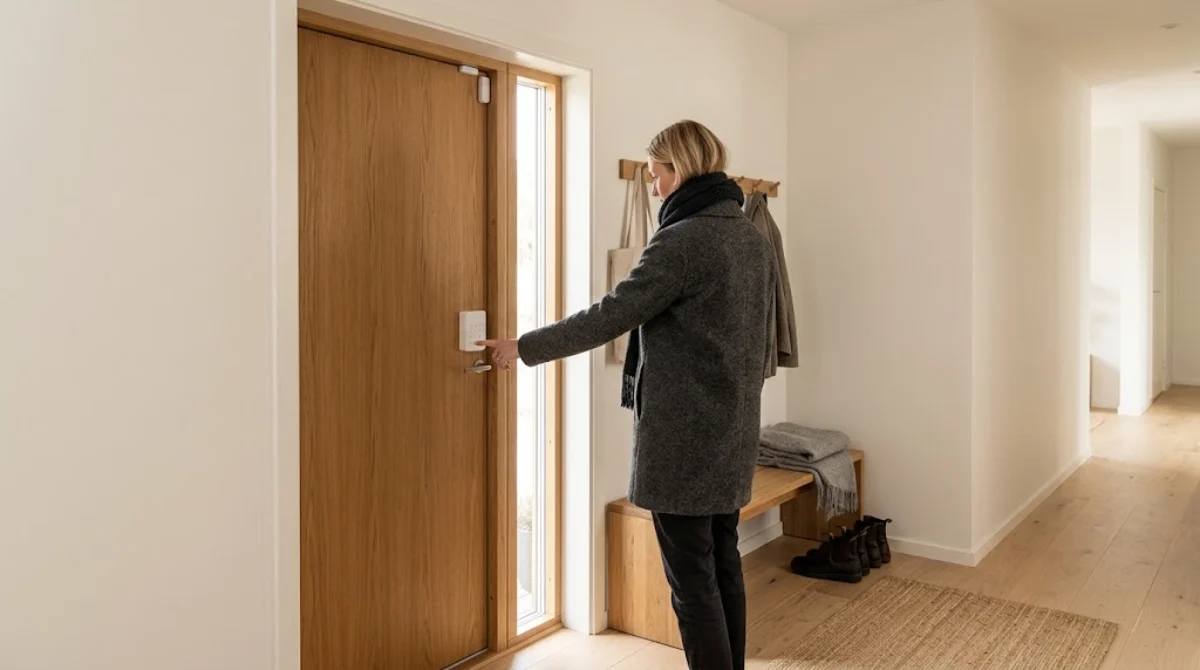
Verification matters more than it used to. Many cities now fine homeowners for repeated false alarms, and some police departments give verified alarms higher priority. Providers like SimpliSafe and Ring offer video verification on their higher plans for this reason.
Professional vs Self-Monitoring
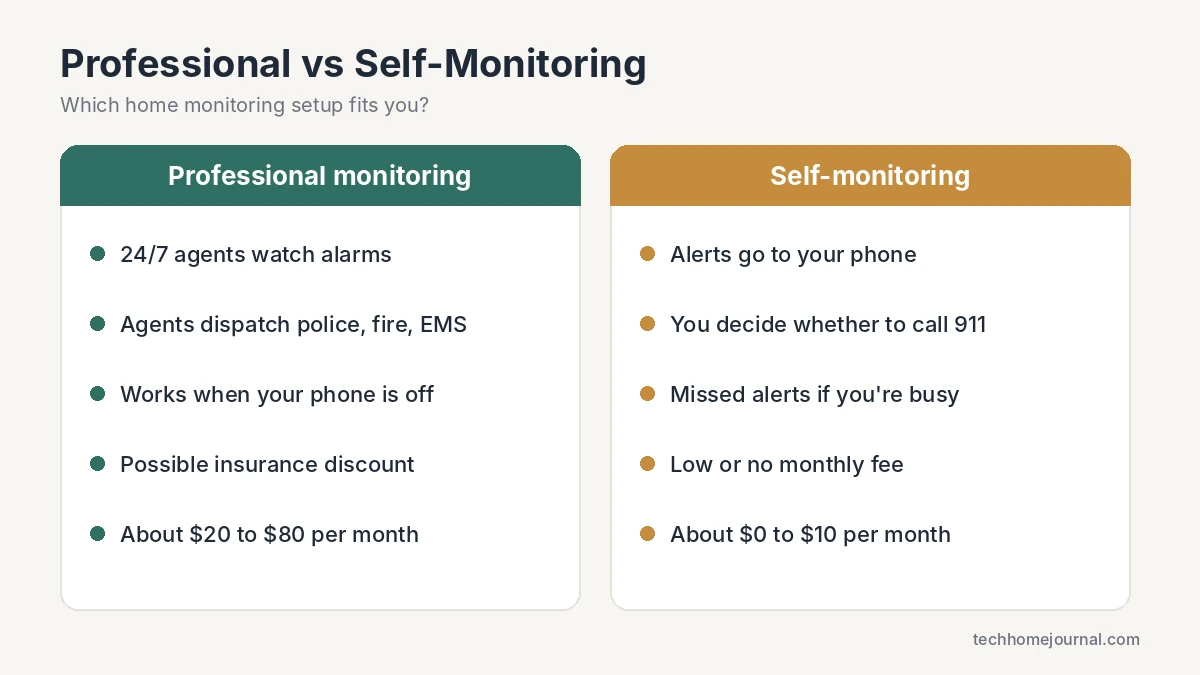
Professional monitoring means a staffed center watches your system around the clock. It costs roughly $20 to $80 a month, but it works when you’re asleep, on a flight or out of signal. Many home insurers offer a discount for a professionally monitored alarm, which can offset part of the fee.
Self-monitoring sends alerts straight to your phone and leaves the next step to you. It’s cheap, often $0 to $10 a month for cloud video and extra features, but it only works if you see the alert and act on it. Self-monitoring suits renters, small apartments and anyone who mostly wants to keep an eye on cameras and the front door.
A practical middle ground is month-to-month professional monitoring. You can switch it on while traveling and drop back to self-monitoring when you’re home, which providers like SimpliSafe, Ring, Cove and Abode allow without a long contract.
Quick Picks: Best Home Monitoring Systems 2026
- Best overall: SimpliSafe. No contract, flexible plans and optional live outdoor guard monitoring.
- Best budget professional monitoring: Ring Alarm with the Ring Pro plan at $19.99 a month.
- Best no-contract value: Cove, with simple plans from about $23 a month.
- Best for flexible smart homes: abode, with cheap self-monitoring and optional pro monitoring.
- Best professional installation: ADT, with nationwide installers and Google Nest integration.
- Best full smart home package: Vivint, with professional install and deep automation.
Home Monitoring Costs Compared
| Provider | Pro monitoring (approx./month) | Self-monitoring option | Contract | Install |
|---|---|---|---|---|
| SimpliSafe | About $23 to $80 | Yes (about $10/mo for camera recordings) | None | DIY or paid pro install |
| Ring Alarm | $19.99 (Ring Pro plan) | Yes (from $4.99/mo) | None | DIY |
| Cove | About $23 to $43 | Limited | None | DIY |
| abode | About $27 (Pro) | Yes (about $8.50/mo Standard) | Monthly or yearly | DIY |
| ADT | About $25 to $50+ | Limited (DIY kits) | Often 36 months with pro install | Pro install |
| Vivint | About $25 to $50 | No | Common unless you pay for equipment upfront | Pro install |
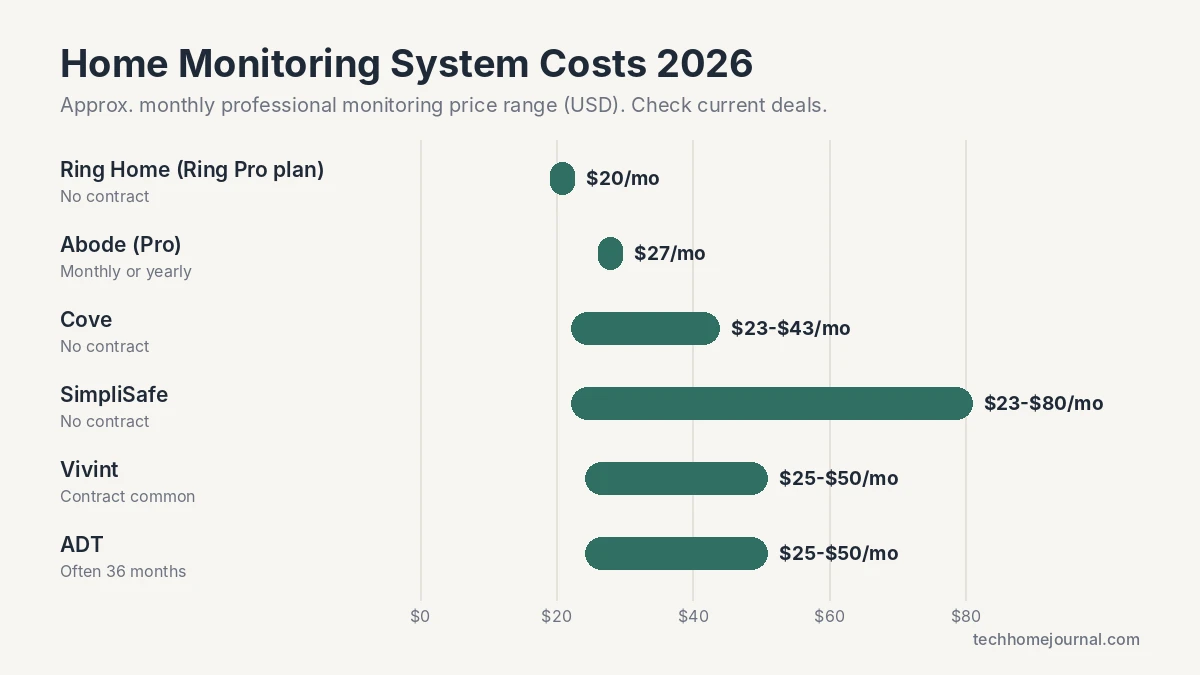
Monthly fees are only part of the cost. Starter equipment kits usually run $100 to $500 for DIY systems, while professionally installed systems can pass $1,000 once you add cameras. Independent comparisons such as Security.org’s budget security roundup are useful for checking current equipment deals.
Best Home Monitoring Systems in Detail
1. SimpliSafe: Best Overall
Plans: Standard about $23/mo | Core about $33/mo | Pro about $50/mo | Pro Plus about $80/mo | Self-monitoring with camera recordings about $10/mo | No contract
SimpliSafe offers the widest range of monitoring plans without locking you into a contract. Core adds video verification, which can speed up police response. Pro and Pro Plus add Active Guard Outdoor Protection, where live agents watch your outdoor cameras and can talk to intruders before they reach the door. Pro covers nighttime hours and Pro Plus runs 24/7. The equipment is wireless, easy to install and comes with a cellular connection to the monitoring center.
Pros: no contract, flexible plans, video verification, lifetime equipment warranty on monitored plans.
Cons: top-tier plans get expensive, no native Apple Home support.
2. Ring Alarm: Best Budget Professional Monitoring
Plans: Ring Solo $4.99/mo | Ring Multi $9.99/mo | Ring Pro $19.99/mo or $199.99/yr (includes 24/7 professional monitoring) | Virtual Security Guard $99/mo | No contract
Ring Alarm is the cheapest way to get real 24/7 professional monitoring from a major brand. The Ring Pro plan covers the alarm, cloud video for every Ring camera and cellular backup in one price. If you already own a Ring doorbell or floodlight camera, everything lives in one app. Ring’s Virtual Security Guard adds live agents who watch your outdoor cameras, but at $99 a month it’s a niche add-on.
Pros: lowest-cost pro monitoring, great camera ecosystem, Alexa integration.
Cons: best value only if you use Ring cameras, privacy settings need attention.
3. Cove: Best No-Contract Value
Plans: about $23 to $43/mo | Equipment from about $110 | No contract
Cove keeps things simple. You get affordable wireless equipment, professional monitoring on every plan and no long-term commitment. Higher tiers add camera support, smart assistant integration and extra perks. It’s a strong pick if you want professional monitoring without paying for features you won’t use.
Pros: low monthly cost, professional monitoring on all plans, easy DIY setup.
Cons: smaller camera range than Ring or SimpliSafe.
4. abode: Best for Flexible Smart Homes
Plans: Basic (free, self-monitoring) | Standard about $8.50/mo | Pro about $27/mo with 24/7 professional monitoring | Monthly or yearly billing
abode is built for people who care about smart home automation. It works with a wide range of Z-Wave and Zigbee devices plus the major voice assistants, so your alarm can trigger lights, locks and more. Its free and low-cost self-monitoring tiers make it easy to start cheap and add professional monitoring later, or only when you travel.
Pros: excellent automation, cheap self-monitoring, on-demand pro monitoring.
Cons: setup takes more effort than Ring or SimpliSafe.
5. ADT: Best Professional Installation
Plans: about $25 to $50+/mo | Professional install often requires a 36-month contract | DIY options with no contract
ADT is the best-known name in home monitoring, with its own monitoring centers and installers across the US. Its systems integrate with Google Nest cameras and doorbells, and a technician handles setup for you. The trade-off is commitment. Professionally installed packages usually come with a multi-year contract and a higher monthly fee.
Pros: professional installation, long track record, Google Nest integration.
Cons: contracts, higher total cost.
6. Vivint: Best Full Smart Home Package
Plans: about $25/mo (no camera support) to about $50/mo (cameras and full automation) | Equipment financing up to 60 months
Vivint combines professional installation with one of the most polished smart home platforms. Locks, thermostats, cameras and sensors all work together in one app. It’s also one of the most expensive options. Equipment is often financed, which ties you in, and cameras require the higher plan.
Pros: polished app, deep automation, professional installation.
Cons: high upfront or financed equipment costs, long commitments.
What to Look for in a Monitoring Plan
- Cellular backup: your alarm should still reach the monitoring center if Wi-Fi or power goes down. Protecting your network matters too, so read our guide on securing your home Wi-Fi from hackers.
- Video verification: agents check camera footage before dispatch, which reduces false alarms and can speed up police response.
- Monitoring center quality: look for centers certified by The Monitoring Association (TMA), such as Five Diamond centers, or UL-listed centers.
- Fire, CO and water coverage: make sure monitored smoke, CO and leak sensors are included, not just intrusion.
- Cameras without lock-in: if you mostly want video, compare with a doorbell camera with no subscription or a local PoE camera system.
- Contract terms: month-to-month plans give you the most freedom.
For help picking the hardware itself, see our wireless home security system buying guide. If you want to keep the living room stylish while still secure, read our living room home security guide.
How to Avoid Hidden Costs and Bad Contracts
Home monitoring is one of the few smart home purchases where the contract can cost more than the hardware. A few rules keep you safe:
- Total the full term. A $45/mo plan over 36 months is $1,620 before equipment.
- Watch “free equipment” deals. They usually come bundled with a long, expensive monitoring contract.
- Check cancellation and moving terms before signing, especially if you rent.
- Be careful with door-to-door sellers. The FTC warns about pressure tactics and fake “upgrades,” and its Cooling-Off Rule gives you three business days to cancel a contract signed at home.
- Ask about local alarm permits and false alarm fines in your city.
Free tools: How much storage will your cameras need? Our free security camera storage calculator shows how many days of footage your hard drive or microSD card will hold. Planning a bigger setup? Our free smart home cost calculator estimates devices, installation and monthly fees for your whole home.
Frequently Asked Questions
How much does a home monitoring system cost per month?
Professional monitoring typically costs about $20 to $50 a month, and premium plans with live video guards can reach $80 or more. Self-monitoring costs $0 to $10 a month for cloud video and extra features.
Is professional monitoring worth it?
It’s worth it if you travel often, live alone, have elderly family at home or want monitored fire and CO protection. It may also lower your home insurance premium. If you’re always reachable and mostly want camera alerts, self-monitoring is usually enough.
Can I have a home monitoring system without a contract?
Yes. SimpliSafe, Ring, Cove and abode all offer month-to-month monitoring. Contracts are most common with professionally installed systems from ADT and Vivint.
Does a home monitoring system work without Wi-Fi?
Most professionally monitored systems include cellular backup, so alarms still reach the monitoring center during an internet outage. App features and camera streaming may be limited until Wi-Fi returns.
What’s the cheapest professional home monitoring?
Among the major brands, Ring’s Pro plan at $19.99 a month (or $199.99 a year) is one of the cheapest ways to get 24/7 professional monitoring. Cove and SimpliSafe’s Standard plan come in a few dollars higher.
Is a home monitoring system good for renters?
Yes, if you choose a wireless DIY system. Ring, SimpliSafe, Cove and abode use adhesive sensors, need no drilling and move with you. Avoid long contracts if you might move within a few years.
Final Verdict
For most homes, SimpliSafe is the best home monitoring system in 2026. It offers no-contract professional monitoring, video verification and plans that scale from basic to live outdoor guards. On a tighter budget, Ring Alarm with the Ring Pro plan gives you 24/7 professional monitoring for $19.99 a month. Cove and abode are strong no-contract alternatives. Choose ADT or Vivint only if you want a technician to handle everything and you’re comfortable with a longer commitment. Whatever you pick, add up the full monthly cost over two or three years before you sign.