

Tesla made its name in solar by publishing prices online, back when most installers made you sit through a sales visit before you saw a number. That simple idea still pulls a lot of homeowners to Tesla first. But Tesla’s solar business looks quite different in late 2026 than it did even a year ago. There is a new US-made panel, the Solar Roof is gone, and the federal tax credit most cost guides still mention no longer applies to homeowners who buy a system.
This guide breaks down what Tesla solar panels cost right now, what pushes the price up or down, how a Powerwall changes the math, and how to judge whether a Tesla quote is actually a good deal. All prices here are approximate and based on published averages, so treat them as a starting point and check your own quote.
Table of Contents
- Quick answer: how much do Tesla solar panels cost?
- What’s new with Tesla solar in 2026
- Tesla solar cost by system size
- Tesla solar panel specs
- Adding a Powerwall 3: what it costs
- The federal tax credit in 2026
- What a Tesla solar quote includes
- What changes the price of your system
- Tesla vs other solar installers
- Payback period and savings
- Pros and cons of going solar with Tesla
- How to get the best price
- FAQ
- Final verdict
Quick answer: how much do Tesla solar panels cost?
For most US homes, a Tesla solar panel system costs roughly $2.30 to $3.10 per watt before any local incentives. This Old House puts a typical 8 kW system at about $18,400 to $24,800. EnergySage, which tracks real quotes from its marketplace, reports an average of about $2.81 per watt for systems using Tesla panels.
| Item | Approximate cost |
|---|---|
| Price per watt (panels, installed) | $2.30 to $3.10 |
| 6 kW system | $13,800 to $18,600 |
| 8 kW system | $18,400 to $24,800 |
| 10 kW system | $23,000 to $31,000 |
| Powerwall 3 (equipment) | About $9,300 before installation |
| Federal tax credit for buyers (2026) | Not available |
Those system-size numbers are simple math from the per-watt range. Your quote can land outside it depending on your roof, location and electrical panel.
What’s new with Tesla solar in 2026
Three changes matter if you are pricing Tesla solar this year.
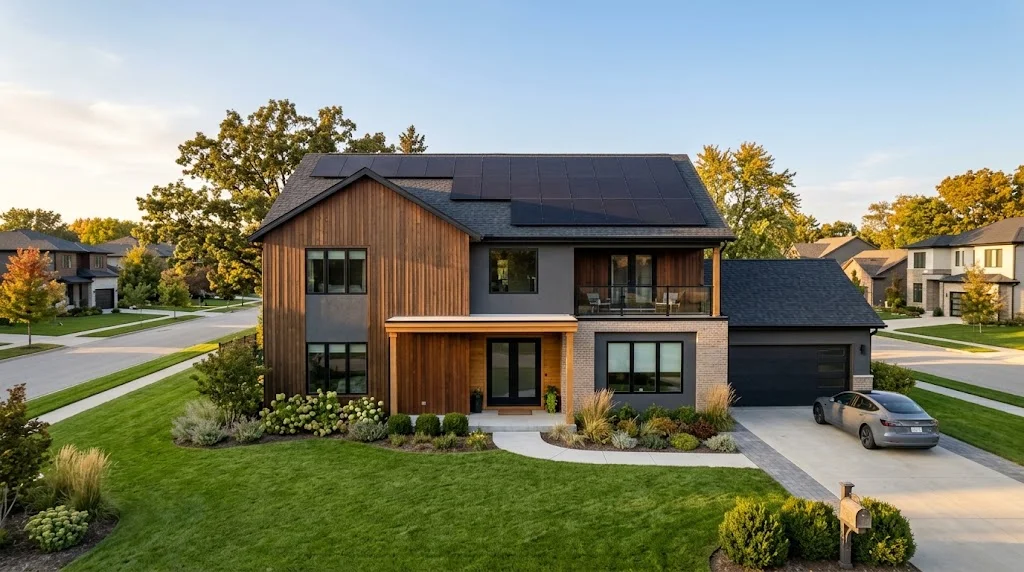
A new, US-made panel. In January 2026, Tesla introduced its own residential panels, the TSP-415 and TSP-420, assembled at its Buffalo, New York factory. According to pv magazine, the panels split each module into 18 power zones instead of the usual six, which is meant to limit losses when part of the panel is shaded by a chimney or vent. They also use a rail-less mounting system that Tesla says makes installation about 33% faster.
The Solar Roof is discontinued. In August 2026, Electrek reported that Tesla told its certified installers that Solar Roof tiles are no longer available to order. Tesla’s solar roof page now redirects to its solar panels page. If you were waiting for a Solar Roof quote, regular panels are now the only Tesla option.
More installs go through certified installers. Tesla still installs directly in some areas, but its panels and Powerwall are also sold through a network of certified third-party installers. In practice, your “Tesla” system may be installed by a local company, which affects pricing, timelines and who you call for service.
Tesla solar cost by system size
System size is the biggest driver of what you pay. It depends on how much electricity your home uses and how much sun your roof gets. A quick way to estimate: look at your yearly kWh use on your utility bills, then divide by roughly 1,200 to 1,500 (a common range for how many kWh each installed kW produces in a year across much of the US). That gives a ballpark system size in kW.
| System size | Approx. panels (420 W) | Typical home | Estimated cost at $2.30 to $3.10/W |
|---|---|---|---|
| 4 kW | 10 | Small home or condo, low usage | $9,200 to $12,400 |
| 6 kW | 14 to 15 | Average home in a sunny state | $13,800 to $18,600 |
| 8 kW | 19 to 20 | Average US home | $18,400 to $24,800 |
| 10 kW | 24 | Larger home, EV charging | $23,000 to $31,000 |
| 12 kW | 29 | Large home, EV, electric heat | $27,600 to $37,200 |
Larger systems usually get a slightly lower price per watt, because fixed costs like permits, design and the inverter are spread over more panels.
Tesla solar panel specs
Here is how the current Tesla panels compare on paper, based on the published datasheet figures reported by pv magazine and EnergySage.
| Spec | TSP-415 | TSP-420 |
|---|---|---|
| Power | 415 W | 420 W |
| Efficiency | 20.3% | 20.5% |
| Cell type | Monocrystalline | Monocrystalline |
| Temperature coefficient | -0.34% per °C | -0.34% per °C |
| Dimensions | 1805 x 1135 x 40 mm | 1805 x 1135 x 40 mm |
| Weight | 49 lb | 49 lb |
| Product and power warranty | 25 years | 25 years |
Around 20.5% efficiency is solid but not class-leading; premium panels from some other brands go above 22%. What Tesla is selling is less about record efficiency and more about a clean, all-black look, the shade-tolerant zone design, and a system built to work with the Tesla inverter and Powerwall 3.
Warranty coverage matters as much as the specs. Tesla backs the panels with a 25-year product and performance warranty, with output guaranteed at 98% in year one and dropping to around 85 to 87% by year 25, depending on the source. The workmanship warranty is shorter, typically 10 years, which is less than some installers offer.
Adding a Powerwall 3: what it costs
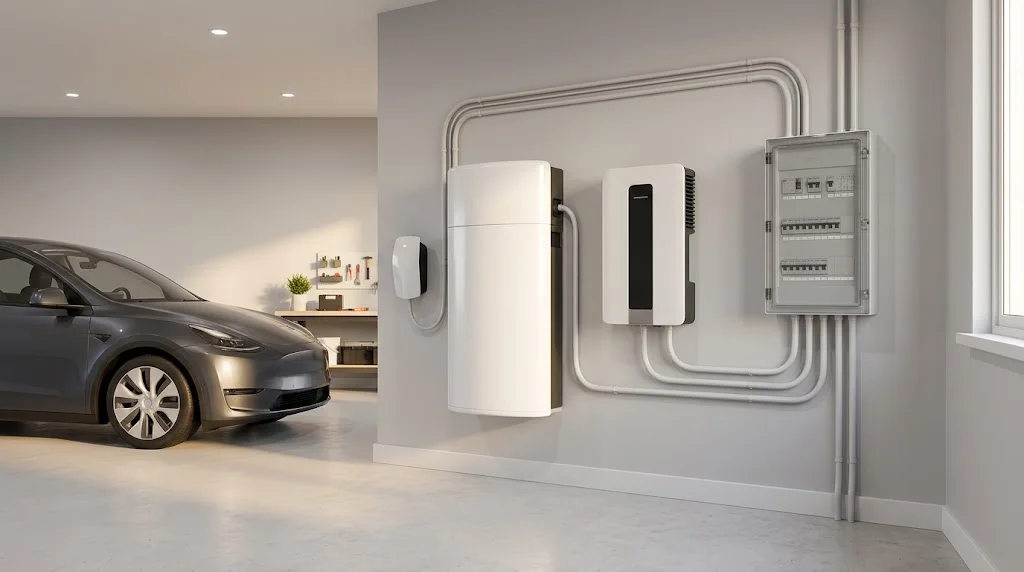
The Powerwall 3 is Tesla’s home battery, and many buyers add one to keep the lights on in an outage or to store daytime solar for the evening.
- Capacity: 13.5 kWh of usable storage
- Power output: up to 11.5 kW continuous
- Built-in solar inverter: yes, so a new solar system may not need a separate inverter
- Expandable: up to about 54 kWh with expansion units
- Price: about $9,300 for the equipment from Tesla, before installation. Installed prices commonly land in the low-to-mid teens of thousands, depending on electrical work.
- Warranty: 10 years, with at least 70% capacity guaranteed at 10 years under normal use
Whether a battery makes financial sense depends mostly on your utility. If your utility pays you well for the solar power you send back to the grid (strong net metering), a battery is mainly for backup and peace of mind. If your utility pays little for exported power or has expensive evening rates, a battery can actually pay for itself faster, because you use your own stored solar instead of buying expensive power at night.
If you are curious how much power your home uses in the evening, a whole-house energy monitor gives you real numbers before you size a battery.
The federal tax credit in 2026
This is where a lot of online cost guides are out of date. The 30% Residential Clean Energy Credit (Section 25D) ended for systems installed after December 31, 2025, under the law signed in July 2025. As Solar.com explains, homeowners who buy a system with cash or a loan in 2026 cannot claim it.
What this means in real dollars: on a $22,000 system, the old credit would have knocked about $6,600 off. That money is no longer on the table for buyers, which stretches out payback periods.
There are still ways to lower the cost:
- State and local incentives. Some states, cities and utilities still offer rebates, performance payments or property tax exemptions for solar. The DSIRE database lists programs by state.
- Leases and power purchase agreements. Third-party owners can still use a business-side credit for systems installed through 2027, and some pass part of that value on through lower payments. Check what your installer offers, since Tesla’s own financing options change over time.
- Battery programs. Some utilities pay homeowners to let them draw on home batteries during peak demand.
Tax rules are complicated and personal, so confirm your situation with a tax professional before counting on any credit.
What a Tesla solar quote includes
When you compare a Tesla quote with another installer’s, check that you are comparing the same things. A typical Tesla solar quote covers:
- The panels and mounting hardware, including the rail-less mounts and trim.
- The inverter. This is either the Tesla Solar Inverter or, if you add a battery, the inverter built into Powerwall 3.
- Design, permits and inspections. Tesla or the certified installer handles the paperwork with your city and utility.
- Utility interconnection, which is the approval that lets your system send power to the grid.
- Monitoring through the Tesla app, which shows production, home use and battery charge in real time.
What often is not included: roof repairs, a main electrical panel upgrade, tree trimming, trenching for ground-mounted arrays, or a critter guard around the panels. Ask for these as separate line items so a low headline price doesn’t grow later. Also ask when payment is due. For cash purchases, Tesla has typically collected final payment after the system passes inspection, which protects you if a project stalls.
What changes the price of your system
Two homes with the same size system can get very different quotes. These are the usual reasons:
- Roof type and condition. Asphalt shingle roofs are the easiest and cheapest. Tile, metal and slate cost more to work on. If your roof needs replacing within ten years, do that first; removing and reinstalling panels later is expensive.
- Roof layout. A big, unshaded, south-facing roof is ideal. Lots of small roof sections, dormers or shading mean more design work and sometimes more panels to reach the same output.
- Electrical panel upgrade. Older homes with 100-amp panels may need an upgrade, which can add $1,500 to $4,000 or more.
- Location. Labor costs, permit fees and utility interconnection rules vary a lot from state to state.
- Battery or no battery. A Powerwall can add roughly 40 to 60% to a typical system’s price.
- Who installs it. Direct Tesla installs and certified installer installs may be priced differently in the same area.
Tesla vs other solar installers
Tesla’s biggest strengths have always been pricing and simplicity. Its biggest weaknesses have been customer service and communication.
| Factor | Tesla | Typical local installer |
|---|---|---|
| Price per watt | Usually below national average | Varies widely, often higher |
| Quote process | Online, upfront pricing | Site visit and custom proposal |
| Panel choice | Tesla panels only | Usually several brands |
| Workmanship warranty | Typically 10 years | 10 to 25 years |
| Battery | Powerwall 3 | Powerwall, Enphase, Franklin and others |
| Customer service | Mixed reviews | Depends on company, often more personal |
A local installer with a strong reputation can be worth paying a little more for, especially if they offer a 25-year workmanship warranty and you know who to call when something goes wrong. Tesla tends to win when price is the main concern and your roof is simple.
Payback period and savings
Payback is the time it takes for your electricity savings to cover what you paid. Without the federal credit, it is longer than it was in 2025.
A rough way to estimate it:
- Take your total system cost after any state or local incentives.
- Estimate yearly savings: system size in kW multiplied by about 1,300 kWh, multiplied by your electricity rate.
- Divide the cost by the yearly savings.
Example: an 8 kW system at $22,000 in an area with $0.20 per kWh electricity. Yearly production is about 10,400 kWh, worth about $2,080 a year. Payback is roughly 10 to 11 years. At $0.30 per kWh, which is common in parts of California and the Northeast, payback drops to around 7 years. In a state with cheap power, around $0.12 per kWh, it stretches to well over 15 years.

Solar works best when you also cut waste. Our guides on lowering your electricity bill and smart home energy saving tips can shrink the system size you need, which cuts the upfront cost. A smart thermostat and a few energy monitoring smart plugs are cheap ways to start.
Pros and cons of going solar with Tesla
Pros
- Competitive pricing, often below the national average per watt
- Online quotes with transparent pricing
- New US-made panels with 18 shade-tolerant zones
- Clean, all-black look with rail-less mounting
- Tight integration with Powerwall 3 and the Tesla app
- 25-year panel product and performance warranty
Cons
- Workmanship warranty is usually only 10 years
- Customer service reviews are mixed
- Only Tesla panels, so less equipment choice
- Solar Roof is no longer available
- Federal tax credit no longer applies to buyers
- Installation timelines can be long in some areas
How to get the best price
- Get at least three quotes. One from Tesla, one or two from well-reviewed local installers. Compare price per watt, not just the total.
- Ask about price matching. Tesla has offered a price match against comparable quotes in the past. Ask whether it applies to you.
- Check the roof first. If your roof is near the end of its life, replace it before installing panels.
- Size for your real usage. Use 12 months of bills, and think about planned changes like an EV or a heat pump.
- Read the fine print on financing. Compare loan interest rates with your own bank or credit union.
- Look up local incentives. Use DSIRE and your utility’s website before you sign.
While the installer is on the roof, some homeowners add outdoor tech at the same time. If that’s on your list, our guides to solar-powered security cameras and solar motion sensor lights are worth a read.
Want a quick estimate for your own roof? Try our free solar panel calculator to see how many panels you need, and our generator size calculator if you also want backup power.
FAQ
How much does a Tesla solar system cost for a 2,000 sq ft house?
Square footage is only a rough guide; usage matters more. Many 2,000 sq ft homes need around 6 to 8 kW, which works out to about $13,800 to $24,800 at Tesla’s typical pricing, before local incentives.
Is Tesla solar cheaper than other companies?
Often, yes, on price per watt. But a cheaper quote with a shorter workmanship warranty and slower service is not always the better value. Compare total cost, warranties and reviews.
Can I still get the 30% federal solar tax credit in 2026?
Not if you buy the system. The residential credit ended for systems installed after December 31, 2025. Leased systems may still benefit indirectly through a business-side credit. Check with a tax professional.
How much does a Powerwall 3 cost?
About $9,300 for the equipment before installation. Installed costs commonly run several thousand dollars more, depending on your electrical setup.
Does Tesla still sell the Solar Roof?
No. Tesla stopped taking Solar Roof orders in August 2026 and now sells only standard solar panels for homes.
How long do Tesla solar panels last?
The panels carry a 25-year warranty and typically keep producing for 25 to 30 years or more, with output slowly declining over time.
Do I need a battery with Tesla solar?
No. Panels work without a battery. A battery is useful for backup power and for homes where the utility pays little for exported solar power.
Final verdict
Tesla solar panels cost about $2.30 to $3.10 per watt in 2026, so roughly $18,000 to $25,000 for a typical 8 kW system before local incentives. That is competitive, and the new US-made panels are a real step up in design. The catch is that the federal tax credit is gone for buyers, which makes payback slower, and Tesla’s service track record is still uneven.
If your roof is simple, your electricity is expensive and price is your main concern, a Tesla quote is well worth getting. Just put it next to two local quotes, compare price per watt and warranty terms, and choose the installer you trust to still answer the phone in year eight.