
Thread and Zigbee look almost identical on paper. Both use the same 2.4GHz radio standard (IEEE 802.15.4), both build low-power mesh networks and both are used for sensors, bulbs, plugs and locks. So what’s actually different, and which should you choose in 2026? This quick guide compares Thread vs Zigbee in plain English.
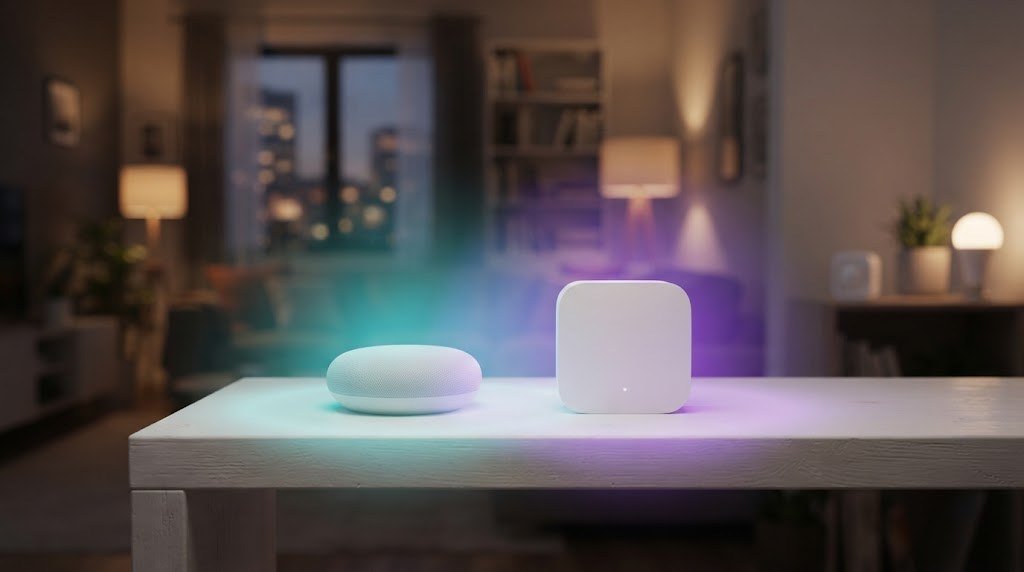
Table of Contents
- The Short Answer
- The Key Difference: How They Connect
- Thread vs Zigbee Comparison
- Reliability and Speed
- Compatibility
- Interference
- Can Thread and Zigbee Work Together?
- Which Should You Buy?
- What Is Thread?
- What Is Zigbee?
- Thread Border Routers vs Zigbee Hubs
- Range, Battery Life and Mesh Size
- Which Devices Use Thread or Zigbee?
- Should You Switch From Zigbee to Thread?
- Setup Experience: Pairing Thread vs Zigbee Devices
- Security and Privacy
- Cost: Is Thread or Zigbee Cheaper?
- Frequently Asked Questions
- Final Verdict
The Short Answer
- Choose Thread if you’re buying new devices in 2026 and want them to work across Apple Home, Google Home, Alexa and SmartThings through Matter.
- Choose Zigbee if you want the cheapest sensors and the largest selection of devices today, or you already have a Zigbee hub.
- Use both if you like. Many hubs support Zigbee and Thread side by side.
The Key Difference: How They Connect
The biggest difference isn’t the radio. It’s the networking.
Zigbee devices speak their own language. They need a Zigbee coordinator (a hub, some Echo speakers or a USB radio), which translates everything for your app. Devices from different brands usually work together through that hub, but some features can be brand-specific.
Thread devices speak IPv6, the same kind of addressing the internet uses. Instead of a translating hub, Thread uses a border router to connect the Thread mesh to your Wi-Fi network. Combined with Matter, a Thread device can be controlled directly by Apple, Google, Amazon and Samsung platforms, often at the same time.
Thread vs Zigbee Comparison
| Feature | Thread | Zigbee |
|---|---|---|
| Radio | IEEE 802.15.4, 2.4GHz | IEEE 802.15.4, 2.4GHz |
| Networking | IPv6 (IP-based) | Zigbee protocol stack |
| Controller | Thread border router | Zigbee coordinator (hub) |
| Single point of failure | No, if you have multiple border routers | Yes, the coordinator |
| Cross-platform | Yes, with Matter | Mostly via hubs and bridges |
| Device selection | Growing quickly | Very large |
| Typical price | Mid-range | Low |
| Best for | New, future-proof setups | Budget sensors, existing hubs |
Reliability and Speed
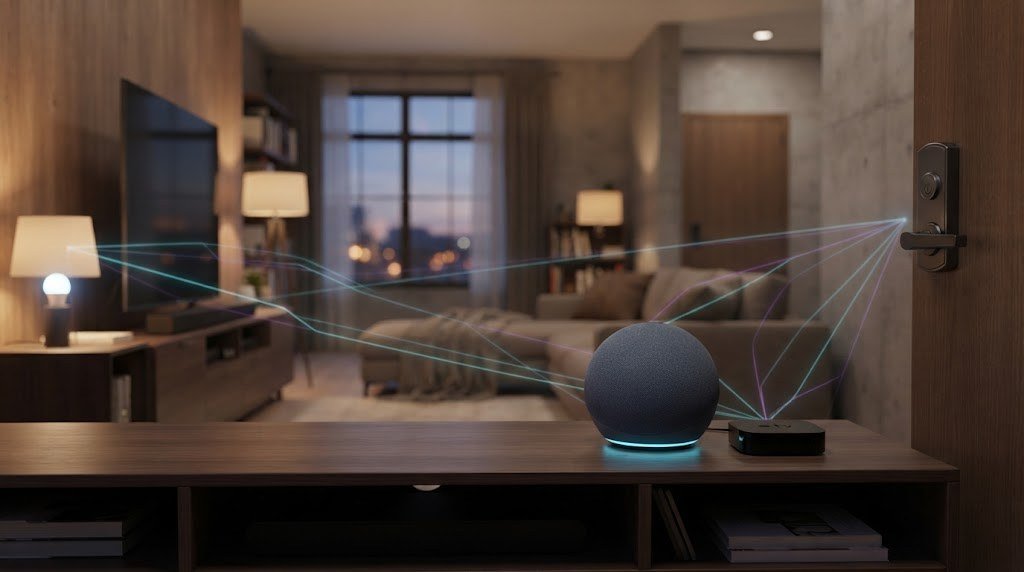
Both protocols are fast and reliable when the mesh is healthy. Thread has one structural advantage: you can have multiple border routers, such as an Apple TV, a HomePod mini and a Google Nest Hub, so if one goes offline, the network keeps working. With Zigbee, if the coordinator goes down, the network stops responding until it’s back.
Zigbee, on the other hand, has more than a decade of real-world maturity. Well-built Zigbee networks with plenty of powered repeaters are extremely stable.
Compatibility
Thread’s real strength comes from Matter. A Matter-over-Thread device can join Apple Home, Google Home, Alexa and SmartThings, and with multi-admin, it can be in more than one at once.
Zigbee devices work great within their ecosystem, such as Philips Hue, Aqara or Home Assistant. To reach other platforms, you rely on the hub. Some hubs, like the Aqara Hub M3, can bridge their Zigbee devices into Matter, giving you some of the same cross-platform flexibility.
Interference
Because both use 2.4GHz, both can be affected by busy Wi-Fi. A few simple steps help:
- Keep hubs and border routers away from the Wi-Fi router’s antennas.
- Use a USB extension cable for USB radios to avoid interference from USB 3.0 ports.
- Choose Zigbee channels (like 15, 20 or 25) that overlap least with your Wi-Fi channels.
Can Thread and Zigbee Work Together?
Not directly. They use different network stacks, so a Zigbee sensor can’t join a Thread network. But a multi-protocol hub like Home Assistant, Homey Pro or Aqara Hub M3 can run both networks and let devices from each interact in the same automations. See our guide to the best smart home hubs for options.
Which Should You Buy?
Buy Thread devices when:
- You’re starting a new smart home
- Your household uses different ecosystems (for example, iPhone and Android)
- You already own Thread border routers like an Apple TV 4K, HomePod mini or a newer Nest Hub
Buy Zigbee devices when:
- You want the lowest cost per sensor
- You already have a Zigbee hub like Hue, Aqara or Home Assistant
- The exact device you want isn’t available in a Thread version yet
Related guides on Tech Home Journal:
- Matter vs WiFi Smart Home 2026: Which Protocol Actually Wins?
- Apple HomeKit Guide: Building a Scandinavian Smart Living Room That Just Works
- Smart Home Without Hub (2026 Guide): Build a Fully Connected Home on Your Terms
- Google Home Tips And Tricks (2026 Guide)
- Smart Water Shut Off Valve: How It Works Best Picks (2026)
Official resources: Thread Group: What is Thread · Zigbee (Connectivity Standards Alliance) · Matter (Connectivity Standards Alliance)
What Is Thread?
Thread is a low-power wireless mesh protocol built for smart home devices. It runs on the same IEEE 802.15.4 radio standard as Zigbee, in the 2.4 GHz band, but it was designed from the start to use IPv6. That means every Thread device has its own internet-style address, and it can talk to your phone or a cloud service through a Thread border router without a brand-specific translation hub.
Thread is managed by the Thread Group, whose members include Apple, Google, Amazon and Samsung. It became much more common once Matter launched, because Matter uses Thread as its main low-power network. Today most new Thread devices are sold as “Matter over Thread”, so they work with Apple Home, Google Home, Amazon Alexa and SmartThings.
Key traits of Thread:
- No single point of failure. If one border router goes offline, another can take over.
- Self-healing mesh. Mains-powered devices act as routers and pass messages along.
- Fast, local control. Commands don’t need the cloud once devices are set up.
- Low power, so battery sensors and locks can run for a long time.
What Is Zigbee?
Zigbee is the older and more established of the two. It has been used in smart homes for well over a decade and is maintained by the Connectivity Standards Alliance, the same group that runs Matter. The current version, Zigbee 3.0, improved compatibility between brands, but in practice you still need a Zigbee coordinator (a hub or bridge) to run the network.
Zigbee’s big strength is its huge product catalogue. Philips Hue lights, Aqara sensors, many IKEA products sold before the brand’s switch to Matter, and countless budget sensors and plugs all use it. It’s also cheap and well understood, which is why many hobbyists running Home Assistant still choose Zigbee for sensors.
The trade-off is that Zigbee is not IP-based. The hub translates everything, and devices from one brand’s hub don’t always work fully on another brand’s hub.
Thread Border Routers vs Zigbee Hubs
The device that runs the network is different for each protocol. You may already own one without knowing it:
| Ecosystem | Thread border routers (examples) | Zigbee hubs (examples) |
|---|---|---|
| Apple | HomePod mini, HomePod (2nd gen), Apple TV 4K (Wi-Fi + Ethernet models) | None built in |
| Nest Hub (2nd gen), Nest Hub Max, Nest Wifi Pro, Google TV Streamer | None built in | |
| Amazon | Echo (4th gen) and other Thread-capable Echo models | Echo (4th gen), Echo Hub and some Echo Show models |
| Samsung SmartThings | SmartThings Station and recent hubs | SmartThings hubs |
| Home Assistant | Thread/Zigbee USB adapters, such as Home Assistant Connect ZBT-1 | The same type of USB adapters |
| Brand bridges | Some newer brand hubs | Philips Hue Bridge, Aqara hubs |
Check the exact model before you buy, because Thread support varies between generations of the same product line. If you prefer to avoid hubs entirely, our guide to a smart home without a hub explains which setups work, and our best home automation hub guide covers hubs that support both protocols.
Range, Battery Life and Mesh Size
Because Thread and Zigbee share the same 802.15.4 radio, their basic physics is similar:
- Range per hop: roughly 10 to 30 m indoors, depending on walls and interference. The mesh extends range by passing messages through other devices.
- Routers vs end devices: plugs, bulbs and wired switches act as routers. Battery sensors and locks are usually end devices that sleep most of the time to save power.
- Battery life: both protocols let a coin-cell sensor run for a year or more, depending on how often it reports.
- Network size: both handle the dozens of devices a typical home needs. Very large networks benefit from more mains-powered routers spread around the house.
The practical tip is the same for both: add a few mains-powered devices, such as smart plugs, early on. A plug in each part of the house gives battery sensors a strong path back to the hub or border router. Our guide on what a smart plug is explains which plugs act as routers.
Which Devices Use Thread or Zigbee?
| Device type | Typical Thread examples | Typical Zigbee examples |
|---|---|---|
| Smart lights | Nanoleaf Essentials, newer Matter-over-Thread bulbs | Philips Hue (via Hue Bridge), many budget bulbs |
| Sensors | Eve door, motion and weather sensors; newer Aqara Matter sensors | Aqara door, motion and temperature sensors |
| Locks | Several recent Matter-over-Thread smart locks | Some locks with Zigbee modules |
| Plugs | Eve Energy, other Matter-over-Thread plugs | Many hub-based smart plugs |
| Blinds | Some newer motorised blinds | Many existing motorised blinds |
IKEA is a good example of the shift. Its older smart home range used Zigbee with the Dirigera hub, while its newer products are moving to Matter over Thread. Philips Hue still uses Zigbee for its lights but exposes them to Matter through the Hue Bridge.
Should You Switch From Zigbee to Thread?
If your Zigbee devices work well, there is no reason to replace them. Zigbee isn’t going away overnight, and many hubs now bridge Zigbee devices into Matter so they appear alongside Thread devices in one app.
A sensible approach:
- Keep existing Zigbee devices that are reliable.
- Buy Matter-over-Thread devices for new purchases, especially if you use more than one ecosystem.
- Make sure you have at least one, ideally two, Thread border routers in different parts of the house.
- Replace Zigbee devices only when they fail or when a Thread model adds something you actually need.
Setup Experience: Pairing Thread vs Zigbee Devices
Day-to-day setup feels quite different between the two.
Thread (Matter over Thread): you scan the Matter QR code on the device or box with your phone, using the Apple Home, Google Home, Alexa or SmartThings app. The app hands the device the network details, and it joins the Thread mesh through your border router. You can then share the same device with a second ecosystem from the app’s settings, so one smart plug can show up in both Apple Home and Alexa.
Zigbee: you put the hub into pairing mode in its app, then reset or power up the device so it joins. Some brands need their own hub for full features. For example, a sensor might pair with a third-party hub but lose firmware updates or advanced settings that only the original brand’s hub offers.
Tip for both: pair devices in their final location, or close to it. A device paired next to the hub and then moved across the house may take a while to find a better route through the mesh.
Security and Privacy
Both protocols encrypt traffic with AES-128, and both are far harder to snoop on than older 433 MHz gadgets. The differences are in how devices join and how they connect to the wider world:
- Thread with Matter uses device certificates and a secure setup code (the QR code), so a device has to prove it is genuine before it joins.
- Zigbee 3.0 uses install codes or network keys. Older Zigbee devices used a well-known default key during pairing, which is one reason to buy recent Zigbee 3.0 products.
- Local control: both can work without the cloud once set up, which is good for privacy. Check each brand’s app settings, because some still send data to their servers.
Whichever you choose, keep your hub, border routers and Wi-Fi router updated. They are the parts of the network most exposed to the internet.
Cost: Is Thread or Zigbee Cheaper?
Zigbee devices are often cheaper, especially sensors and plugs from budget brands, because the technology is mature and widely made. Thread devices used to cost more, but prices have dropped as Matter over Thread has spread to brands like IKEA and Aqara.
Remember to count the hub. If you already own a Thread border router, such as a HomePod mini or a recent Nest Hub, Thread devices need no extra hardware. Zigbee usually needs a hub or bridge, which adds to the cost unless your Echo or SmartThings hub already includes one.
Frequently Asked Questions
Is Thread better than Zigbee?
Thread is more future-proof thanks to Matter and IP-based networking, and it avoids a single point of failure with multiple border routers. Zigbee is cheaper and has more devices available today. “Better” depends on what you already own.
Is Zigbee going away?
No. Zigbee has a massive installed base and continues to be supported by major brands and hubs. Thread is growing quickly, but Zigbee will be around for years.
Do I need a hub for Thread?
You need a Thread border router, which is built into many smart speakers, streaming boxes and hubs. You also need a Matter controller, which these same devices usually provide.
Can a device have both Thread and Zigbee?
Some hubs and radios support both, and a few devices can be updated between them, but most end devices use one or the other.
Is Thread faster than Zigbee?
In everyday use, both feel instant for lights and sensors. Thread’s IP-based design and direct Matter support can make control feel a little more consistent across apps, but radio speed is very similar because both use 802.15.4.
Can a Zigbee device be upgraded to Thread?
Usually not. Some devices have radios that could support both, but the maker has to release new firmware. Most Zigbee devices will stay Zigbee for their whole life.
How many Thread border routers do I need?
One is enough to start, but two in different rooms give you a backup. Many homes already have two without realising it, such as a smart speaker and a streaming box.
Does Thread interfere with Wi-Fi?
Thread and Zigbee both use 2.4 GHz, like many Wi-Fi networks, but they use narrow channels and very little power. Interference is rare in normal homes. If you notice drop-outs, moving your 2.4 GHz Wi-Fi to channel 1, 6 or 11 and away from the Thread or Zigbee channel usually helps.
Which is better for Apple Home users?
Thread. Apple Home works with Matter-over-Thread devices through a HomePod or Apple TV, and it has no built-in Zigbee support, so Zigbee devices need a separate bridge.
Final Verdict
In the Thread vs Zigbee matchup, Thread is the smarter long-term bet for new devices, especially if you mix Apple, Google and Amazon at home. Zigbee remains the value king with the biggest device catalog. The good news is you don’t have to choose just one. For a deeper look that also covers Z-Wave, read our full Zigbee vs Z-Wave vs Thread comparison.