
Sliding glass doors are one of the easiest ways into many homes. They’re usually at the back, out of sight from the street, and most still rely on the small hook latch they shipped with. The good news: a few inexpensive upgrades make a huge difference.
This guide covers how to secure a sliding glass door step by step, from a $10 track bar to smart sensors that alert your phone, plus renter-friendly fixes and a five-minute test you can run today. Prices are approximate and vary by store.
Table of Contents
- Why Sliding Glass Doors Are a Weak Point
- Quick Picks: 5 Best Ways to Secure a Sliding Door
- Physical Barriers That Stop Forced Entry
- Smart Upgrades for Real-Time Alerts
- Renter-Friendly Options (No Drilling)
- Common Installation Mistakes to Avoid
- How to Test Your Sliding Door in 5 Minutes
- Building a Layered Defense
- Frequently Asked Questions
- Final Verdict
Why Sliding Glass Doors Are a Weak Point
Most sliding doors have three weak spots:
- The latch: a small hook that clips into a thin strike plate, often held by short screws.
- The track: on many older doors the panel has enough vertical play that it can be lifted up and out of its track.
- The glass: tempered glass is strong against everyday knocks, but it can be broken with the right tool. Laminated glass and security film hold together much longer.
Fix all three and your door goes from one of the easiest entry points to one of the harder ones.
Quick Picks: 5 Best Ways to Secure a Sliding Door
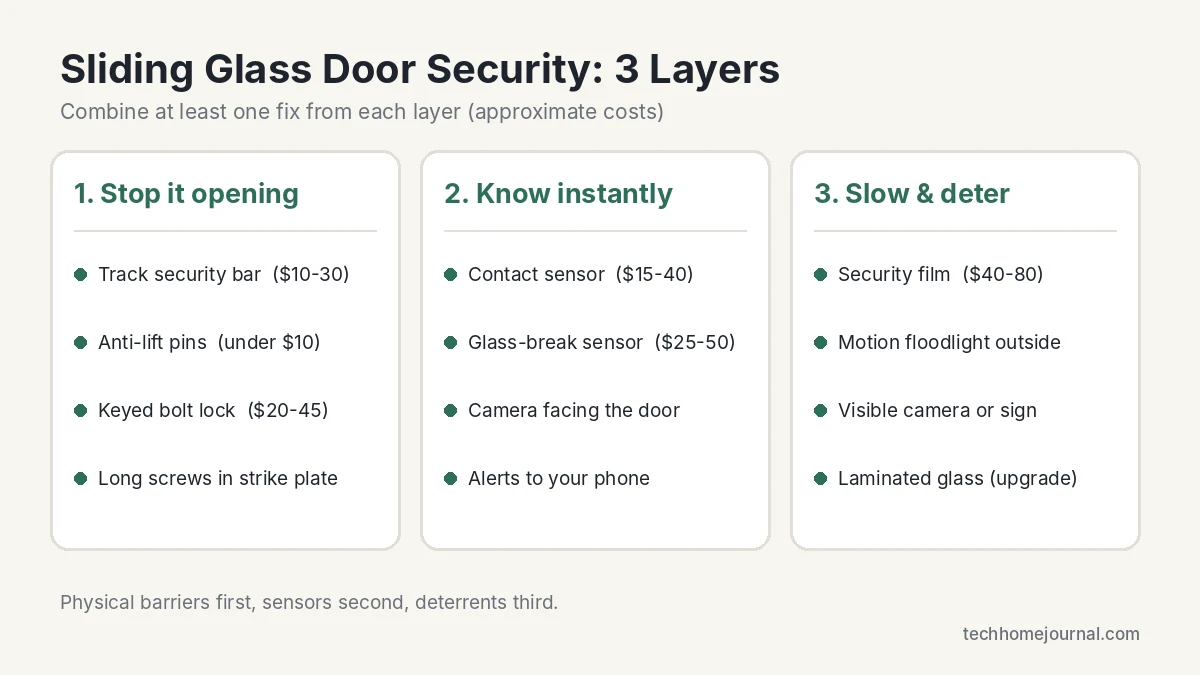
- Security bar in the track ($10 to $30): blocks the door from sliding even if the latch is defeated. A cut-to-fit dowel works; an adjustable metal bar looks neater.
- Anti-lift pins or screws (under $10): stop the panel being lifted out of the track.
- Keyed or double-bolt sliding door lock ($20 to $45): replaces or supplements the stock latch with a much stronger lock.
- Contact and glass-break sensors ($15 to $50 each): alert your phone or alarm the moment the door opens or the glass breaks.
- Security window film ($40 to $80 per door): holds broken glass together and slows down a forced entry.
Physical Barriers That Stop Forced Entry
Track security bar
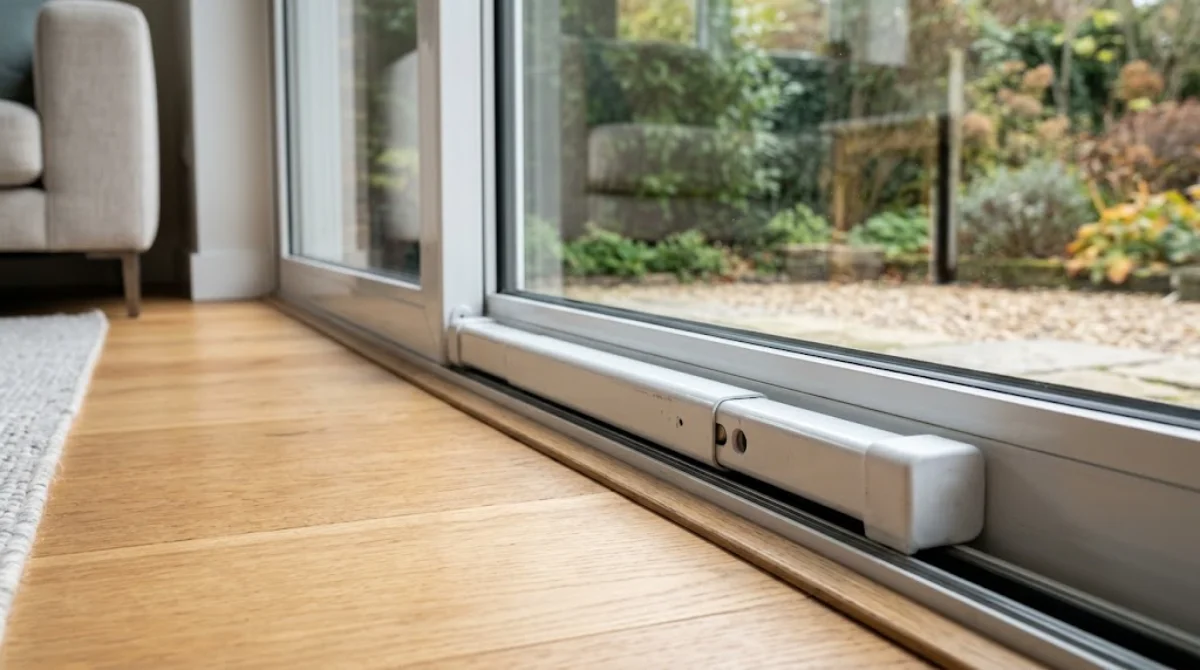
The simplest fix is still one of the best. A bar laid in the bottom track stops the door travelling more than a few centimetres, whatever happens to the latch. Measure from the edge of the closed sliding panel to the frame and cut the bar so it fits snugly with almost no play. Adjustable aluminium bars with rubber end caps resist warping in humid climates and don’t scratch the track. Fold-down bars mounted at handle height do the same job and are easy to flip up when you want to use the door.
Anti-lift pins
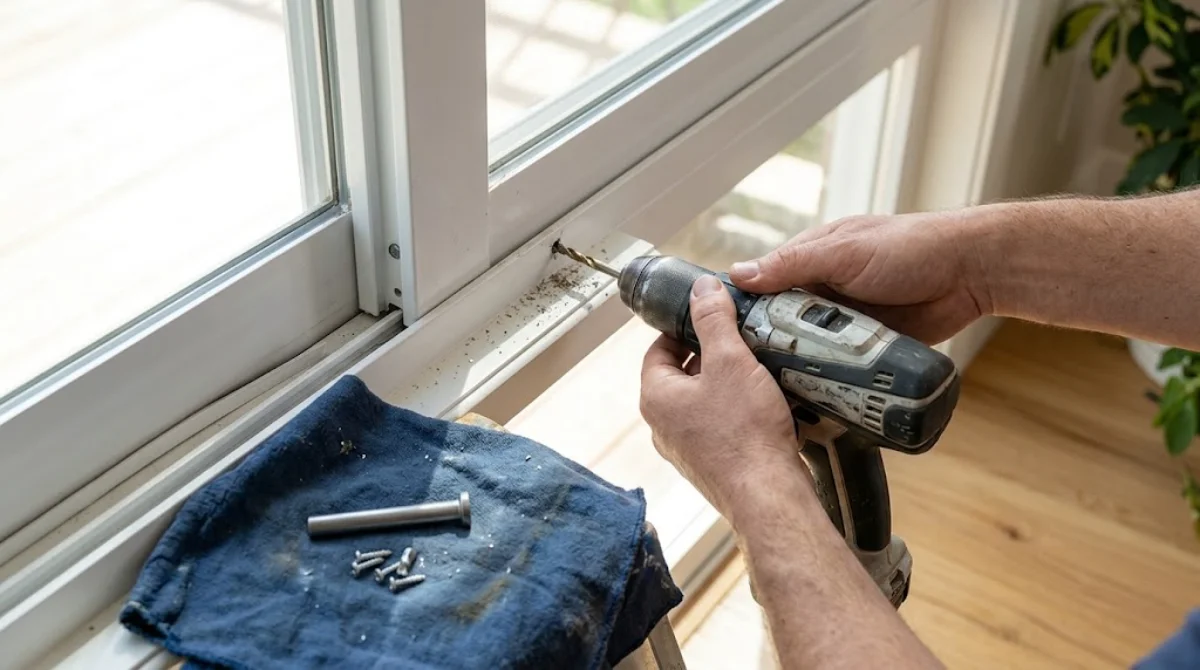
To stop the lift-out trick, drill a small hole through the inside frame into (not through) the sliding panel where they overlap, then drop in a steel pin or bolt. Two pins per door is typical. Alternatively, drive a couple of screws into the top track so they just clear the top of the sliding panel; this removes the gap needed to lift it. Either job takes about 20 minutes with a cordless drill.
Stronger lock and strike plate
Swap the factory latch for a keyed or double-bolt sliding door lock, or add an auxiliary lock that bolts the two panels together. While you’re there, replace short strike plate screws with longer ones that reach solid framing. It’s one of the cheapest upgrades on this list and one of the most effective.
Security film or laminated glass
Safety and security films bond to the inside of the glass and hold fragments in place when it’s struck. They don’t make glass unbreakable, but they make getting through noisy and slow, which is exactly what deters opportunistic burglars. If you’re replacing the door anyway, laminated glass is the stronger long-term option.
Smart Upgrades for Real-Time Alerts
Physical locks stop a door opening. Smart sensors tell you when someone tries. The combination is what makes a sliding door hard to breach without you knowing.
- Contact sensors: a small magnet pair on the frame and panel alerts you as soon as the door moves. Zigbee models (like Aqara’s) work through a hub with Apple Home, Google Home or Alexa; Wi-Fi and alarm-system sensors connect directly. Our sliding door security sensor guide compares the options.
- Glass-break sensors: acoustic sensors that listen for the specific sound of breaking glass. Place one in the same room, within the range the manufacturer specifies.
- Motion lighting: a motion sensor light or floodlight camera outside removes the cover of darkness most intruders rely on.
- Cameras: a visible camera covering the patio is a strong deterrent and records evidence if something happens.
- Smart locks: most smart locks are made for hinged doors. For sliders, the practical setup is a strong mechanical lock plus a contact sensor, so you still get app alerts. Our Bluetooth lock guide covers smart locks for your other doors.
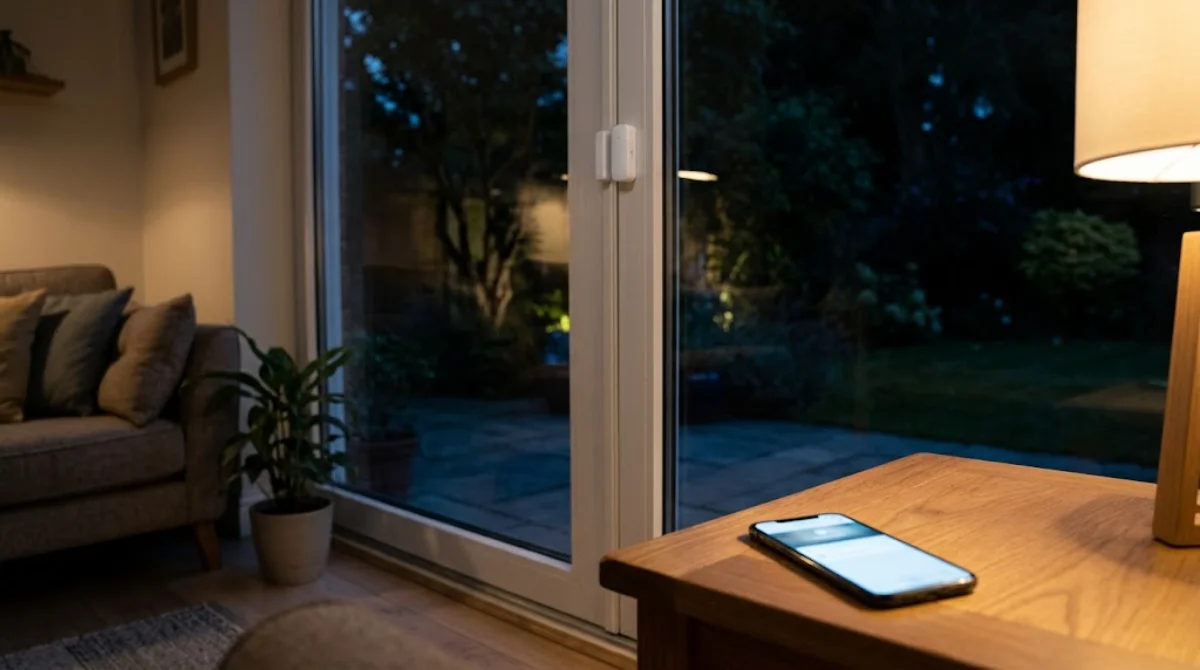
If you want all of this monitored in one app, a home monitoring system can tie door sensors, cameras and alarms together, with optional professional monitoring.
Renter-Friendly Options (No Drilling)
- Track bar or adjustable security bar (no tools)
- Adhesive contact sensors and a battery glass-break sensor
- Tension-fit or clamp-on sliding door locks
- Removable window film rated for rentals
- A plug-in or battery camera pointed at the patio
Ask your landlord before drilling for anti-lift pins; many are happy to approve a small security upgrade.
Common Installation Mistakes to Avoid
- Cutting the track bar too short. Any gap lets the door rattle open far enough to get fingers or a tool in. Measure twice and aim for a snug fit.
- Drilling anti-lift pin holes horizontally. Angle the hole slightly downward so the pin stays seated.
- Keeping the stock strike screws. Short screws into the door frame trim are easy to pry out. Use longer screws into solid framing.
- Putting sensors on the glass. Mount contact sensors on the frame, where adhesive holds better and they’re out of direct sun.
- Forgetting the top track. Check for lift-out clearance at the top and fix it with pins or screws.
How to Test Your Sliding Door in 5 Minutes
- Close and latch the door. Grip the panel and push firmly upward. If it lifts noticeably, add anti-lift pins or top-track screws.
- With the latch engaged, try to slide the door open. More than a tiny bit of movement means the latch or strike plate needs attention.
- Drop in your track bar and try again. There should be no movement at all.
- Look for gaps at the top and sides of the frame that suggest the door has sagged.
- Open the door a little and confirm your sensor alert arrives on your phone within a few seconds.
Building a Layered Defense
No single product secures a sliding glass door on its own. Treat it as a system: physical barriers first, sensor alerts second, deterrents third. A track bar, anti-lift pins and longer strike screws cost well under $50 together and close the two most common attack methods. Add a contact sensor and glass-break sensor for awareness, and security film or outdoor lighting to slow and deter.
The same approach applies to the rest of the house. Our living room security guide and garage security ideas cover other common weak spots, and the FTC’s camera security tips help keep any connected devices you add safe.
Frequently Asked Questions
What is the single most effective way to secure a sliding glass door?
A track bar combined with anti-lift pins. Together they block both sliding the door open and lifting it out of the track, the two most common ways in, for under $30 and about half an hour of work.
Can I secure a sliding glass door without drilling?
Yes. A track bar, adhesive contact sensors, a battery glass-break sensor and clamp-on locks all work without drilling, which makes them ideal for renters.
Does security window film really work?
It delays rather than stops. Film holds broken glass together so an intruder has to keep striking, which is noisy and slow. That is enough to put off most opportunistic burglars.
How do I know if my sliding door lock is strong enough?
If it is a single hook latch held by short screws, it is not. Add a keyed or auxiliary lock, fit longer strike screws and use a track bar as a backup.
Are there smart locks for sliding glass doors?
A few exist, but most smart locks are designed for hinged doors. A strong mechanical lock plus a smart contact sensor gives you app alerts with far better physical security.
Where should I put a glass-break sensor?
In the same room as the door, with a clear line to the glass and within the distance the manufacturer specifies. Avoid placing it right next to noisy appliances.
Final Verdict
Securing a sliding glass door doesn’t take an expensive system. Start with a track bar and anti-lift pins this weekend, upgrade the latch and strike screws, then add a contact sensor so your phone tells you the moment the door moves. Layer those together and the back door stops being the easy way in.