

Carrier is the company that invented modern air conditioning. Willis Carrier designed the first modern system in 1902, and the brand is still one of the most common names you’ll see on outdoor units across the US. But “a Carrier AC unit” can mean anything from a basic single-stage condenser to a near-silent variable-speed system that costs three times as much.
This guide explains Carrier’s current central air conditioner lineup, what the model numbers mean, what you can expect to pay installed, and how to pick the right tier for your home and climate. Prices are approximate ranges from published sources and vary a lot by region and installer, so use them to judge quotes, not as a fixed price list.
Table of Contents
- Quick picks: which Carrier AC unit fits you?
- Carrier’s three series explained
- Carrier AC models compared
- Infinity 21 (26VNA1)
- Performance series (26TPA8 and 26SPA6)
- Comfort series (26SCA5 and 26SCA4)
- How much does a Carrier AC unit cost?
- New refrigerant: Puron Advance (R-454B)
- How to choose the right Carrier AC
- Carrier warranty: what you need to know
- Thermostats and smart home control
- Maintenance tips to make it last
- FAQ
- Final verdict
Quick picks: which Carrier AC unit fits you?
- Best for quiet and comfort: Infinity 21 (26VNA1), variable speed, up to 21 SEER2
- Best middle ground: Performance 17 (26TPA8), two-stage, up to 18 SEER2
- Best budget pick: Comfort 16 (26SCA5), single-stage, up to 16.5 SEER2
- Best for coastal homes: the coastal versions of the Performance and Comfort units, built with extra corrosion protection
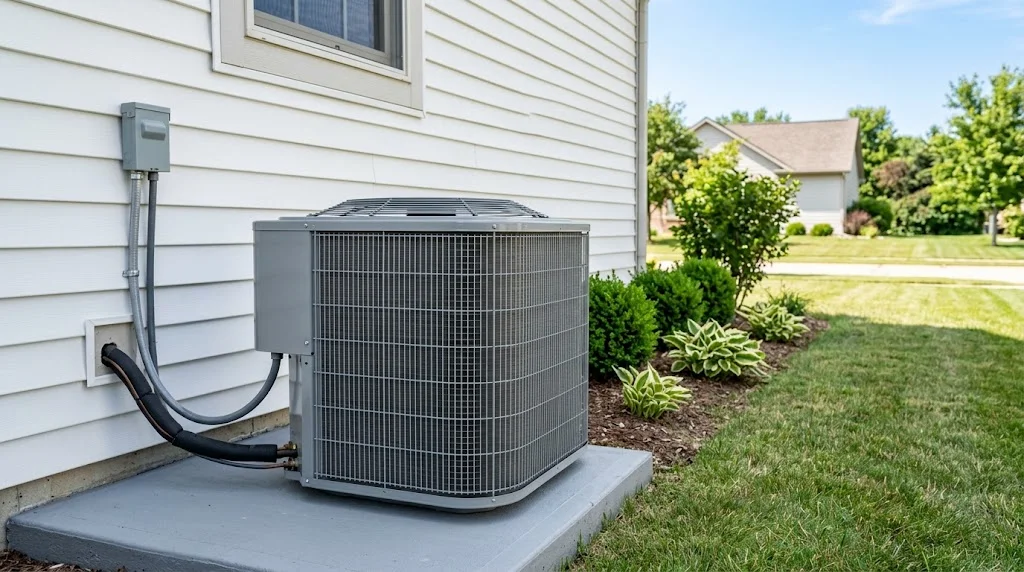
Carrier’s three series explained
Carrier groups its home air conditioners into three tiers. The main difference between them is how the compressor runs.
Infinity is the top tier. It uses a variable-speed compressor that can run at a small fraction of its full power and adjust in tiny steps. Instead of blasting cold air and shutting off, it runs longer at low speed. That means steadier temperatures, better humidity removal, lower noise and higher efficiency.
Performance is the middle tier. It includes single-stage and two-stage models. A two-stage compressor has a low setting for mild days (roughly two-thirds capacity) and a high setting for heat waves. It is a real comfort upgrade over single-stage without the full Infinity price.
Comfort is the entry tier. These are single-stage units: on at full power or off. They are simple, reliable and the least expensive to buy and repair, but they cycle on and off more often and are louder.
One more thing worth knowing: Carrier and Bryant are both owned by the same parent company and share a lot of engineering. If a Bryant dealer is closer or more highly rated in your area, their equivalent models are worth comparing.
Carrier AC models compared
Here is the current residential lineup as listed on Carrier’s air conditioner page. Ratings are “up to” figures and depend on which indoor coil and furnace or air handler the outdoor unit is paired with.
| Model | Series | Compressor | SEER2 (up to) | Sound (as low as) |
|---|---|---|---|---|
| 26VNA1 Infinity 21 | Infinity | Variable speed | 21 | 55 dB |
| 26TPA8 Performance 17 | Performance | Two-stage | 18 | 67 dB |
| 26SPA6 Performance 16 | Performance | Single-stage | 16.5 | 67 dB |
| 26SCA5 Comfort 16 | Comfort | Single-stage | 16.5 | 71 dB |
| 26SCA4 Comfort | Comfort | Single-stage | 16 | 72 dB |
SEER2 is the current federal efficiency rating, introduced in 2023 with a tougher test than the older SEER. The higher the number, the less electricity the unit needs for the same cooling. Sound levels are in decibels, and every 10 dB is roughly a doubling of perceived loudness, so the gap between 55 dB and 71 dB is very noticeable when the unit sits under a bedroom window.
Infinity 21 (26VNA1)
Specs: variable-speed compressor, up to 21 SEER2, up to 12 EER2, as low as 55 dB, Puron Advance refrigerant, up to 8 zones with Infinity controls.
The Infinity 21 is Carrier’s flagship. Its variable-speed compressor adjusts its output across a wide range (Carrier lists 25 to 100% in one place on the product page), so on most summer days it runs quietly at low speed for long stretches. That’s what makes the house feel evenly cool rather than swinging between cold blasts and stuffy gaps.
Long, slow run times are also better at pulling moisture out of the air. In humid regions like the Southeast, that matters as much as temperature. The unit works with Carrier’s Infinity System Control thermostat, supports zoning, and can share diagnostic data with your dealer so problems can sometimes be spotted before you notice them. It also uses a sound blanket and Carrier’s Silencer System II to keep noise down.
Pros: quietest in the lineup, best humidity control, highest efficiency, zoning support, remote diagnostics
Cons: highest upfront cost, best features need Carrier’s matching thermostat and indoor equipment, repairs can be more expensive
Performance series (26TPA8 and 26SPA6)
Performance 17 (26TPA8) specs: two-stage compressor, up to 18 SEER2, as low as 67 dB, coastal version available.
Performance 16 (26SPA6) specs: single-stage compressor, up to 16.5 SEER2, as low as 67 dB.
For a lot of homes, the Performance 17 is the sweet spot. Its two-stage compressor runs on low most of the time, which gives you longer, quieter cycles and better dehumidification than a single-stage unit. On the hottest afternoons, it switches to high. You get most of the comfort benefit of the Infinity at a noticeably lower price.
The Performance 16 is single-stage but has Performance-tier features and a quieter cabinet than the Comfort models. It makes sense if you want a step up in build and noise without paying for two-stage.
Pros: strong comfort-to-price ratio, quieter than Comfort models, coastal version for salty air
Cons: not as quiet or efficient as Infinity, two-stage benefits depend on a compatible thermostat
Comfort series (26SCA5 and 26SCA4)
Comfort 16 (26SCA5) specs: single-stage, up to 16.5 SEER2, up to 14.5 EER2, as low as 71 dB, Puron Advance refrigerant, coastal version available.
The Comfort 16 is a no-frills, dependable unit. It does one thing: run at full power until the house is cool, then shut off. That simplicity is a strength. There are fewer parts to fail, and any HVAC technician can work on it. The trade-off is more noise and less precise temperature and humidity control.
The 26SCA4 is the most basic model in the lineup at up to 16 SEER2, and Carrier labels it ENERGY STAR certified. It is a sensible pick for mild climates where the AC doesn’t run hard for months, for rental properties, or when budget is the top priority.
Pros: lowest price, simple and easy to service, efficient enough for most climates
Cons: loudest models, temperature swings, weaker humidity control
How much does a Carrier AC unit cost?
You can’t buy a Carrier central AC unit off a shelf and install it yourself. Carrier sells through dealers, and the installed price includes the outdoor unit, often a matching indoor coil, labor, refrigerant lines, permits and electrical work. Published estimates from PICKHVAC for a typical 2.5 to 4 ton system look like this:
| Series | Approx. installed cost | Example |
|---|---|---|
| Comfort | $3,000 to $8,000 | 3-ton unit around $5,000 |
| Performance | $5,000 to $10,000 | 3-ton unit around $6,000 to $7,000 |
| Infinity | $8,000 to $15,000+ | Often 2 to 3 times a Comfort unit of the same size |
Treat these as rough guides. Prices in 2026 can run higher in many areas because of the refrigerant transition and general equipment price increases. Things that push your quote up include:
- Replacing the indoor coil or furnace at the same time (often required for proper matching and the new refrigerant)
- New refrigerant lines if the old ones are the wrong size or in poor condition
- Electrical upgrades, such as a new disconnect or breaker
- Ductwork repairs, which can make or break how well a new system performs
- Difficult access, like rooftop units or tight attics
- Your region, since labor rates vary widely
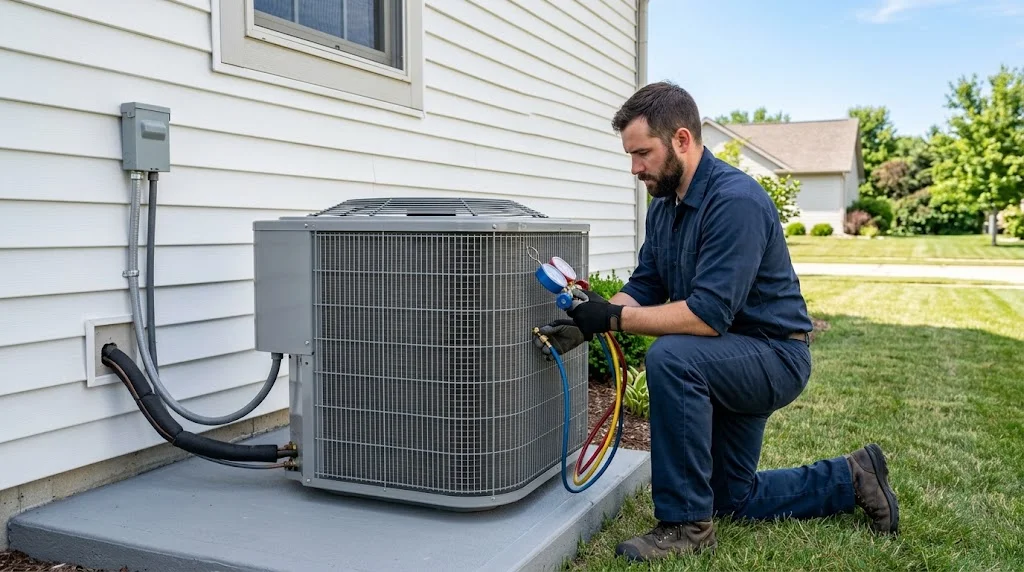
New refrigerant: Puron Advance (R-454B)
US rules have been phasing down R-410A, the refrigerant most central ACs have used for the past 15 years or so. Carrier’s current units use Puron Advance, its name for R-454B. Carrier says it cuts global warming potential by 75% compared with the original Puron (R-410A).
What it means for you:
- New outdoor units need matching indoor coils designed for R-454B. If your indoor coil is older, expect to replace it too.
- You can’t top up an old R-410A system with R-454B. They are different refrigerants.
- Older R-410A systems can still be repaired, but R-410A refrigerant may get more expensive over time as supply shrinks.
If your current AC is more than 12 to 15 years old and needs a major repair, the refrigerant change is one more reason to price a replacement instead.
How to choose the right Carrier AC
1. Get the size right
Bigger is not better. An oversized AC cools the house quickly, shuts off before it removes much humidity, and wears itself out cycling on and off. A good installer should do a load calculation (often called a Manual J) that accounts for your home’s insulation, windows, orientation and climate, not just square footage. The US Department of Energy’s guidance on buying efficient central air conditioners specifically recommends quality installation standards to avoid oversizing, wrong refrigerant charge and leaky ducts.
2. Match the tier to your climate
- Hot and humid (Florida, Gulf Coast, Southeast): two-stage or variable-speed. The humidity control is worth it.
- Hot and dry (Arizona, Nevada, inland California): efficiency pays off because the AC runs for months. Performance or Infinity.
- Mild summers (Pacific Northwest, northern states): Comfort or Performance 16 is often plenty.
3. Think about noise
If the outdoor unit sits near a bedroom, patio or a neighbor’s window, the 16 dB difference between the Infinity and the Comfort models is something you will notice every evening.
4. Pick the installer, not just the brand
Most HVAC problems in the first few years come from installation, not the equipment. Look for a Carrier Factory Authorized Dealer with strong local reviews, and ask how they will check refrigerant charge and airflow at startup.
5. Compare at least three quotes
Ask each dealer for the exact model numbers of the outdoor and indoor units, the rated SEER2 of that specific combination, and what’s included in labor and warranty.
Carrier warranty: what you need to know
Registration is the detail many homeowners miss. On current Carrier air conditioners, if you register within 90 days of installation, you choose between a 10-year parts-only limited warranty or a 5-year parts plus 3-year labor limited warranty. If you don’t register in time, the parts warranty drops to 5 years.
Many dealers register the unit for you, but check. A few minutes online can add five years of parts coverage. The Infinity 21 also carries an extra unit replacement limited warranty on eligible installations. Labor beyond the warranty term is usually covered only by a separate dealer plan, so ask what your installer offers.
Thermostats and smart home control
The thermostat decides how well a two-stage or variable-speed AC actually performs.
- Infinity 21: to use all its features (full variable-speed operation, zoning, diagnostics), you’ll need Carrier’s Infinity System Control. Third-party thermostats generally run it in a more limited mode.
- Performance 17 (two-stage): works with many two-stage compatible smart thermostats. Make sure the one you choose supports two cooling stages.
- Comfort and Performance 16 (single-stage): work with almost any smart thermostat.
Not sure if your wiring will work with a smart thermostat? Run it through our free smart thermostat compatibility checker first.
If you are pairing a new Carrier unit with a smart thermostat, start with our guide to the best smart thermostats, or compare the two most popular options in Nest vs ecobee. If your home lacks a C-wire, see our no C-wire thermostat guide, and when you are ready to install, our smart thermostat installation guide walks you through it. Alexa users can check our picks for the best thermostat for Alexa.
A well-programmed smart thermostat can trim cooling costs noticeably. Our article on smart thermostat energy savings explains the settings that matter most.
Maintenance tips to make it last
A Carrier AC that’s looked after can last 15 to 20 years. These habits help:
- Change the air filter every 1 to 3 months during cooling season. A clogged filter starves the system of airflow and makes it work harder.
- Keep the outdoor unit clear. Trim shrubs back at least 2 feet and clear leaves, grass clippings and cottonwood fluff off the coil.
- Rinse the outdoor coil gently with a garden hose once a year, with the power off at the disconnect. Never use a pressure washer on the fins.
- Keep the unit level. If the pad has sunk or tilted, have it reset.
- Book a yearly tune-up before summer. A technician checks refrigerant charge, electrical connections, the condensate drain and capacitor health.
- Watch your bills. A sudden jump in summer electricity use often means something is off. A home energy monitor can show exactly how much power your AC uses.
For more ways to keep summer bills down, see our guide on how to lower your electricity bill at home.
Sizing an AC starts with knowing your floor area. Measure each room with our free square footage calculator before you compare units.
FAQ
Is Carrier a good AC brand?
Yes. Carrier is one of the largest and longest-running HVAC brands, and its units are widely serviced. Like any brand, real-world reliability depends heavily on correct sizing and installation.
How long does a Carrier AC unit last?
Typically 15 to 20 years with regular maintenance. Coastal homes and very hot climates can shorten that unless you choose a coastal model and keep the coil clean.
What is the quietest Carrier air conditioner?
The Infinity 21 (26VNA1), rated as low as 55 dB thanks to its variable-speed compressor and sound blanket.
Is a two-stage or variable-speed AC worth it?
In hot, humid climates or homes where noise and even temperatures matter, usually yes. In mild climates where the AC runs only a few weeks a year, a single-stage unit often makes more financial sense.
Can I buy a Carrier AC unit online and install it myself?
Carrier sells through authorized dealers. Installing a central AC involves refrigerant handling that requires EPA certification, high-voltage wiring and permits. DIY installation also usually voids or limits the warranty.
What size Carrier AC do I need?
It depends on your home, not just square footage. A rough rule of thumb is 1 ton per 500 to 600 sq ft, but insulation, windows and climate change that a lot. Insist on a proper load calculation.
Do Carrier units still use R-410A?
Current Carrier residential AC units use Puron Advance (R-454B). Older systems installed before the transition use R-410A and can still be serviced.
Final verdict
The best Carrier AC unit depends on where you live and what bothers you most. If you want the quietest, most even cooling and you’re in a hot or humid climate, the Infinity 21 is worth the premium. For most homes, the two-stage Performance 17 hits the best balance of comfort, efficiency and cost. If budget comes first or your summers are mild, the Comfort 16 is a solid, simple unit that will do the job for years.
Whichever tier you choose, put as much effort into picking the installer as the model. Get a proper load calculation, ask for exact model numbers, register the warranty within 90 days, and pair the unit with a thermostat that can actually use its features.