
A gym membership, a long commute to the gym and crowded equipment are three reasons people never stick to a workout plan. A smart home gym removes all three. These connected machines use digital weights, cameras and AI coaching to give you personal trainer style workouts in a spare room, garage or even a corner of the living room.
Free tool: Use our free Appliance Energy Cost Calculator to see what any device costs to run per month and per year.
In this guide, we compare the best smart home gym equipment in 2026, explain how digital resistance works, break down the real cost including memberships, and help you choose the right setup for your space, goals and budget.
What Is a Smart Home Gym?
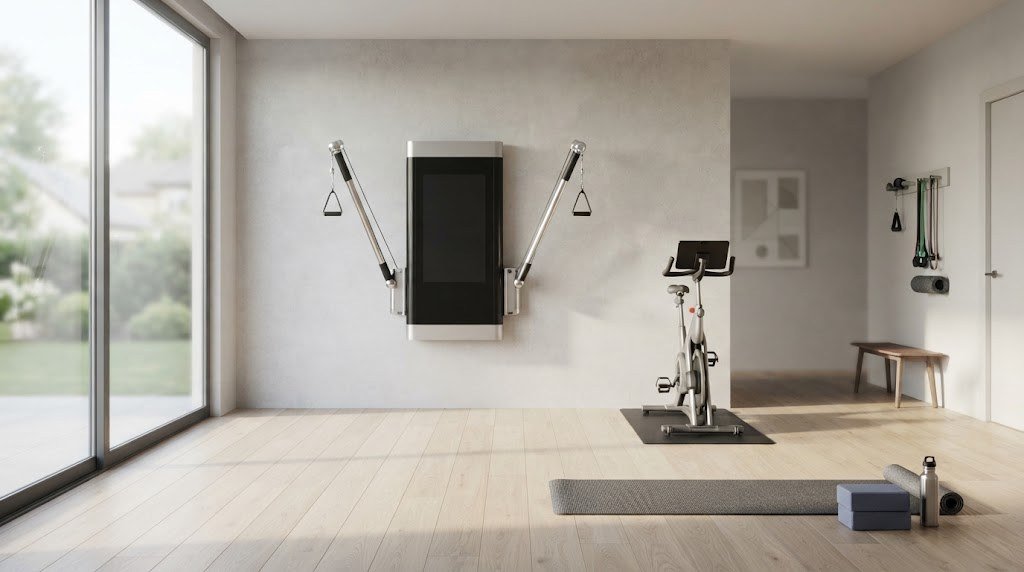
A smart home gym is exercise equipment that connects to the internet and uses sensors, motors and software to guide your workouts. Instead of a rack of dumbbells, many smart strength trainers use digital resistance: electric motors create the feeling of weight, which you can change with a tap.
Common types of smart home gym equipment include:
- Smart strength trainers with cables and digital weights, wall mounted or freestanding.
- Camera based trainers that track your form with 3D sensors while you use dumbbells.
- Smart bikes, treadmills and rowers with touchscreens and live or on demand classes.
- Smart mirrors that stream classes while showing your reflection.
- Portable smart cable machines that pack away after each workout.
Benefits of a Smart Home Gym
- Saves space. One machine can replace a full rack of dumbbells, a cable tower and a bench.
- Personalized coaching. AI and sensors adjust weight, count reps and give form feedback.
- Progress tracking. Every workout is logged automatically, so you can see strength gains over time.
- Motivation. Classes, programs, leaderboards and streaks help you stay consistent.
- Convenience. Work out any time without commuting, waiting for equipment or changing in a locker room.
- Safety features. Many digital weight systems can reduce resistance instantly if you struggle, acting like a built in spotter.
Best Smart Home Gym Equipment in 2026
Prices and membership fees change often, so treat the figures below as approximate and check the latest offers.
1. Speediance Gym Monster 2: Best Overall Value
Speediance’s freestanding all in one machine uses dual motors to provide up to about 220 lbs of digital resistance. It includes a touchscreen, guided programs and a foldable design that can be moved against a wall. A major advantage is that it does not require a mandatory membership, which keeps the total cost of ownership lower than many rivals.
- Type: Freestanding digital strength trainer
- Approx. price: Around $3,800
- Membership: Not required
- Best for: Most people who want a full gym without monthly fees, including renters who cannot drill into walls
2. Tonal 2: Best AI Coaching
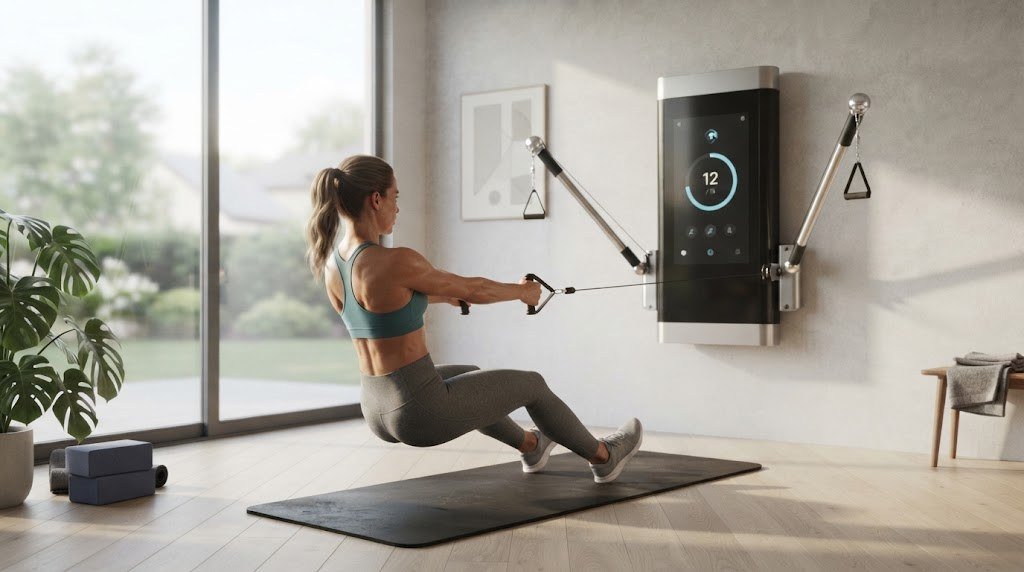
Tonal 2 is a wall mounted strength trainer with two adjustable arms and up to 250 lbs of digital resistance. Its cameras and sensors watch your form, count reps and recommend weight changes in real time. The class library is excellent, but the machine requires a monthly membership.
- Type: Wall mounted digital strength trainer
- Approx. price: Around $4,300 plus about $60 per month membership
- Best for: People who want the most guided, coach like experience in a small footprint
3. Tempo Move: Best Budget Option With Coaching
Tempo Move pairs a compact console with a set of dumbbells and plates. A 3D motion sensor tracks your movements to count reps and give form feedback through your TV. It costs far less upfront than a full digital weight machine, but it needs a monthly membership and offers lighter maximum weights.
- Type: Camera based trainer with dumbbells
- Approx. price: Around $500 plus about $39 per month
- Best for: Beginners and small apartments
4. MAXPRO SmartConnect: Best Portable and No Subscription
The MAXPRO SmartConnect is a lightweight, foldable cable machine that offers up to 300 lbs of resistance and works with a free companion app. It is not motorized like Tonal or Speediance, but it is the most affordable and portable way to add serious strength training.
- Type: Portable cable machine
- Approx. price: Around $700 to $750
- Membership: Optional
- Best for: Tight budgets, travelers and small spaces
5. amp: Best Mid Range Wall Unit
amp is a wall mounted smart trainer with digital resistance up to about 100 lbs and hundreds of guided movements. It sits between budget and premium options in price and works well for general fitness.
- Type: Wall mounted digital trainer
- Approx. price: Around $1,800 plus installation and a monthly membership
- Best for: General fitness without the premium price
6. Smart Cardio: Bikes, Treadmills and Rowers
If cardio is your priority, a connected bike, treadmill or rower is the center of your smart home gym:
- Peloton bikes offer one of the best streaming class experiences, with an optional membership for full classes.
- NordicTrack Commercial 1750 is a popular smart treadmill with incline and decline training and iFIT classes.
- Aviron rowers use game style workouts on a large touchscreen to keep rowing fun.
7. Smart Mirrors
Smart mirrors such as the Echelon Reflect stream cardio, yoga, Pilates and strength classes while looking like a regular mirror when off. They are great for variety, but they do not provide resistance on their own.
Smart Home Gym Comparison Table
| Equipment | Type | Approx. price | Membership | Max resistance | Best for |
|---|---|---|---|---|---|
| Speediance Gym Monster 2 | Freestanding strength | ~$3,800 | Not required | ~220 lbs | Best value |
| Tonal 2 | Wall mounted strength | ~$4,300 | ~$60/mo | 250 lbs | AI coaching |
| Tempo Move | Camera + dumbbells | ~$500 | ~$39/mo | Dumbbell set | Beginners |
| MAXPRO SmartConnect | Portable cable | ~$700 | Optional | 300 lbs | Budget, travel |
| amp | Wall mounted strength | ~$1,800 | Monthly | ~100 lbs | Mid range |
| Peloton bike | Smart bike | Varies | Optional | N/A | Cardio classes |
| Echelon Reflect | Smart mirror | ~$2,000 | Optional after trial | Bodyweight | Class variety |
The Real Cost of a Smart Home Gym
Sticker price is only part of the story. Many smart gyms require a monthly membership to unlock classes and coaching. Over three years, that can add thousands of dollars.
| Equipment | Upfront cost | Membership over 3 years | Approx. 3 year total |
|---|---|---|---|
| Speediance Gym Monster 2 | ~$3,800 | $0 | ~$3,800 |
| Tonal 2 | ~$4,300 | ~$2,160 | ~$6,460 |
| Tempo Move | ~$500 | ~$1,400 | ~$1,900 |
| MAXPRO SmartConnect | ~$700 | $0 | ~$700 |
| Typical gym membership | $0 | ~$1,800 to $3,600 | ~$1,800 to $3,600 |
If you live with a partner or family, one smart home gym can replace several gym memberships, which makes the math more attractive.
How to Choose the Right Smart Home Gym
1. Define your main goal
- Strength and muscle: Digital weight machines like Speediance or Tonal.
- Weight loss and cardio: Smart bike, treadmill or rower.
- Flexibility and variety: Smart mirror or app based classes.
- On a tight budget: Portable cable machine or camera trainer with dumbbells.
2. Measure your space
Wall mounted units need a sturdy wall (usually wood studs or masonry) and around 7 by 7 feet of free floor space. Freestanding machines need a level floor and room to move around them. Ceiling height matters for overhead presses and jump workouts.
3. Check power and WiFi
Most smart gyms need a nearby outlet and a strong WiFi signal for streaming classes. Garages and basements often need a mesh WiFi node.
4. Look at the membership
Find out what works without a membership. Some machines become simple equipment without classes if you cancel, while others lose most features.
5. Consider who will use it
Choose equipment with multiple user profiles if several family members will train. Weight limits, height ranges and difficulty levels vary by machine.
How to Set Up a Smart Home Gym
- Pick the room. A spare bedroom, garage, basement or living room corner all work.
- Protect the floor. Use rubber gym flooring or a large equipment mat.
- Plan power. Use a dedicated outlet where possible and avoid daisy chained extension cords.
- Boost WiFi. Add a mesh node if the signal is weak where you will train.
- Add lighting and airflow. A fan and good lighting make workouts more comfortable.
- Install wall units properly. Follow the manufacturer’s mounting guide or use their professional installation service.
- Add smart extras. Use a smart speaker for music and a smart plug to switch on a fan or lights automatically. Our guide to what a smart plug is shows how.
Smart Home Gym Automation Ideas
- Workout scene: Say “Hey Google, workout time” to turn on the fan, bright lights and a playlist. See our Google Home tips and tricks.
- Cool down: Turn the fan off and lights to a softer level 20 minutes after your workout starts.
- Morning motivation: Start your playlist and turn on gym lights at your usual workout time.
- Energy saving: Switch off the machine’s power with a smart plug overnight if the manufacturer allows it.
Smart Home Gym vs Traditional Home Gym
| Smart home gym | Traditional home gym | |
|---|---|---|
| Equipment | One connected machine | Rack, barbell, plates, dumbbells, bench |
| Space | Small footprint | Usually needs a garage or large room |
| Weight changes | Instant, with a tap | Manual plate changes |
| Coaching | Built in classes and form feedback | Self guided or separate app |
| Max weight | Around 100 to 300 lbs | Practically unlimited |
| Upfront cost | $500 to $6,000+ | $1,000 to $5,000+ |
| Monthly fees | Often required | None |
| Resale value | Depends on brand support | Plates and racks hold value well |
A traditional setup is better for powerlifters who need very heavy loads. A smart gym is better for most people who want efficient, guided workouts in a small space.
Sample Beginner Week on a Smart Home Gym
If you are new to strength training, a simple plan helps you build a habit. Most smart gyms include beginner programs, but here is a balanced starting point:
| Day | Workout | Time |
|---|---|---|
| Monday | Full body strength (squats, chest press, rows) | 30 minutes |
| Tuesday | Low intensity cardio (bike, rower or walk) | 20 to 30 minutes |
| Wednesday | Mobility and stretching or yoga | 20 minutes |
| Thursday | Full body strength (lunges, shoulder press, pulldowns) | 30 minutes |
| Friday | Interval cardio class | 20 minutes |
| Weekend | Rest, a walk or a light recovery class | Optional |
Start with weights that feel easy for 10 to 12 reps, let the machine’s strength assessment set your baseline, and increase gradually. Consistency matters far more than intensity in the first few months.
Safety Tips for Smart Home Gyms
- Complete the onboarding assessment so recommended weights match your ability.
- Use spotter or safety modes on digital machines when lifting near your limit.
- Check wall mounts periodically for loose bolts on wall installed units.
- Keep kids and pets away from moving cables and arms during workouts.
- Warm up first, even if a class jumps straight into the main workout.
Pros and Cons of a Smart Home Gym
| Pros | Cons |
|---|---|
| Saves space compared with traditional equipment | High upfront cost |
| Personalized coaching and form feedback | Many require monthly memberships |
| Tracks progress automatically | Needs WiFi and power |
| Train any time with no commute | Heavy lifters may outgrow digital weight limits |
| Safer solo training with digital spotting | Repairs can be expensive out of warranty |
Frequently Asked Questions
What is a smart home gym?
It is connected workout equipment that uses sensors, motors and software to guide your training, adjust resistance and track progress, often with live or on demand classes.
Is a smart home gym worth it?
It is worth it if you will train regularly and value coaching and convenience. Compare the total cost, including membership, against your current gym fees.
Which smart home gym has no subscription?
Speediance Gym Monster 2 does not require a membership, and portable machines like the MAXPRO SmartConnect work with a free app. Others, including Tonal and Tempo, need a monthly plan for full features.
Can you build muscle with a smart home gym?
Yes. Digital resistance machines offer up to 220 to 300 lbs, which is enough for most people to build strength and muscle. Very advanced lifters may still want free weights.
How much space does a smart home gym need?
Wall mounted units typically need about 7 by 7 feet. Compact options like Tempo Move or portable cable machines fit in even smaller areas.
Do smart home gyms work with Alexa or Google Home?
Some integrate with voice assistants or fitness apps, but most rely on their own touchscreen and app. You can still automate lights, fans and music around your workouts with smart plugs and speakers.
Final Thoughts
A smart home gym can replace your gym membership with a personal trainer style setup at home. For the best value without a monthly fee, the Speediance Gym Monster 2 stands out. If you want the most advanced coaching, Tonal 2 leads the way. On a budget, Tempo Move and the MAXPRO SmartConnect offer smart training for a fraction of the price. Measure your space, add up the total cost including membership, and pick the equipment that matches your goals.