
Is your home working as hard as you are: or are you still adjusting thermostats by hand and fumbling for light switches at midnight?
A well-planned smart home setup changes that completely. The best luxury systems run quietly in the background. They learn your schedule, protect your property, and cut energy bills by 20 to 30% in the first year. This guide covers every room, every key decision, and the brands worth your money.
Why Planning Comes Before Purchasing
Most people buy devices first and plan later. That’s the single biggest mistake in any smart home project.
A luxury installation typically costs $15,000 to $80,000 for a full home, depending on square footage and system complexity. Rushing into purchases without a blueprint wastes 15 to 25% of that budget on redundant hardware or incompatible systems.
Start with a written room-by-room list of what you want automated. Then choose a single ecosystem: Apple HomeKit, Google Home, or Amazon Alexa: before buying a single device. Mixing ecosystems without a hub causes communication failures within 3 to 6 months.
Choosing the Right Control System for the Whole Home
The control system is the backbone of everything. Get this wrong and every other decision suffers.
For luxury installations, three platforms dominate: Control4, Crestron, and Savant. Control4 starts at around $10,000 installed for a mid-size home. Crestron targets commercial-grade installs and routinely runs $30,000 to $150,000. Savant sits between the two, with strong Apple integration and a cleaner mobile interface.
All three require a certified dealer-installer. Expect a 2 to 4 week installation timeline for a full home. DIY is not an option at this tier: improper wiring voids warranties and creates security gaps.
> Pro tip: Ask your installer for a “future-proofing clause” in the contract. This locks in free software updates for 24 months post-installation.
Smart Lighting That Does More Than Dim
Lighting is the most visible part of any smart home. It’s also where most buyers overspend on features they never use.
Lutron Homeworks QS is the gold standard for luxury homes. It integrates with every major control platform and supports up to 200 zones. A 4,000 sq ft home typically needs 40 to 60 zones to cover every room, hallway, and exterior area.
Expect to spend $8,000 to $20,000 on a full Lutron Homeworks installation. That includes keypads, dimmers, motorized shades, and programming. The payoff: occupancy-based lighting cuts electricity use by 35 to 40% compared to manual switching.
Philips Hue works well for accent lighting and color zones. At $50 to $200 per fixture, it pairs cleanly with Lutron for a layered approach.
Climate Control Across Every Room
A single smart thermostat is fine for a 1,200 sq ft apartment. A 5,000 sq ft luxury home needs zone-based climate control.
Ecobee Premium and Nest Learning Thermostat both work well for 1 to 3 zone homes. For larger properties, look at Carrier Infinity or Trane ComfortLink II: these support 8+ independent zones and integrate with Control4 and Crestron natively.
A full multi-zone HVAC smart control installation runs $3,500 to $12,000 depending on zone count. The energy savings are real: multi-zone systems reduce HVAC energy consumption by 25 to 30% compared to single-zone setups.
> Pro tip: Set bedroom zones to drop 2°F between 10 PM and 6 AM. Studies show cooler sleeping temperatures improve sleep quality by measurable margins: most homeowners report better rest within 2 weeks.
Whole-Home Audio and Theater Integration
Distributed audio is one of the most-requested features in luxury smart home setups. Done right, it feels invisible.
Sonos remains the most reliable multi-room audio platform for homes under 8,000 sq ft. A 10-room Sonos system costs $5,000 to $12,000 installed, including in-wall speakers and amplifiers. It integrates with Control4, Savant, and Apple HomeKit without adapters.
For dedicated home theaters, Dolby Atmos setups with 7.2.4 speaker configurations start at $25,000 for a 300 to 400 sq ft room. Include a 4K laser projector (Sony VPL-XW7000 runs $15,000 to $18,000) and motorized blackout shades for a true cinema experience.
The key detail most people miss: acoustic treatment. Without it, even $50,000 in equipment sounds mediocre. Budget at least $3,000 to $5,000 for panels and bass traps in a dedicated theater room.
Security Systems Worth the Investment
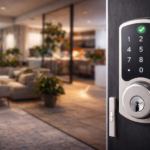
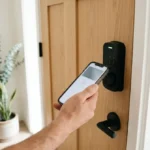
A luxury smart home setup is only as good as its security layer. Entry-level smart locks aren’t enough here.
Yale Assure and Schlage Encode work for secondary doors. For main entry points, Mul-T-Lock and Abloy Protec2 offer Grade 1 security with smart integration. These locks resist picking and drilling: standard smart locks do not.
Pair door security with a professional monitoring system. ADT Command and Alarm.com both offer 24/7 professional monitoring starting at $40 to $60/month. Response time averages under 45 seconds for verified alerts.
For cameras, Axis Communications and Hanwha Vision offer commercial-grade 4K outdoor cameras at $400 to $900 per unit. A 6-camera perimeter system runs $4,000 to $8,000 installed. Footage stores locally on a NAS drive or encrypted cloud: never on a shared consumer server.
Smart Kitchen and Appliance Integration
The kitchen is where smart home technology earns its keep daily.
Miele and Gaggenau both offer Wi-Fi-enabled ovens, refrigerators, and dishwashers that integrate with major smart home platforms. A Miele@home connected kitchen package costs $12,000 to $30,000 depending on appliance count.
The real value isn’t remote preheating: it’s diagnostics. Connected Miele appliances self-report errors before they become breakdowns. That saves an average of $400 to $800 per repair visit avoided.
Under-cabinet lighting, motorized cabinet lifts, and smart faucets (Kohler Sensate starts at $500) round out a fully integrated kitchen. Budget $2,000 to $5,000 for these finishing touches on top of appliance costs.
Outdoor Automation and Landscape Control
The exterior deserves the same attention as any interior room.
Hunter and Rain Bird both make professional-grade smart irrigation controllers. The Hunter Hydrawise supports up to 52 zones and reduces water use by 30 to 50% through weather-based scheduling. A full landscape irrigation smart system runs $1,500 to $4,000 installed.
For outdoor lighting, FX Luminaire and CAST Lighting offer landscape fixtures with individual zone control. A $3,000 to $8,000 landscape lighting package covers most half-acre properties.
Gate automation adds both convenience and security. FAAC and LiftMaster make commercial-grade gate operators that integrate with smart home platforms. Expect $3,500 to $7,000 for a dual-swing or sliding gate system with intercoms and video.
Networking: The Foundation Everything Runs On
Every device in a smart home setup depends on a fast, stable network. Most luxury installs fail here first.
Consumer routers can’t handle 80 to 150 connected devices without packet loss and dropouts. You need a commercial-grade mesh network. Cisco Meraki and Ubiquiti UniFi are the two most common choices for high-end residential installs.
A UniFi setup for a 5,000 sq ft home: including 4 to 6 access points, a managed switch, and a security gateway: runs $2,000 to $4,500 hardware only. Add $1,500 to $3,000 for professional installation and configuration.
Separate your smart home devices onto a dedicated VLAN (virtual local area network). This isolates IoT traffic from personal devices. It cuts network congestion by roughly 40% and adds a meaningful security layer.
> Pro tip: Run CAT6A ethernet to every room during construction or renovation. Wireless-only installs need 3× more access points to achieve the same coverage.
Making Your Luxury Smart Home Last
A smart home setup at this level isn’t a one-time project. It’s an ongoing system that needs attention.
Start with the control platform and network: these decisions shape every other purchase. Lutron for lighting, a professional AV integrator for audio, and a Ubiquiti network give you a rock-solid base. From there, layer in climate, security, and kitchen automation over 6 to 12 months rather than all at once.
Budget $500 to $1,500 per year for software updates, device replacements, and system checks. Most Control4 and Crestron dealers offer annual service contracts in this range. That keeps firmware current and catches hardware failures before they cascade.
The homes that age best are the ones built around open standards. Thread, Matter, and Z-Wave all support long-term device compatibility. Avoid proprietary systems that lock you into one manufacturer’s hardware roadmap: those ecosystems typically go unsupported within 5 to 8 years.
Frequently asked questions
What’s a realistic budget for a full luxury smart home setup?
For a 4,000 to 6,000 sq ft home, expect $40,000 to $120,000 for a fully integrated luxury system. That includes control platform, lighting, climate, audio, security, networking, and outdoor automation. Phased installs over 12 to 18 months can spread costs without sacrificing quality.
Do I need a professional installer or can I do parts myself?
For Control4, Crestron, and Savant, a certified installer is required: not optional. DIY is viable for Sonos audio, Philips Hue accent lighting, and Ecobee thermostats. Mixing professional and DIY tiers works well as long as you stay within one ecosystem.
How long does a full smart home installation take?
A complete luxury installation across a full home typically takes 3 to 8 weeks. Network infrastructure goes in first (3 to 5 days), followed by lighting and climate (1 to 2 weeks), then AV and security (1 to 2 weeks). Programming and testing adds another 3 to 5 days at the end.
Which smart home platform has the best long-term support?
Control4 and Crestron have both been in the market for over 20 years and show no signs of discontinuing support. Apple HomeKit benefits from Apple’s ecosystem stability. Avoid smaller proprietary platforms with fewer than 5 years of market history.
Can a luxury smart home setup increase property value?
Yes: but only with documented systems and transferable warranties. Homes with professionally installed automation systems sell for 3 to 5% more in markets above $1 million, according to real estate data from the past 3 years. Buyers want the documentation, not just the devices.