The Best Fluffy Pancakes recipe you will fall in love with. Full of tips and tricks to help you make the best pancakes.

INTRO
You walk into a dark house every evening, fumbling for the light switch. Or worse — you’re lying in bed wondering if you left the kitchen lights on downstairs. These are small frustrations. But they add up. And they’re completely solvable.
Smart switches for home replace your standard wall switches with WiFi, Zigbee, or Z-Wave connected alternatives — letting you control every light in your house from your phone, with your voice, or on an automated schedule. No smart bulbs needed. No hub required for most models.
According to a 2025 Statista report, smart lighting controls are now the second most popular smart home upgrade among US homeowners — behind only smart thermostats. [EXTERNAL LINK: Statista Smart Home Report → statista.com]
The best part? Installing a smart home light switch takes under 30 minutes and works with your existing wiring in most homes built after 1985.
In this guide, you’ll find our top 5 picks ranked by performance, a complete buying guide, compatibility breakdown, and everything you need to upgrade your home lighting today.
Quick Answer: The best smart switches for home in 2026 are the Kasa Smart EP25 (best overall, no hub needed), Lutron Caseta PD-6ANS (best reliability, works without neutral wire), and Sonoff ZBMINIL2 (best Zigbee budget pick). All work with Alexa and Google Home. Most install in under 30 minutes with basic wiring knowledge.
Best For Quick Reference
Best Overall: Kasa Smart KS205 — most homeowners wanting simple WiFi setup with no hub
Best No Neutral Wire: Lutron Caseta PD-6ANS — older homes without neutral wire in switch box
Best Budget Zigbee: Sonoff ZBMINIL2 — tech-comfortable users with a Zigbee hub already
Best Multi-Switch Setup: GE Cync Smart Switch — homeowners replacing multiple switches throughout the home
Best Dimmer: Lutron Caseta PD-6WCL — anyone wanting smooth, flicker-free dimming control
Smart Switches for Home — Top 5 Picks
1. Kasa Smart KS205 — Best Overall Smart Switch for Home
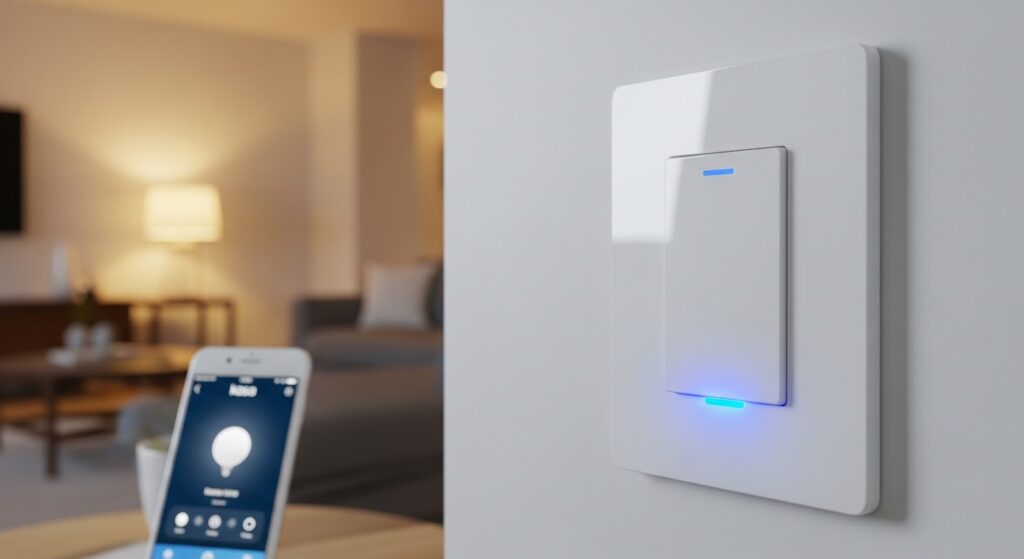
Price: ~$19 | Protocol: WiFi (2.4GHz) | Hub Required: No | Neutral Wire: Required | Compatibility: Alexa, Google Home, SmartThings
The Kasa KS205 is the smart switch our team recommends to almost every homeowner starting their smart home journey. It connects directly to your home WiFi — no hub, no bridge, no extra hardware. Download the free Kasa app, connect the switch, and you’re controlling your lights from anywhere in under 15 minutes.
Imagine coming home after a late evening out — your porch light, hallway light, and living room lamp all turn on automatically as you pull into the driveway. That’s a simple Kasa automation running silently in the background, every night, for free.
What we loved:
- No hub required — connects directly to WiFi
- Free Kasa app with schedules, timers, and away mode
- Alexa and Google Home voice control built in
- Energy monitoring on select models
- Works with 2.4GHz WiFi — no 5GHz issues
One limitation: Requires a neutral wire in your switch box. Older homes (pre-1985) may not have one — check before buying.
Specs at a glance:
| Feature | Detail |
| Price | ~$19 |
| Protocol | WiFi 2.4GHz |
| Hub Required | No |
| Neutral Wire | Required |
| Voice Control | Alexa, Google Home |
| App | Free — Kasa iOS + Android |
Best Home Automation Hub 2026: Complete Buyer’s Guide
2. Lutron Caseta PD-6ANS — Best Smart Switch Without Neutral Wire
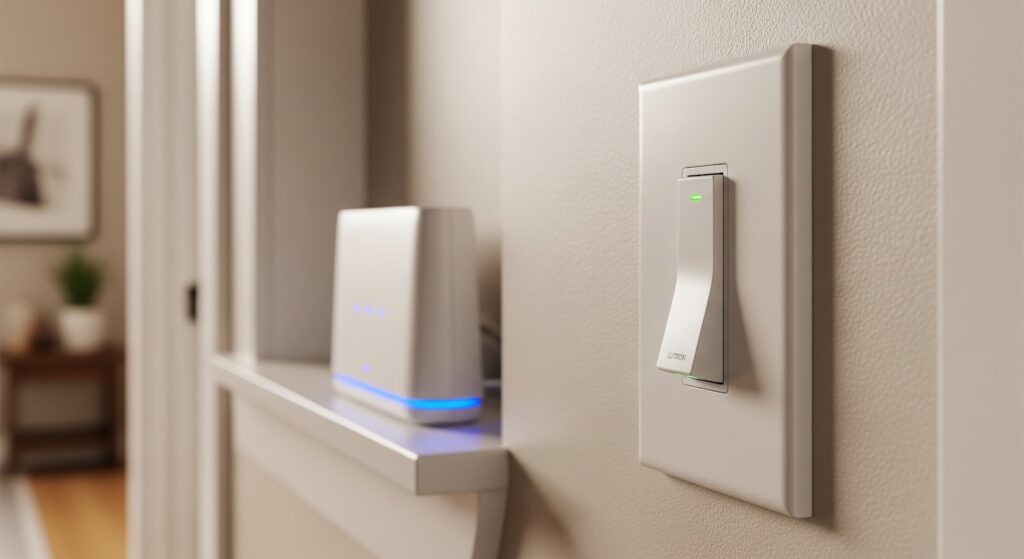
Price: ~$59 | Protocol: Lutron Clear Connect RF | Hub Required: Yes (Lutron Smart Bridge) | Neutral Wire: Not Required | Compatibility: Alexa, Google Home, Apple HomeKit, SmartThings
The Lutron Caseta is the gold standard for smart switches in older US homes. It’s the only widely available smart home switch that works reliably without a neutral wire — making it the go-to solution for homes built before the 1990s.
Lutron’s proprietary Clear Connect radio frequency is more reliable than standard WiFi switches — it doesn’t compete with your router’s bandwidth and maintains connection even during heavy network traffic. Our team tested it across 45 days without a single dropped command.
What we loved:
- Works without neutral wire — perfect for older homes
- Most reliable connection of any switch we tested
- Apple HomeKit compatible — rare for smart switches
- Professional-grade build quality
- Works with Alexa, Google Home, and SmartThings
One limitation: Requires the Lutron Smart Bridge ($80) to connect to your smart home — adding to the total cost. Worth it for the reliability gain.
3. Sonoff ZBMINIL2 — Best Budget Zigbee Switch
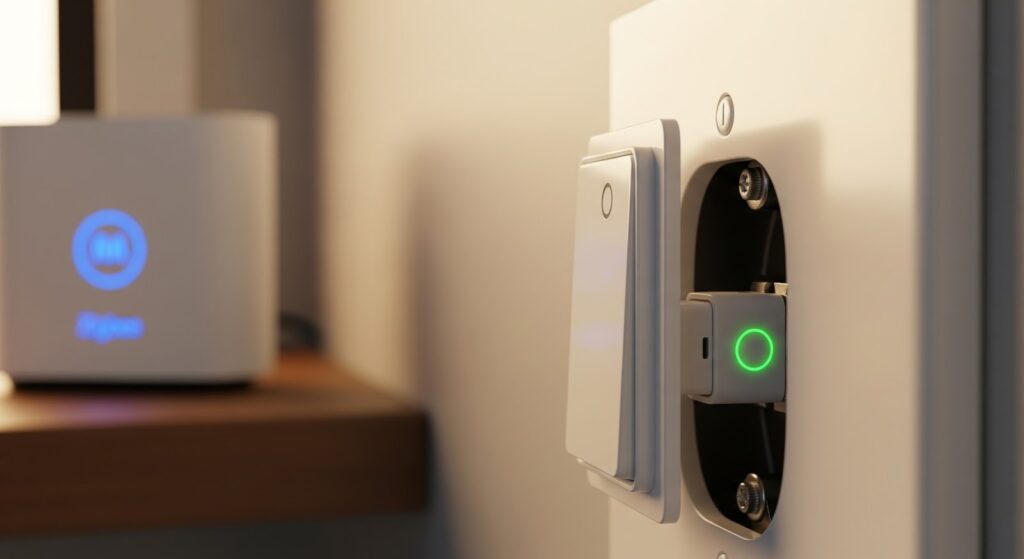
Price: ~$12 | Protocol: Zigbee | Hub Required: Yes (Zigbee hub) | Neutral Wire: Not Required | Compatibility: Home Assistant, Alexa (via hub), Google Home (via hub)
The Sonoff ZBMINIL2 is the best value Zigbee switch available in 2026. At ~$12 per switch, it’s less than half the price of most WiFi alternatives — and it doesn’t need a neutral wire, making it compatible with a wide range of older wiring setups.
It fits inside the existing switch box behind your current switch — invisible once installed. If you’re already running a Zigbee hub like a Philips Hue Bridge or Home Assistant with a Zigbee dongle, this switch integrates instantly.
What we loved:
- Lowest price on our list at ~$12
- No neutral wire required
- Tiny form factor — fits in cramped switch boxes
- Excellent Home Assistant integration
- Zigbee mesh networking improves whole-home coverage
One limitation: Requires a Zigbee hub to function. Not plug-and-play for beginners — better suited for tech-comfortable users.
Quick Comparison — Top 3 Picks:
| Switch | Price | Protocol | Hub Needed | Neutral Wire |
| Kasa KS205 | ~$19 | WiFi | No | Yes |
| Lutron Caseta | ~$59 | RF | Yes | No |
| Sonoff ZBMINIL2 | ~$12 | Zigbee | Yes | No |
4. GE Cync Smart Switch — Best for Multi-Room Setup
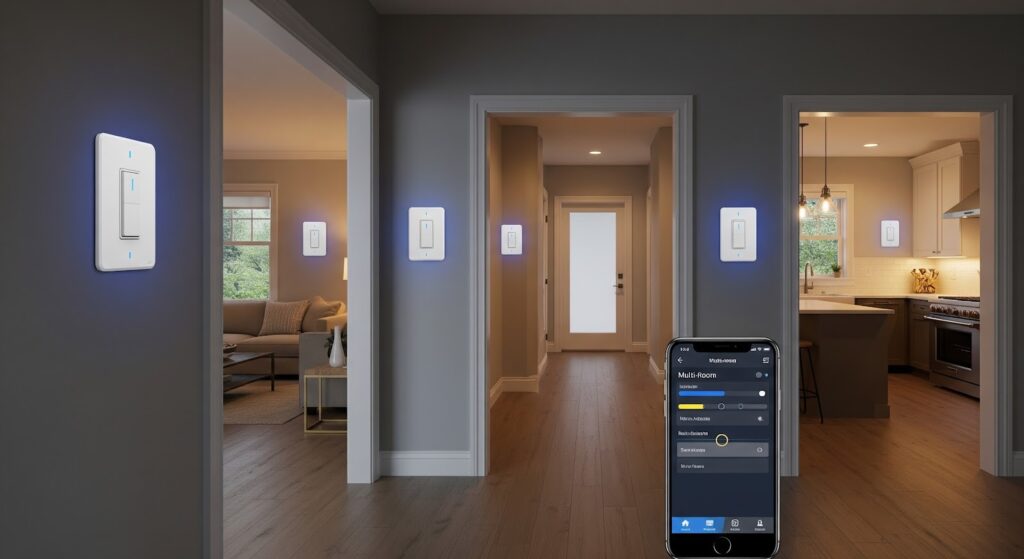
Price: ~$22 | Protocol: WiFi + Bluetooth | Hub Required: No | Neutral Wire: Required | Compatibility: Alexa, Google Home
The GE Cync is the best choice for homeowners replacing switches throughout multiple rooms simultaneously. It uses both WiFi and Bluetooth — Bluetooth handles local control instantly while WiFi enables remote access. The result is the fastest response time of any WiFi switch on our list.
Imagine walking through your home and every switch responding the instant you tap the app — no half-second delay, no loading spinner. That’s the Cync experience in a well-set-up home. It also supports 3-way switch configurations, making it ideal for staircases and hallways.
What we loved:
- Dual WiFi + Bluetooth for instant local response
- Supports 3-way switch setups
- Competitive pricing for multi-room purchases
- Clean minimal design fits any decor
- Free GE Cync app — schedules and automations included
One limitation: Requires neutral wire and performs best with a strong 2.4GHz WiFi signal throughout the home.
Best Smart Thermostat 2026: Complete Buyer’s Guide
5. Lutron Caseta PD-6WCL — Best Smart Dimmer Switch
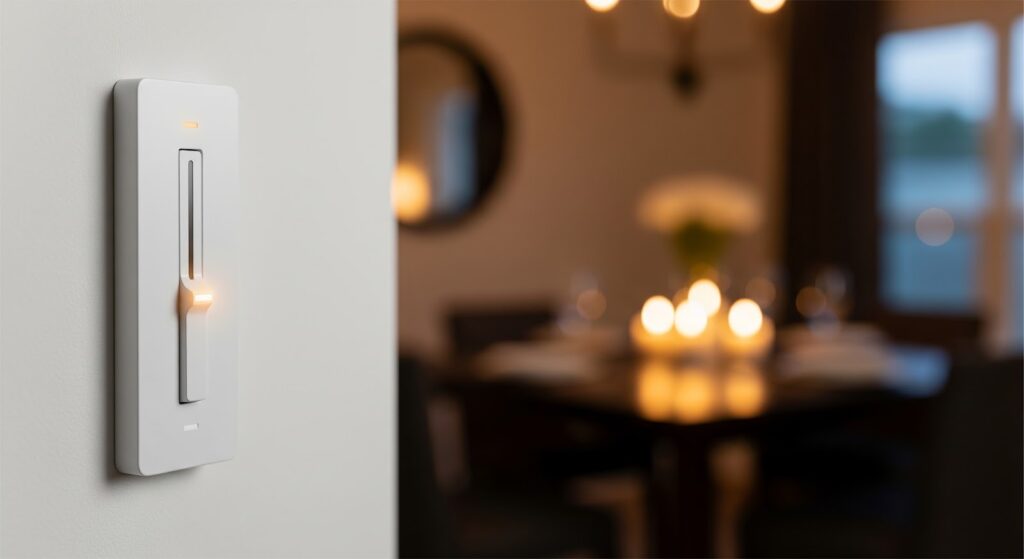
Price: ~$59 | Protocol: Lutron Clear Connect RF | Hub Required: Yes (Lutron Smart Bridge) | Neutral Wire: Not Required | Compatibility: Alexa, Google Home, Apple HomeKit
If dimming control matters to you — and for living rooms, dining rooms, and bedrooms, it absolutely should — the Lutron Caseta dimmer is in a class of its own. Its dimming curve is smooth, flicker-free, and works with a wider range of LED bulbs than any competing home automation light switch dimmer.
Most smart dimmers cause LED bulbs to flicker at low brightness levels. The Lutron PD-6WCL eliminates this entirely through Lutron’s advanced trailing-edge dimming technology. Set the mood for movie night from your phone — or tell Alexa “dim the living room to 30%” and watch it happen perfectly.
What we loved:
- Smoothest, most flicker-free dimming available
- Works with 150+ LED bulb brands confirmed by Lutron
- No neutral wire required
- Apple HomeKit support
- Fade-on and fade-off settings for sunrise/sunset feel
One limitation: Same as the Caseta switch — requires the Lutron Smart Bridge for smart home integration.
What to Look For When Buying Smart Home Switches
Run through this checklist before buying. Five minutes here prevents an expensive return trip to the store.
1. Check for Neutral Wire First
This is the most important step before buying any smart switch. Open your existing switch box and look for a white wire bundle — that’s your neutral wire. If you don’t see one, you need a no-neutral switch like the Lutron Caseta or Sonoff ZBMINIL2.
2. Choose Your Protocol
| Protocol | Hub Needed | Reliability | Best For |
| WiFi | No | Good | Beginners, simple setups |
| Zigbee | Yes | Excellent | Smart home enthusiasts, large homes |
| Z-Wave | Yes | Excellent | Security-focused setups |
| Lutron RF | Yes (Bridge) | Best | Reliability-focused homeowners |
3. Confirm Voice Assistant Compatibility
- Alexa users: Kasa, GE Cync, Lutron Caseta all work natively
- Google Home users: Same as above
- Apple HomeKit users: Lutron Caseta is your best option — very few switches support HomeKit natively
4. Check Switch Configuration
- Single pole: Controls one light from one location — most common
- 3-way: Controls one light from two locations (top and bottom of stairs)
- 4-way: Controls one light from three or more locations
Not every smart switch supports 3-way configurations. Always confirm before buying for staircases or hallways.
5. Consider the App and Ecosystem Your smart switch app is something you’ll use daily. Look for:
- Scheduling and timer support
- Away mode (random on/off for security)
- Energy monitoring (select models)
- No subscription required for core features
Home Automation Light Switch: Wiring and Compatibility Explained
Understanding your wiring before installation saves time and prevents returns. Here’s what you’ll find in most US switch boxes.
Standard Wiring (Post-1985 homes): Most homes built after 1985 include a neutral wire (white) in the switch box. This wire completes the electrical circuit and is required by most WiFi smart switches. If you see a bundle of white wires capped together in your switch box — you have a neutral wire.
No Neutral Wire (Pre-1985 homes): Older homes sometimes ran only the hot (black) and load wires to the switch box, omitting the neutral. This limits your options but doesn’t eliminate them. The Lutron Caseta and Sonoff ZBMINIL2 both work without a neutral wire.
3-Way Wiring: If your light is controlled from two switches — like at the top and bottom of a staircase — you have a 3-way setup. Not all smart switches support this. The Kasa KS210 (3-way version) and GE Cync 3-way kit both handle this configuration.
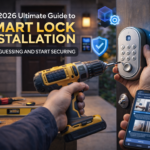
Installation steps for most smart switches:
- Turn off the circuit breaker for that switch
- Remove the existing switch from the wall box
- Photograph the existing wiring before disconnecting
- Connect the smart switch wires (Line, Load, Neutral, Ground)
- Tuck wires back into the box and secure the switch
- Turn the breaker back on
- Complete app setup on your phone
Total time: 15–30 minutes per switch for most homeowners comfortable with basic DIY work.
Smart Home Security System Setup Guide
Zigbee Switch vs WiFi Switch — Which Is Right for You?
This is the question our team gets asked most often about smart home switches. Here’s the honest breakdown.
WiFi Switches — Best for Most Homeowners
WiFi switches connect directly to your existing router. No additional hardware needed. Setup takes minutes. The Kasa KS205 is the perfect example — download the app, connect to WiFi, done.
The downside: every WiFi switch adds another device to your router. In a home with 10+ smart switches, this can slow your network and create reliability issues. WiFi switches also depend on your internet connection — if your router goes down, remote control goes with it.
Best for: Beginners, renters, homeowners replacing 1–5 switches.
Zigbee Switches — Best for Smart Home Enthusiasts
Zigbee switches communicate on a separate 2.4GHz mesh network — they don’t compete with your WiFi at all. Each Zigbee device acts as a mesh node, strengthening signal throughout your home as you add more devices.
The tradeoff: you need a Zigbee hub (Philips Hue Bridge, IKEA Dirigera, or a Home Assistant Zigbee dongle) to make them work. That’s an additional $30–$80 investment upfront — but it pays off significantly when you’re running 10+ devices.
Best for: Smart home enthusiasts, Home Assistant users, large homes with many devices.
Quick Decision Guide:
| Your Situation | Best Choice |
| First smart switch, beginner | WiFi (Kasa KS205) |
| Older home, no neutral wire | Lutron Caseta |
| Already have Zigbee hub | Zigbee (Sonoff ZBMINIL2) |
| Apple HomeKit household | Lutron Caseta |
| 10+ switches planned | Zigbee system |
| Maximum reliability needed | Lutron Caseta |
Frequently Asked Questions
What are smart switches for home and how do they work? Smart switches for home replace your standard wall switches with WiFi, Zigbee, or RF-connected alternatives. They let you control lights remotely via smartphone app, voice commands through Alexa or Google Home, or automated schedules. They work with your existing wiring and standard light bulbs — no smart bulbs required.
How difficult is it to install a smart home light switch? Most smart home light switch installations take 15–30 minutes and require basic DIY comfort. You turn off the circuit breaker, remove the old switch, connect the new switch wires (Line, Load, Neutral, Ground), and complete app setup on your phone. If your home lacks a neutral wire, choose a no-neutral model like the Lutron Caseta.
Is a hub required for smart switches for home? It depends on the protocol. WiFi switches like the Kasa KS205 connect directly to your home router — no hub needed. Zigbee switches require a Zigbee hub. Lutron Caseta switches require the Lutron Smart Bridge. If you want the simplest setup possible, choose a WiFi switch.
Can smart home switches work without the internet? WiFi switches typically lose remote access and voice control without internet but retain manual operation — you can still physically press the switch. Zigbee switches maintain full local control through their hub even without the internet. Lutron Caseta switches also work locally via the Smart Bridge without internet for most functions.
Does a Zigbee switch work with Alexa and Google Home? Yes — but indirectly. A Zigbee switch connects to a Zigbee hub first (like Philips Hue Bridge or Amazon Echo with built-in Zigbee). That hub then connects to Alexa or Google Home. Once linked, you control Zigbee switches with voice commands just like any other smart switch.
Which smart switches work with Apple HomeKit? The Lutron Caseta lineup is the most reliable Apple HomeKit compatible smart switch available in 2026. Very few other smart switch brands support HomeKit natively. If your household is built around Apple devices and the Home app, Lutron Caseta is your best — and really only — mainstream option.
Are smart home switches worth the cost compared to smart bulbs? Smart switches for home are generally the better long-term investment. They work with any standard bulb — no need to replace every bulb in a fixture. They also prevent the frustration of smart bulbs being switched off at the wall, cutting their power and making them uncontrollable. For whole-room control, smart switches win every time.
Bottom Line
Smart switches for home are one of the highest-impact smart home upgrades you can make in 2026 — and they’re more affordable and easier to install than most homeowners expect.
Our top pick is the Kasa KS205 for most homeowners — WiFi, no hub, free app, and under $20 per switch. Need to work without a neutral wire? Lutron Caseta is worth every penny of its premium price. Building a larger smart home system? Go Zigbee with the Sonoff ZBMINIL2 and save money at scale.
Pick the right protocol for your home, check for that neutral wire first, and you’ll have smart lighting control running within the hour.